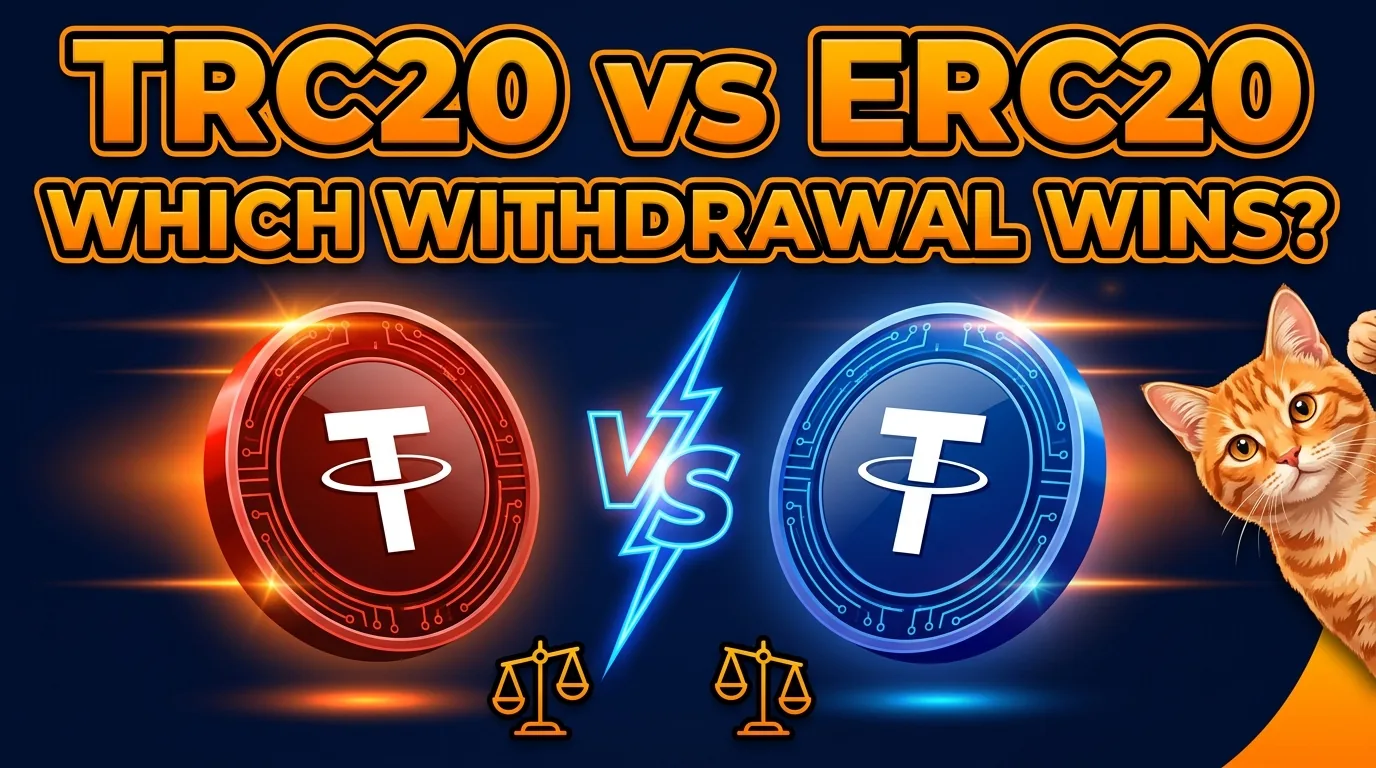
If you searched how to withdraw crypto from a PTC site, the safest answer is simple: verify who controls the destination, match the asset and network exactly, send a small test first, then keep enough evidence to trace the transaction. A withdrawal form is only one part of the process. Your wallet or exchange, the PTC site's internal review and the blockchain must all agree on what is being sent.
Crypto transfers are usually not like card payments that can be reversed with a merchant dispute. A wrong address, wrong network or missing memo can turn a successful broadcast into a difficult recovery case. The steps below are designed for beginners who want to withdraw a small balance without rushing.
Answer firstUse a wallet or exchange you have independently verified, copy its deposit address, choose the exact network it supports, compare every field before confirming, and start with the smallest permitted test withdrawal. Save the request ID and transaction hash, and never give support your seed phrase or private key.
Key Takeaways
- Wallet ownership matters: a self-custody wallet and an exchange deposit account have different recovery and support rules.
- Network matching is mandatory: TRC20 and ERC20 are different routes even when the token name is the same.
- Test before scaling: a small successful transfer proves more than a balance shown on a dashboard.
- Evidence protects your time: keep the withdrawal ID, selected network, timestamp, status and hash.
1. Choose a wallet you understand before you withdraw
The first decision is not the PTC site; it is the destination. A self-custody wallet is controlled by whoever holds its private key or recovery phrase. That means you are responsible for backups, device security and selecting a compatible network. A hosted exchange account is different: the exchange controls the wallet infrastructure, gives you a deposit address and credits your account under its deposit and compliance rules.
Neither option is automatically safer for every reader. Self-custody means protecting the recovery phrase; an exchange may offer support but can pause deposits or reject unsupported networks. Read the receiving service's own instructions rather than relying on a generic address from a search result.
| Destination | What you control | Check before sending |
|---|---|---|
| Self-custody wallet | Wallet keys and recovery process. | Asset support, network support, backup method and whether a memo/tag is needed. |
| Hosted exchange | Your account login, not necessarily the underlying keys. | Deposit page, exact network, minimum deposit, maintenance notices and memo/tag rules. |
| PTC balance | An account record on the site, not yet a wallet receipt. | Withdrawal minimum, fee, review status, supported countries and support route. |
CatPTC's PTC beginner guide explains the wider earning model. Treat a dashboard balance as a claim you still need to test, not as money already in your wallet.
2. Verify the address, asset and network separately
Before opening the PTC withdrawal form, open the receiving wallet or exchange and generate its deposit details. Confirm three separate fields: asset (for example, USDT), network (for example, TRC20 or ERC20) and address. A familiar ticker is not enough. Stablecoins and other tokens can exist on multiple networks, and a receiving service may support only some of them.
Copy the address using the wallet's copy button. Then compare the first and last several characters after pasting into the PTC form. If the wallet shows a memo, tag or payment ID, copy that too. Some assets and services need an additional identifier to credit an account. If the PTC form has no field for a required memo or tag, stop and ask the platform before submitting.
Two-person or two-pass check
Read the receiving screen aloud or compare it line by line: coin → network → address → memo/tag → amount → fee → final amount. Changing one field after you begin is a reason to restart the check, not a reason to click faster.
- Do not choose a network because its name looks cheaper.
- Do not assume two addresses are compatible because both begin with similar characters.
- Do not use an old screenshot; copy current instructions.
- Use only the official wallet or exchange app/site you opened yourself, not a link sent by a stranger.
Ethereum's transaction documentation describes a receiving address, signing, broadcast and validated-block inclusion. A completed transaction still does not prove that the receiving service supports your chosen route.
3. Understand TRC20 vs ERC20, fees and final amount
ERC20 refers to a fungible-token standard implemented by smart contracts on Ethereum. TRC20 is TRON's fungible-token standard, with its own network environment. The official Ethereum ERC-20 documentation and TRON token-standard overview are the authoritative references for those definitions.
For a withdrawal, the practical rule is not “TRC20 is always better” or “ERC20 is always safer.” It is: choose the route that the receiving service explicitly supports and that the PTC site can send correctly. Fees vary with the network, token contract, platform policy and congestion. A lower displayed fee is not a saving if the destination cannot credit the transfer.
| Question | TRC20 | ERC20 |
|---|---|---|
| Where is it issued? | On the TRON network. | On Ethereum, through token smart contracts. |
| What must match? | Receiving service must support the token on TRON/TRC20. | Receiving service must support the token on Ethereum/ERC20. |
| What can change? | PTC withdrawal fee, network conditions and receiver policy. | PTC withdrawal fee, gas conditions and receiver policy. |
| Beginner rule | Follow the receiving deposit page and the PTC form; never infer compatibility from the ticker alone. | |
Read CatPTC's USDT TRC20 vs ERC20 guide alongside the current deposit instructions. Record the gross amount, platform fee and net amount. If a site asks for an “unlock,” “tax,” or “verification” payment before releasing an ordinary task balance, pause and review its terms.
4. Follow a safe withdrawal sequence
When you are ready, use a repeatable sequence. The goal is to make the first transfer boring and auditable. Do not begin by moving the largest balance you can withdraw; begin by proving that the route works.
Read the PTC withdrawal rules
Check the minimum, processing window, fee model, supported assets and networks, account verification requirements and any limits. Screenshot the page if the terms are likely to change.
Open the real receiving deposit screen
Select the asset and network in the wallet or exchange first. Confirm the address, memo/tag requirement and any minimum deposit. Keep that screen open while you compare the PTC form.
Enter and compare the details
Paste the address; never type it from memory. Compare the beginning and end of the address, then compare asset, network, memo/tag, gross amount, fee and net amount.
Send the smallest permitted test
Use a small amount that is meaningful after fees but affordable to lose. A test cannot guarantee future withdrawals, but it can reveal an address, network or crediting mismatch before the balance is larger.
Wait for status and receipt
Save the request ID immediately. After the site broadcasts the transaction, save the transaction hash and check it on the correct network explorer or inside the receiving service.
Scale only after the test credits
Once the test is visible and credited, repeat the same route. Re-check the network every time because a form may remember a different option or the platform may change supported routes.
Do not pay a stranger who offers to “validate” your wallet, and never paste a seed phrase into a support form. If you are still comparing platforms, review CatPTC's offers and pricing pages only through the official CatPTC site, then verify the actual withdrawal rules inside your account.
5. Read confirmations and keep support evidence
A withdrawal can have several statuses: requested, under review, approved, broadcast, pending, confirmed, failed or credited. The exact labels vary. A PTC site's “paid” label may mean it sent a transaction, while an exchange's “credited” label may require additional checks. Look for a transaction hash before treating an on-chain transfer as independently verifiable.
Ethereum's transaction lifecycle documentation explains that a transaction is broadcast, placed in a pending pool, included in a block and then becomes more certain as the block is justified and finalized. Other networks use different terminology and confirmation policies. Use the network's own explorer and the receiving service's policy; do not promise yourself a fixed wait time.
| Save this evidence | Why it helps | Safe handling |
|---|---|---|
| Withdrawal request ID and timestamp | Lets PTC support locate the internal record. | Keep the time zone and do not edit the original screenshot. |
| Asset, network, amount and fee | Shows exactly what route you selected. | Mask most of the destination address if sharing publicly. |
| Transaction hash | Lets you check whether the transfer was broadcast and its status. | Share only with the official support channel or use it in a public explorer. |
| Receiving deposit screen/status | Shows the receiver's supported route and whether it credited. | Hide balances, email, account IDs and personal data before posting. |
If the transfer is missing, check the hash on the correct network and whether the receiver requires more confirmations or a memo. Then contact both services through official channels. CatPTC's FAQ and about page help identify official navigation. The PTC scam guide and FTC task-scam alert cover fake earnings and demands to deposit crypto to unlock withdrawals.
Do not send more money to release a normal earned balance, do not accept “guaranteed recovery” offers, and do not disclose a seed phrase, private key, password or one-time code. A support agent should not need wallet secrets to investigate a transaction hash.
Frequently asked questions
Should I withdraw to my own wallet or an exchange?
Either can work, but the destination must explicitly support the exact asset and network. A self-custody wallet gives you control of its recovery credentials; an exchange gives you a deposit account governed by its rules. Use the option you understand, and check whether a memo or tag is required.
Are TRC20 and ERC20 addresses interchangeable?
No. They are token standards on different networks. A similar-looking address does not prove compatibility. Select the network shown by the receiving wallet or exchange and select the same network in the PTC withdrawal form.
How much should I send as a test transfer?
Use the smallest amount that the PTC site allows and that still makes sense after its fee. The purpose is to confirm the address, asset, network and crediting process—not to optimize the amount. Never test with funds you cannot afford to lose.
How long should a crypto withdrawal take?
There is no universal time. A PTC site may review the request before broadcasting it, and the network may then need to include and confirm it. Check the site status, transaction hash and receiving service policy before assuming a delay means loss.
What should I send to support if a withdrawal is missing?
Send the withdrawal ID, timestamp and time zone, asset, network, amount, destination address with most characters masked, transaction hash if one exists, and screenshots of the status and network selection. Never send a seed phrase, private key, password or one-time code.
Related reading
- USDT TRC20 vs ERC20 withdrawal guide for a deeper network comparison.
- How to spot a scam PTC site for deposit-pressure and fake-proof checks.
- What is a PTC site? for the broader task and payout model.
Conclusion
Safe PTC withdrawals are mostly a verification habit, not a speed contest. Use a destination you understand, confirm wallet ownership or exchange-account rules, match the asset and network, and treat the first small transfer as a test. Then keep the request ID, selected network, fee, timestamp and transaction hash so both the PTC site and the receiving service can investigate a problem.
There is no universal “best” network or guaranteed withdrawal time. Use the route supported by both sides and shown in current instructions. If a platform changes the rules, demands an unexpected deposit or pressures you to skip a test, stop. Review CatPTC's terms and FAQ before trying again.