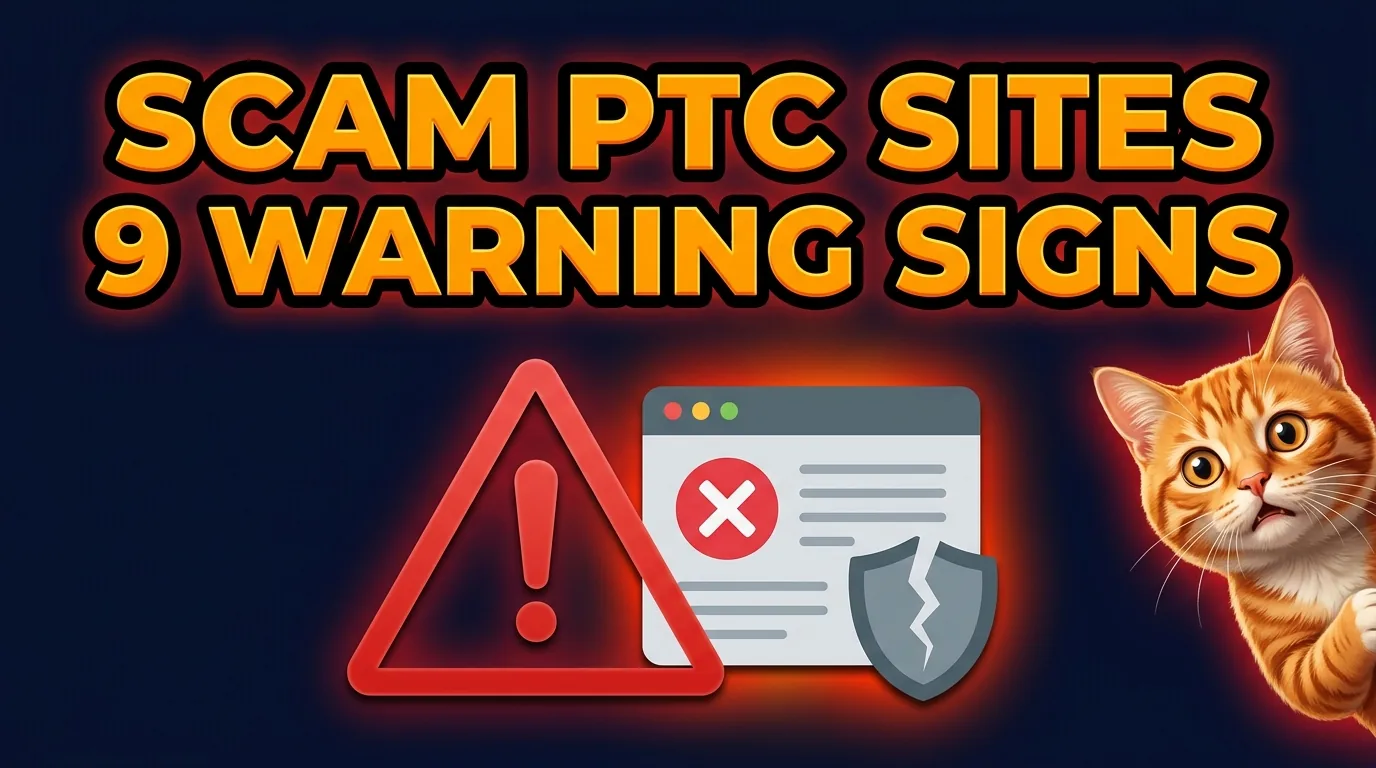
When people search for real PTC sites 2026, they are usually trying to avoid two opposite mistakes: wasting hours on a platform with no usable tasks, or sending money to a site that makes unrealistic income promises. A real paid-to-click platform should make its advertising model, task rules, withdrawal process and support path understandable before a member commits time or funds.
This guide gives you a repeatable verification process. It does not label every platform as safe, and it does not promise earnings. Use it to compare evidence: visible task rewards, readable terms, a reversible free test, a small withdrawal and a clear explanation of how advertiser money reaches members.
Answer firstA real PTC site in 2026 should let you understand the task reward before completion, begin ordinary earning without a mandatory deposit, publish withdrawal rules, protect account data and answer support questions. Test the smallest practical withdrawal before considering any paid plan.
What does “real PTC” mean in 2026?
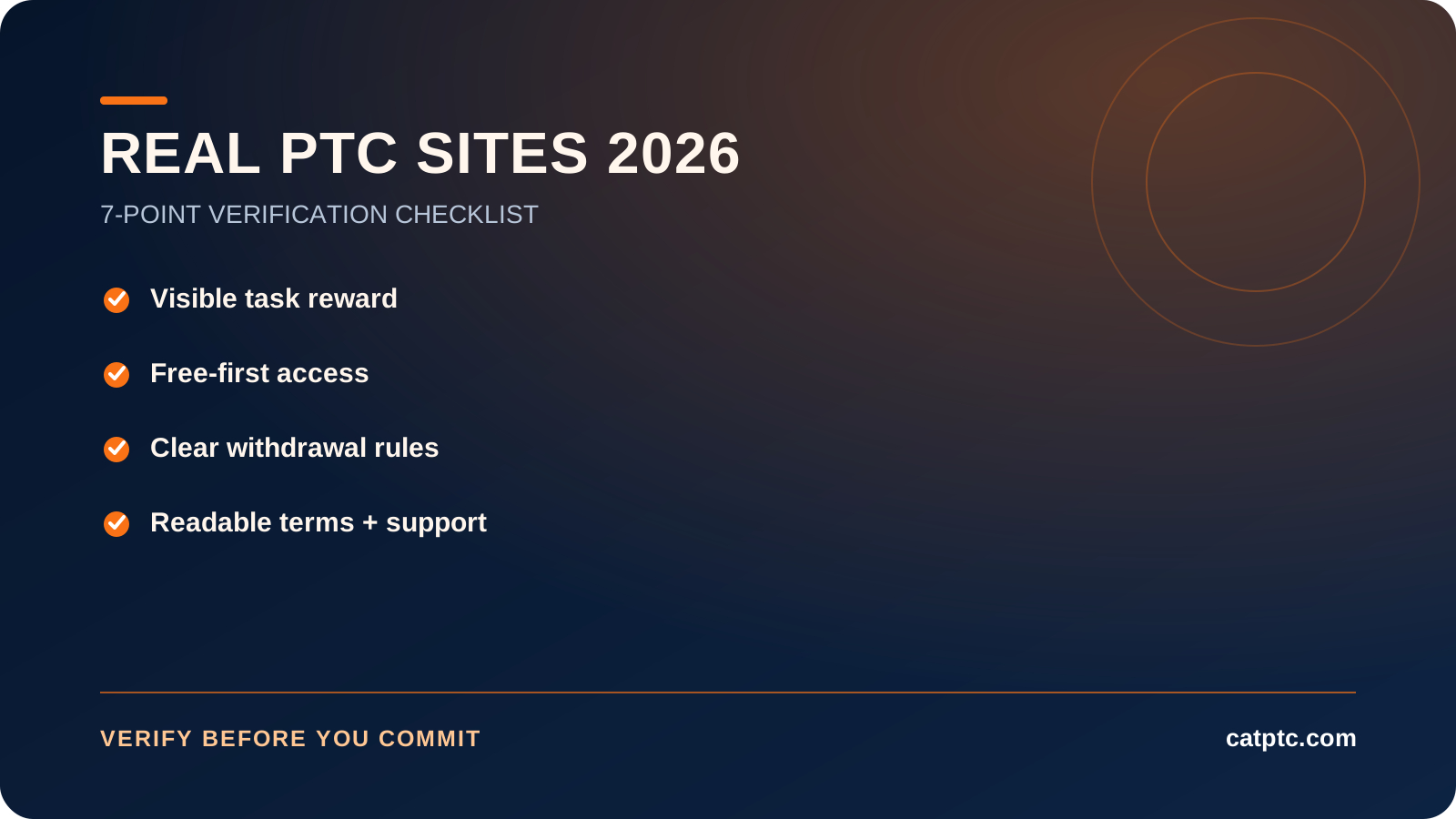
Real PTC describes a business model, not a guaranteed income level. Advertisers pay for attention or a defined action, the platform tracks completion, and the member receives a small reward under published rules. A real model can still be low-paying, have limited task inventory or be unsuitable for your location. “Real” should therefore mean verifiable and transparent, not “everyone earns a large amount.”
Google’s people-first content guidance is a useful standard for evaluating claims online: look for clear authorship, specific explanations and evidence rather than pressure language. For consumer protection context, the FTC job-scam guidance warns against paying for the promise of work and against requests for sensitive information that does not fit the service.
Seven checks before joining a PTC site
Run these checks in order. If a platform fails a high-risk check, stop instead of trying to recover the decision with more time or a larger deposit.
| Check | Evidence to look for | Decision |
|---|---|---|
| Task economics | Reward, timer and completion rule are visible before starting. | Continue if clear; stop if hidden. |
| Free access | Ordinary tasks can be tested without buying a plan. | Deposit pressure is a risk signal. |
| Withdrawal rules | Minimum, fee, asset, network and review time are documented. | Prefer precise rules. |
| Terms and privacy | Account, payout and data-use rules are readable. | Do not accept vague terms. |
| Support | There is a real support route and a way to track a ticket. | Test a low-risk question. |
Check the money story
A platform does not need to publish every advertiser contract, but it should explain what members are doing and how rewards are calculated. Be careful with “guaranteed daily profit,” “risk-free investment” or referral structures that depend more on deposits than on advertising activity. A referral reward can exist in a legitimate marketing programme; it is not proof that the underlying earning model works.
Check identity and consistency
Compare the homepage, pricing page, FAQ, terms and withdrawal screen. Do the minimum withdrawal and supported coins match? Are rates described as variable? Does the support answer agree with the written rules? Inconsistency is more useful than a dramatic review when deciding whether to proceed.
How to run a safe withdrawal test
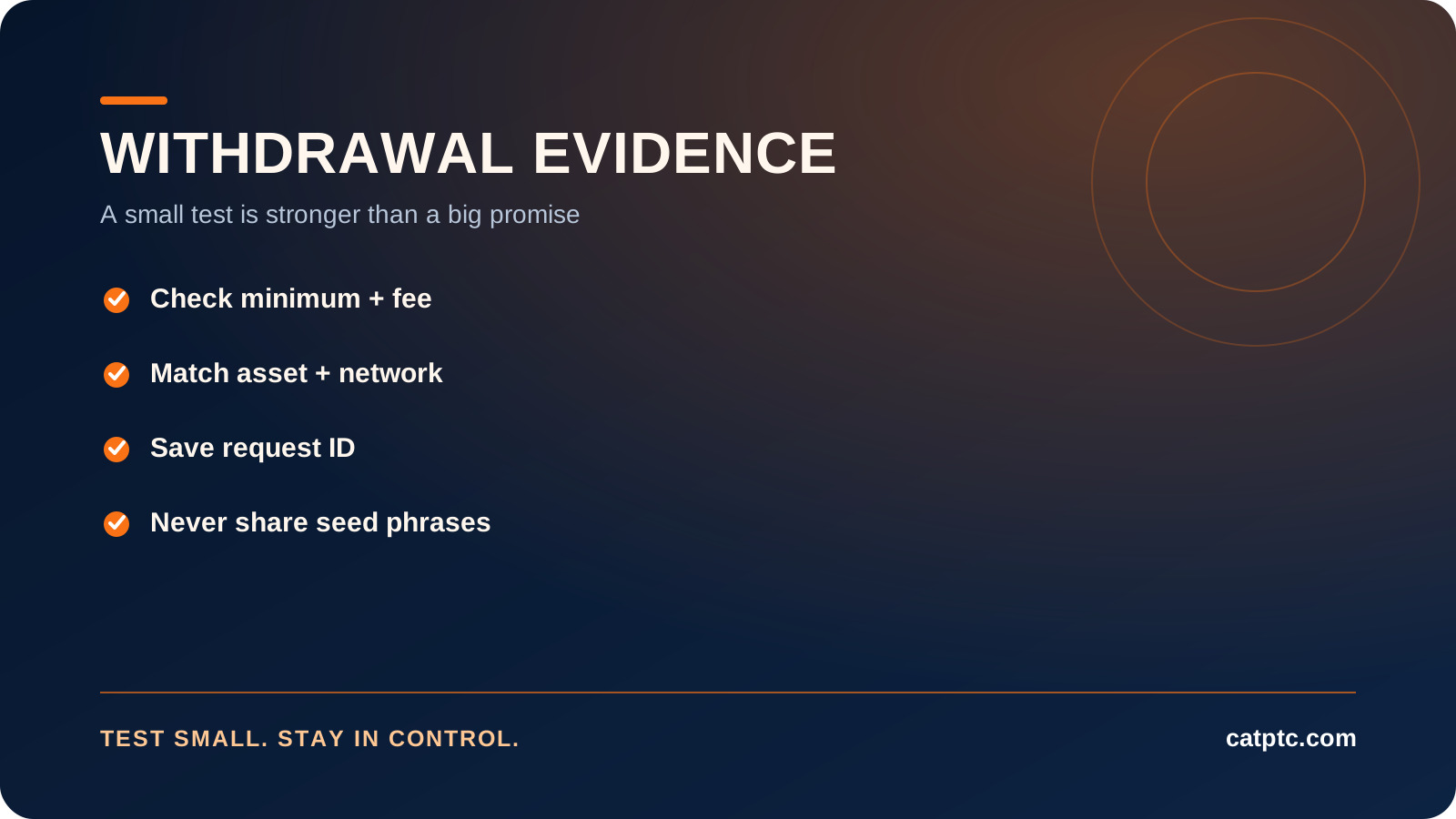
After completing a few free tasks, request the smallest withdrawal that the platform permits. Use an account or wallet you control, verify the exact asset and network, and keep screenshots of the request, fee and status. Never share a seed phrase or private key with support. A successful small withdrawal does not prove that every future withdrawal will be smooth, but it gives stronger evidence than a screenshot posted by someone else.
Read the minimum and fee
Confirm the amount, processing time, network and whether the fee is deducted from the requested amount.
Copy the address carefully
Use a wallet that supports the exact coin and network. Check the first and last characters before submitting.
Record the request
Save the request ID, timestamp, amount and status page. This gives support something specific to investigate.
Stop if a surprise payment appears
Do not pay an unexpected “unlock,” “tax” or “verification deposit” without independent confirmation and written terms.
Red flags that should change your decision
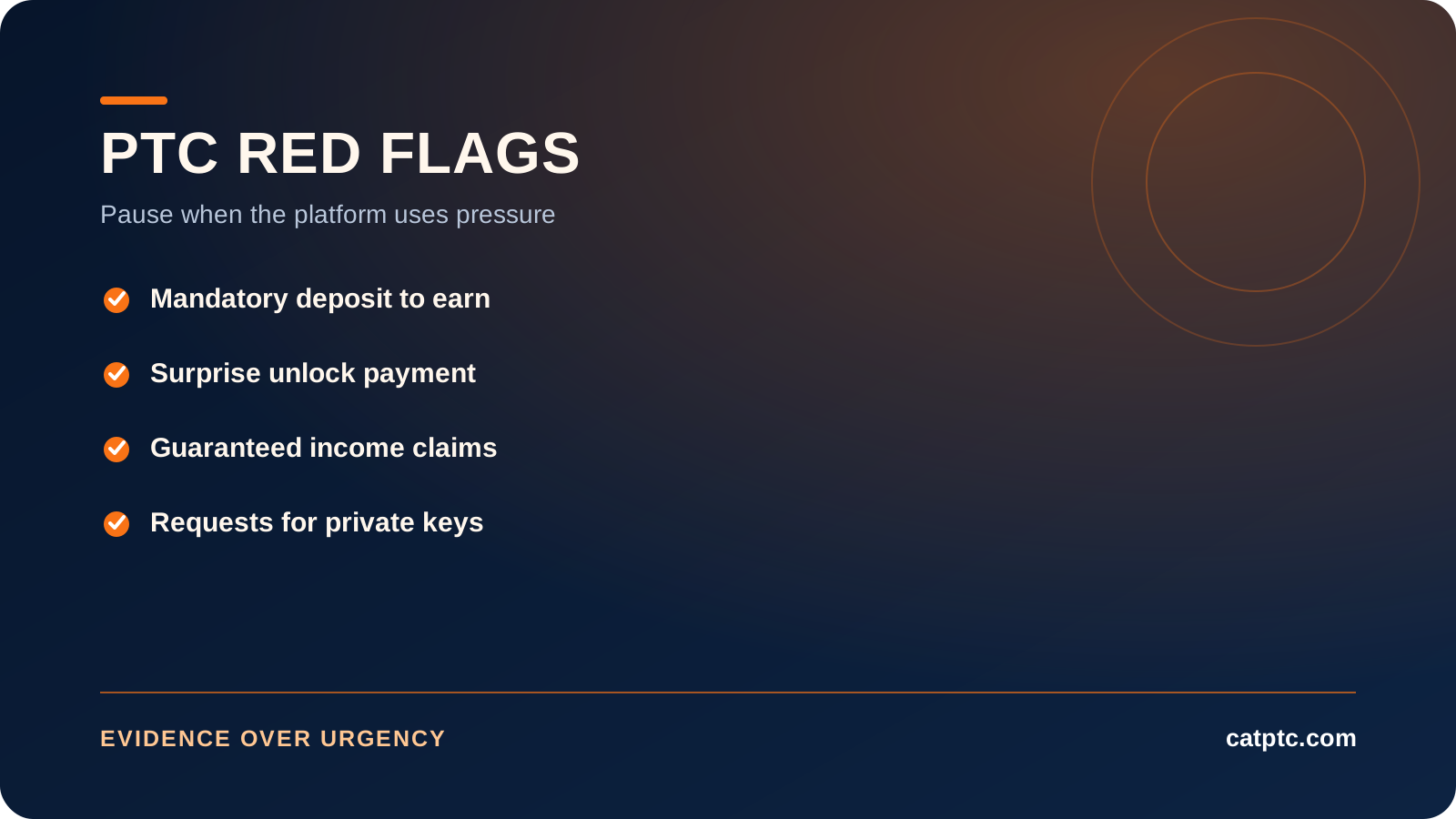
Some warning signs are decisive: a mandatory payment before ordinary tasks, pressure to recruit deposits, changing withdrawal rules after you qualify, requests for a password or seed phrase, fake countdowns, copied company claims and support that only responds when you send more money. A low rate is disappointing; a hidden rule is dangerous.
Never treat a PTC balance shown on a dashboard as money you already possess. Until a withdrawal reaches an account or wallet you control, it is an unverified platform balance.
How should you evaluate CatPTC?
CatPTC can be evaluated using the same checklist, not by trusting its own marketing. Review the public About page, terms, FAQ and pricing page. Start with free tasks, compare the reward shown before completion, read the withdrawal requirements and make a small test request before considering any paid plan. Conditions can change, so re-check live terms rather than relying on an old article.
For a broader walkthrough, read our what is a PTC site guide and the dedicated PTC legitimacy checklist.
How to document evidence without being misled
Keep a simple evidence log with the date, page URL, stated reward, minimum withdrawal, network, fee and the answer from support. This prevents a common mistake: remembering the most attractive number while forgetting the condition attached to it. Screenshots are useful for your own record, but they are not proof that a platform will pay every account. Treat a review as a starting point and verify the live rule yourself.
Pay attention to language that changes the meaning of a claim. “Up to” is not an average. “Available” is not guaranteed for every member. “Balance credited” is not the same as “funds withdrawn.” A careful article or platform will explain the difference; a promotional page may blur it. If a claim cannot be tested or tied to a written rule, exclude it from your decision.
| Claim | Better question | Evidence standard |
|---|---|---|
| High reward | What is the typical reward shown to my account? | Observe several tasks, not one headline. |
| Fast payout | What is the stated review time and network? | Keep the request ID and transaction record. |
| Trusted platform | What are the terms, support route and privacy rules? | Read primary pages, then compare independent reports. |
This evidence-first habit also helps when a platform changes. Re-check the terms and withdrawal page before each future test. If the current page differs from an old review, the current page controls your risk.
Finally, distinguish operational friction from fraud. A slow page, a task that expires or a normal network confirmation can happen on a real platform; the question is whether the rule was published and support can explain the status. Fraud becomes more likely when the explanation changes, the fee appears only after you request a payout or the platform asks you to transfer funds to a personal address. Record the facts, pause, and do not escalate your commitment just because you already spent time.
A useful final check is whether the platform respects a “no.” You should be able to decline an upgrade, stop a task session, close a campaign or ask a support question without retaliation or escalating requests. Clear boundaries are part of trust. If every answer leads to another payment, referral request or urgency message, the platform is not giving you enough evidence to continue.
Frequently asked questions
Are real PTC sites guaranteed to pay every member?
No. A transparent model still has variable task availability, eligibility, fees and operational risk. Verify with a small withdrawal.
Do real PTC sites require a deposit?
Ordinary task earning should be testable without a mandatory deposit. A paid plan is a separate capital-at-risk decision.
What is the strongest proof of a PTC site?
Consistent public rules plus a small withdrawal to an account or wallet you control is stronger than anonymous screenshots.
Can reviews prove that a platform is real?
Reviews are clues, not proof. Check their date, methodology, conflicts and whether the described terms still match the live site.
What should I do if support asks for my seed phrase?
Stop immediately. Legitimate support should never need your private key or seed phrase.
Conclusion
The best way to find real PTC sites in 2026 is to reduce uncertainty step by step. Start free, read the rules, calculate the time value, test the smallest withdrawal and leave when the platform uses pressure instead of evidence. CatPTC’s public pages can be reviewed with this same checklist; the decision should remain yours.