
Rented referrals are the most misunderstood feature in paid-to-click, and the misunderstanding runs in both directions. Some people treat them as free passive income and lose money. Others dismiss them as a scam and miss a legitimate — if demanding — strategy. The truth is that rented referrals are a paid investment with variable returns, and whether they profit or lose depends entirely on whether you understand the math and manage them actively.
Rented referrals are other users you pay a PTC site to "rent". You earn a share of what they click, but you pay a fixed rental fee regardless of their activity. If your referrals click above the break-even average, you profit; if they click below it, you lose money. They are not free income and not passive — they are a small arbitrage business that requires tracking, recycling and patience. For most beginners, direct referrals are the better path.
What are rented referrals on PTC sites?
A rented referral is another user of the platform whom you pay the platform to "rent". You do not own them, you do not control them, and you cannot contact them. What you get is a share of the money they earn by clicking ads. The platform takes a cut, and you take a cut, and the user themselves takes a cut.
The key word is rent. You are not buying a person; you are leasing their future activity for a fixed period, usually thirty days. At the end of that period you can renew the rental for another thirty days, or let it lapse. You pay the rental fee whether or not the referral clicks anything at all.
That last point is the whole story. Rented referrals are a fixed cost against a variable return. If the return exceeds the cost, you profit. If it does not, you lose. There is no way to make a rented referral click, and there is no refund if it does not.
This is why the marketing around rented referrals is so misleading. Presenting them as "passive income" hides the fact that they are a paid investment with real downside. They are closer to running a tiny advertising arbitrage than to earning free money.
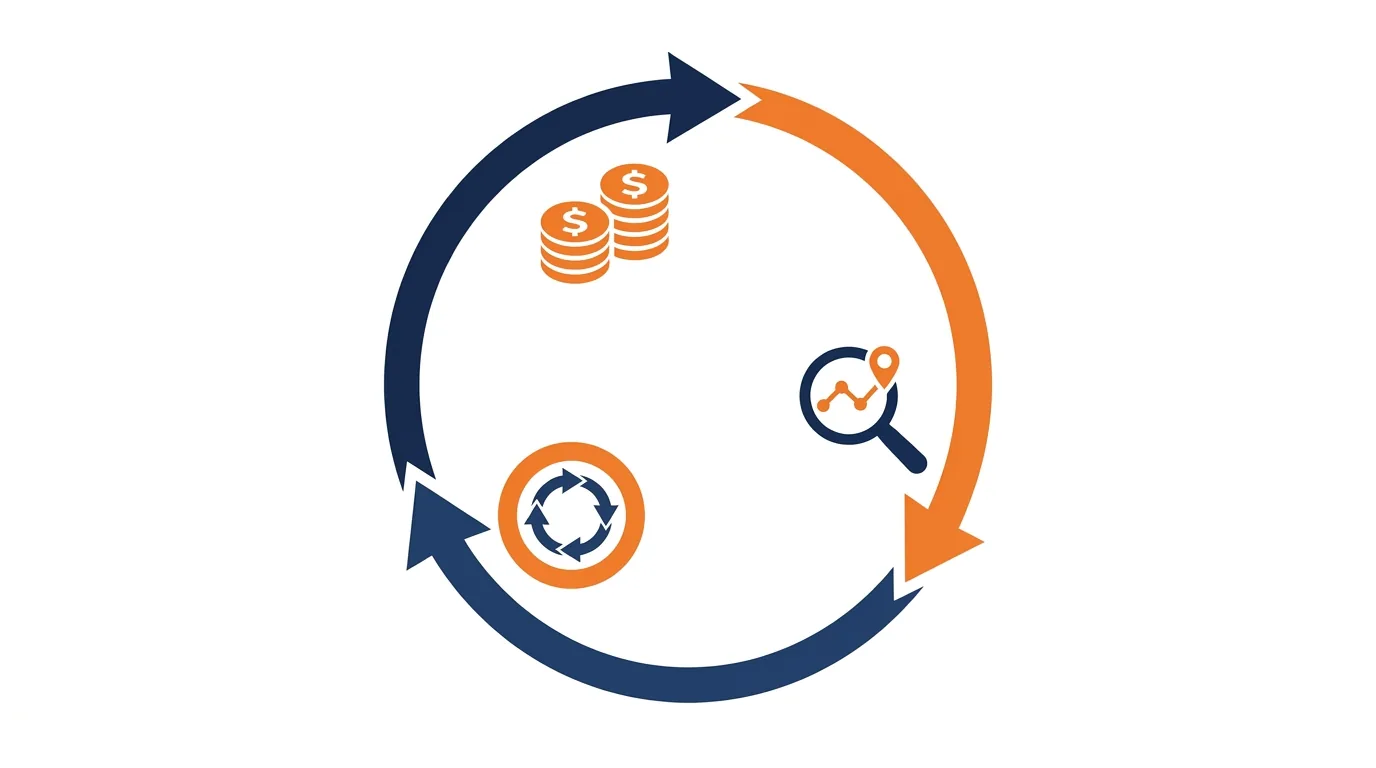
How the rent, recycle and renew cycle works
Managing rented referrals is a cycle, and understanding each stage is what separates profitable users from losing ones.
Rent
You pay the platform a fee to rent a batch of referrals for thirty days. The cost per referral is fixed and known in advance. This is your capital outlay, and it is at risk from the moment you pay it.
Track
Over the rental period, you monitor each referral's average clicks per day. The platform shows you this data. Referrals that click above the break-even average are profitable; those below it are losing you money.
Recycle
You can pay a small fee to "recycle" an underperforming referral, which replaces it with a new one. Recycling costs money, so it is only worth doing when a referral is clearly below break-even and the expected value of a replacement exceeds the recycling fee.
Renew
At the end of thirty days, you decide whether to renew each referral. Renewing a profitable referral extends your income; renewing a losing one extends your loss. Many platforms offer discounts for renewing in bulk or for longer periods, which changes the math.
The cycle never stops
Rented referrals are not a set-and-forget system. They require regular tracking, recycling and renewal decisions. If you are not prepared to manage them weekly, the average referral will drift below break-even and you will lose money. This is the single most common reason people lose on rentals.
The math: when rented referrals turn profitable
The break-even calculation is the heart of the whole strategy, and it is simpler than it looks. You need to know three numbers: the rental cost per referral, the commission you earn per referral click, and the average clicks per referral per day.
| Variable | Example value | What it means |
|---|---|---|
| Rental cost | $0.20 / 30 days | Your fixed cost per referral |
| Commission per click | $0.005 | Your share of a referral's click |
| Break-even clicks | 40 clicks / 30 days | Clicks needed to cover the rental |
| Break-even per day | ~1.33 clicks / day | Average needed to break even |
In this example, a referral must average about 1.33 clicks a day to cover its rental cost. If the platform's average referral clicks 1.5 times a day, you profit slightly. If it clicks 1.0 times a day, you lose. The margin is thin, which is why management matters so much.
The numbers vary by platform, and the commission rate is the variable that changes the math most. A platform that pays a higher referral commission lowers the break-even threshold, making rentals more viable. A platform with a low commission makes them almost impossible to profit from. Before renting anything, calculate the break-even for that specific platform.
Do the math before you rent
Write down the rental cost, the commission per click, and the platform's stated average clicks per referral. Divide the cost by the commission to get the break-even clicks, then divide by thirty to get the daily break-even. If the platform's average is below your break-even, do not rent. This five-minute calculation prevents most rental losses.
Average referral performance and break-even points
Platforms publish an average clicks-per-referral figure, and it is the number that determines whether rentals are viable. Here is how different performance levels translate into outcomes.
| Avg clicks / day | Monthly clicks | Outcome (at $0.005/click, $0.20 rent) |
|---|---|---|
| 0.5 | 15 | Loss — well below break-even |
| 1.0 | 30 | Loss — below break-even |
| 1.33 | 40 | Break-even |
| 1.5 | 45 | Small profit |
| 2.0 | 60 | Good profit |
The uncomfortable truth is that the platform's average is often close to break-even, which means the typical referral is roughly a wash. Profit comes from the minority of referrals that click well above average, and from disciplined recycling of the ones that do not. This is why the strategy rewards active management and punishes neglect.
It also explains why so many people lose money on rentals. They rent a batch, do not track it, and let the average drift below break-even. The platform's average is not a promise; it is a statistic, and your specific batch can perform worse than it.
Risks: inactive refs and sunk costs
Rented referrals carry several risks, and understanding them is what separates a calculated bet from a gamble.
- Inactive referrals. Some rented referrals simply stop clicking. You still pay the rental fee. This is the most common way to lose money.
- Sunk costs. Once you have paid a rental fee, that money is gone. Renewing a losing referral to "recover" the cost is a classic sunk-cost error that deepens the loss.
- Recycling costs. Recycling an underperformer costs money, and the replacement may perform no better. Recycling is a bet, not a fix.
- Platform risk. If the platform changes its commission rate or its average performance, your break-even shifts and a profitable batch can become a losing one overnight.
- Time cost. Managing rentals takes time. If you value your time at all, that cost belongs in the calculation.
None of these risks makes rentals illegitimate. They make them an investment, and investments can lose money. The mistake is treating them as guaranteed income. For a broader look at how to tell a legitimate platform from a trap, see our guide on how to spot a scam PTC site.
Rented vs direct referrals
The alternative to renting is building direct referrals — real people who join through your link and stay active. The two strategies are fundamentally different.
| Factor | Rented referrals | Direct referrals |
|---|---|---|
| Upfront cost | Yes (rental fee) | None |
| Control | None — cannot contact | Some — can support them |
| Risk of loss | High — fixed cost, variable return | Low — no cost |
| Effort | Ongoing management | Upfront outreach |
| Scalability | Immediate, with capital | Slow, but compounding |
| Best for | Experienced users with capital | Most users |
Direct referrals are slower to build but they cost nothing and they cannot lose you money. Rented referrals are faster to scale but they require capital and active management, and they can lose money. For most users, direct referrals are the better strategy, and rentals are only worth considering once you have a working routine and understand the math. For the direct-referral side, see our guide on how to get referrals on PTC sites.
Is it worth it in 2026? Verdict
Rented referrals are neither free money nor a scam. They are a paid investment with variable returns, and whether they are worth it depends entirely on you.
Rent referrals if you have capital you can afford to lose, you are prepared to track and recycle weekly, you understand the break-even math for your specific platform, and you treat it as a small business rather than passive income. For that user, rentals can produce a modest return.
Skip rentals if you are a beginner, you want passive income, or you are not willing to manage them actively. In that case, build direct referrals instead — they cost nothing and cannot lose you money. Our guide on how to get referrals on PTC sites covers that path, and our how to maximize PTC earnings guide puts rentals in the context of a broader strategy.
The honest summary: rented referrals are a trap for people who treat them as passive income, and a legitimate — if demanding — strategy for people who treat them as an investment. The difference is not the feature; it is whether you do the math.
Frequently Asked Questions
What are rented referrals on PTC sites?
Rented referrals are other users you pay a PTC site to rent for a fixed period, usually 30 days. You earn a share of what they click, but you pay the rental fee regardless of their activity. They are a paid investment with variable returns, not free income.
Are rented referrals worth it in 2026?
Only for users with capital who are prepared to track and recycle them weekly and who understand the break-even math. For most beginners, direct referrals are the better path because they cost nothing and cannot lose money.
How do you calculate the break-even for rented referrals?
Divide the rental cost by the commission you earn per referral click to get the break-even number of clicks, then divide by 30 for the daily break-even. If the platform's average clicks per referral is below your break-even, do not rent.
Why do people lose money on rented referrals?
Because they treat them as passive income and do not manage them. The platform's average referral performance is often close to break-even, so without active tracking and recycling, the average drifts below break-even and the fixed rental cost becomes a loss.
What is the difference between rented and direct referrals?
Rented referrals cost money, cannot be contacted, and can lose you money. Direct referrals are real people who join through your link, cost nothing, and pay you a share of their earnings indefinitely. Direct referrals are slower to build but far safer.
CatPTC partner plans carry capital at risk, and a published return is not a guarantee of future performance. Task earning involves no deposit and therefore no capital at risk. Earnings depend on the tasks you complete. Nothing in this article is financial advice.
See what each CatPTC task pays before you click
Every task shows its reward and timer up front — plus a $1.50 signup bonus to start with.
Create your free account →Registration takes under a minute and needs no card.

The CatPTC editorial team researches paid-to-click platforms hands-on — verifying payout terms, withdrawal records and trust signals before publishing. Every guide is fact-checked against live platform data and updated whenever terms change.