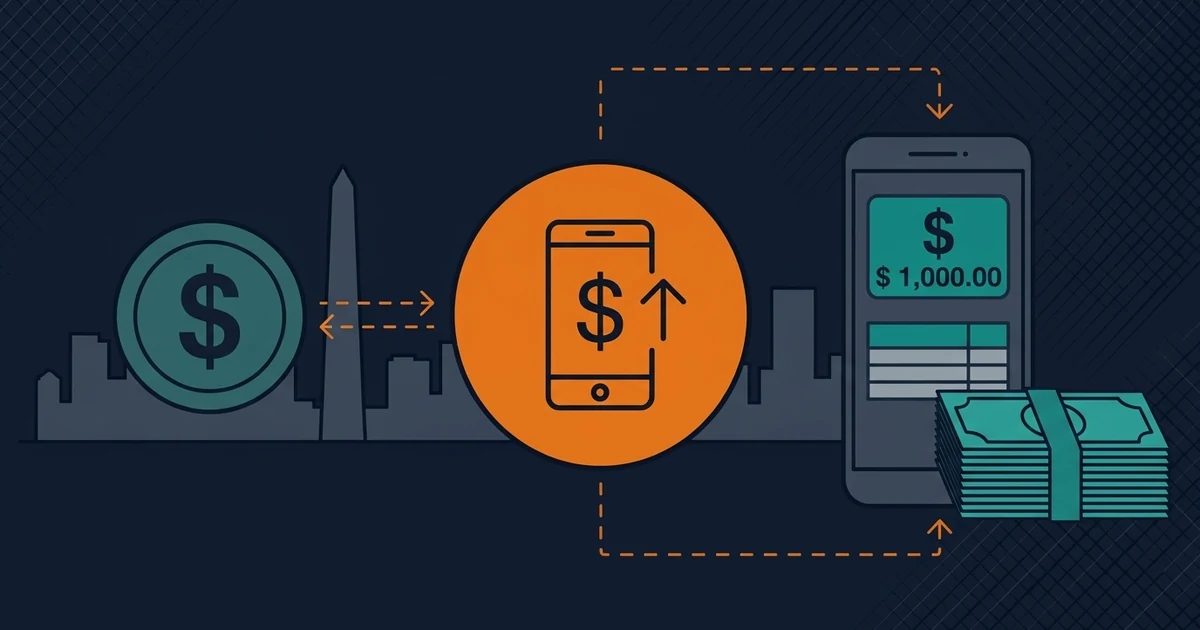
Argentina is the most interesting PTC market in the world right now, and not because the platforms are better there. It is because the currency situation makes the conversion step — normally a boring 1–2% cost — the single largest determinant of what your earnings are actually worth.
With multiple exchange rates in play and a peso that has moved sharply, a member who converts badly can lose 20–30% of their earnings without ever noticing. A member who converts well can earn more in real terms than someone in a much richer market. This guide is about being the second one.
PTC earnings in Argentina are dollar-denominated, so the earning is stable and the conversion is everything. Withdraw in USDT, hold the dollars, and convert to pesos only when you need to spend — through a route that gets you close to the market rate rather than the official one. Mercado Pago is the practical endpoint for spending. The gap between a good and a bad conversion is far larger than every fee in the chain combined.
Why Argentina is different from every other market
In most countries, a PTC guide is about fees. In Argentina it is about the exchange rate, because the rate is not a single number.
Three things follow from that:
- Your earnings are in dollars, and that is a feature. A dollar balance is a hedge in a way it is not in a stable-currency country.
- The conversion step can gain or lose double digits. Not 1–2% — the spread between available rates has been far wider than that.
- Timing matters more than amount. Converting monthly rather than weekly smooths the volatility, and holding dollars between conversions is a legitimate strategy rather than a delay.
This is not financial advice and nobody can predict the rate. What is predictable is that the spread between the best and worst available conversion is large, and that choosing well is worth more than any platform optimisation.
The route that preserves value
Withdraw in USDT
TRC20 or BEP20. You want dollars, and USDT is the cheapest way to hold them.
Hold the dollars
Do not convert immediately out of habit. In a volatile currency environment, holding the dollar balance between spending needs is the whole strategy.
Convert when you need pesos
Through a P2P market or an exchange with a competitive rate. Compare two venues before every conversion — the spread between them is real money.
Land in Mercado Pago
So the money is spendable, transferable, and usable for bills and QR payments.
Convert on demand, not on schedule. A monthly conversion habit is fine in a stable currency. Here it means you convert whatever the rate happens to be that day. Convert when you need to spend, and hold otherwise.
What the chain costs
| Step | Typical cost | Comment |
|---|---|---|
| Platform withdrawal | $0–$3 | Fixed, so batch to reduce its share |
| Network fee | $0.01–$1 | TRC20 or BEP20 |
| Holding cost | 0% | USDT held in a wallet costs nothing |
| USD-to-ARS conversion | 1–5% | Depends entirely on the venue |
| Mercado Pago deposit | 0–1% | Usually free |
The conversion line is the one that matters. Everything else is rounding by comparison.
What you can realistically earn
Argentina is a mid-tier advertising market. Rates are better than tier-3 markets and well below tier-1.
| Activity | Monthly range (USD) | Time needed |
|---|---|---|
| Clicks only, one platform | $4–$12 | 20–30 min/day |
| Clicks across three platforms | $10–$30 | 45–60 min/day |
| With offerwalls | $15–$60 | Variable |
| With active referrals | Adds 10–30% | Ongoing |
In dollar terms these are modest. In peso terms, at a competitive conversion rate, they can be materially more useful than the same dollar amount earned in a country where the local currency is stable.
The rails that matter
| Rail | Best for | Limitation |
|---|---|---|
| Mercado Pago | Spending, bills, QR payments, transfers | Peso balance loses value if held |
| USDT wallet | Holding value between conversions | Not spendable directly in most shops |
| Local exchange | Converting at a competitive rate | Rates vary; compare before each trade |
| Bank account | Larger sums, formal records | Slower, more paperwork |
The pattern is: hold in dollars, spend in pesos. A peso balance is a spending tool, not a store of value.
Risks specific to this market
- Rate volatility. The peso can move sharply. Holding dollars protects you; holding pesos does not.
- Regulatory change. Currency rules have changed repeatedly. What works this month may not next month.
- Counterparty risk. P2P conversion depends on the other side delivering. Use escrow where available.
- Record keeping. Multiple conversions at different rates create a paperwork burden. Log every one.
Date, dollars converted, pesos received, rate, venue. Four columns. In a market with multiple rates and changing rules, this log is the only thing that lets you explain your own numbers later — to yourself as much as to anyone else.
Timing, and why a schedule is the wrong habit here
In a stable-currency country, converting on a fixed day each month is sensible: it is simple, it is predictable, and the rate barely moves. In Argentina that habit actively costs money, because it means you convert whatever the rate happens to be on the 1st.
Three approaches, and what each actually does:
| Approach | What it does | Best for |
|---|---|---|
| Convert on a fixed date | Locks in whatever the rate is that day | Nobody, in this market |
| Convert on demand | Converts only what you are about to spend | Most members |
| Convert in tranches | Averages the rate across several conversions | Larger balances you need soon |
On-demand conversion is the default because it matches the actual need: you convert when you need pesos, in the amount you need. Tranches make sense when you know you will need a large amount soon and want to avoid converting it all on a bad day.
Do not try to time the market. Holding dollars is a hedge, not a trade. The point is to avoid converting at a bad moment out of habit, not to predict where the rate goes next week — nobody can, and members who try usually convert later at a worse rate than the one they skipped.
The practical setup, in one place
Everything above, reduced to what you actually do.
- One USDT wallet you control. Seed phrase offline. This is where earnings rest.
- One exchange or P2P venue you have tested twice. Not three. A tested counterparty beats a theoretically better rate.
- Mercado Pago for spending. Peso balance kept small, because it is a spending tool and not a store of value.
- A four-column log. Date, dollars converted, pesos received, rate. This is what lets you explain your own numbers later.
- A monthly review. Look at what you converted at versus what was available. If you consistently get a poor rate, change venue rather than trying harder.
That is the whole system. It is not complicated, and the members who do it consistently end up with materially more pesos for the same dollar earnings than those who convert reflexively.
Sources and method
Rail availability is from Mercado Pago's published information for 2026. Exchange-rate behaviour is described from observed market conditions, not forecast. Platform rates are site-reported. This is not financial, tax or legal advice; currency rules in Argentina change frequently and should be confirmed locally.
Frequently Asked Questions
How do I get PTC earnings into Argentina?
Withdraw in USDT, hold the dollars, and convert to pesos through a P2P market or exchange when you need to spend. Land the pesos in Mercado Pago. There is no direct platform-to-Mercado-Pago rail, and the conversion step is where the real cost or gain lives.
Should I convert my PTC earnings to pesos immediately?
Usually not. Your earnings are dollar-denominated, which is a hedge in a volatile currency environment. Converting on demand rather than on a schedule means you are not locked into whatever the rate happens to be on conversion day.
How much can I earn on PTC sites in Argentina?
Realistically $4–$12 a month from clicks on one platform, or $10–$30 across three. Argentina is a mid-tier advertising market, so rates sit between tier-1 and tier-3 countries.
Why does the conversion venue matter so much?
Because the spread between available rates is far wider than any fee in the chain. Choosing a good venue versus a bad one can move your outcome by several percent, which dwarfs the platform withdrawal fee and the network fee combined.
Is it safe to hold USDT between conversions?
Holding USDT in your own wallet costs nothing and avoids peso depreciation. The risks are the usual ones for self-custody: keep the seed phrase offline, and do not leave a large balance on an exchange you do not control.
Verdict
Argentina rewards a member who understands one thing: the earning is in dollars and the conversion is the job. Hold the dollars, convert on demand, compare two venues every time, and log what you did. That discipline is worth more than any platform choice.
Everything else in this guide is secondary. The platform fee is a few dollars a month; the conversion decision is a percentage of everything you earn.
For the regional comparison see Brazil, and for the rail comparison see payment methods compared.
Other ways to earn beyond this guide
Sponsored partner offers for readers who want a second income stream alongside PTC tasks. These links are paid placements — the partner sets the terms, the rewards and the payout.
See the sponsored offers →Opens a partner page in a new tab. This is not a CatPTC task and does not credit your CatPTC balance.
Test CatPTC with the $1.50 signup bonus
Registration costs nothing, needs no card, and new members get $1.50 credited instantly.
Create your free account →No deposit required to start. Withdrawals in BTC, ETH, LTC, DOGE or USDT.