
Earning money online as a student without investment means trading time and attention rather than capital — through paid tasks, signup bonuses, micro-freelance work, or referral commissions. The amounts are modest, but the downside is nearly zero, which is exactly the right risk profile when you have more time than money.
This guide is written for university-age adults and above. It covers what genuinely works with no upfront cost, what each option realistically pays, and how to avoid the schemes that target students specifically.

The honest framing first
Most "make money online as a student" content oversells badly. It is worth stating the accurate picture before the tactics.
Zero-capital online earning produces small amounts of money for time you spend. It is not a way to fund tuition, and any source suggesting otherwise is either quoting arithmetic on assumptions nobody sustains or selling you a course about it.
What it is genuinely good for: covering small recurring costs, building a small crypto balance, and learning how online earning actually works — which is a skill with its own value. Approached that way it is worth doing. Approached as a wage replacement, it will disappoint you, and that disappointment is created by marketing rather than by the work itself.
Four zero-capital routes that genuinely work
Paid tasks and micro-work
The largest and most accessible category. Advertisers pay platforms to have their products seen or tested, and a share reaches the person who does the work.
Paid-to-click is the classic version: short ad views of roughly 10 to 15 seconds, with the reward and timer shown before you commit. Observed rewards run $0.02 to $0.13 per task, with a best observed effective rate of $0.22 per minute. The model is described in Wikipedia's paid-to-click overview.
The wider family includes surveys, app testing, video watching and small transcription tasks. Rates vary and the work quality varies more, but the structure is identical: time in, small payment out, no capital required.
Signup bonuses
Many legitimate platforms credit a small starting balance specifically so new members can test them without risk. CatPTC credits $1.50 instantly on registration with no deposit required.
Used well, a signup bonus is a test budget rather than income. It lets you confirm the platform's mechanics work and reach a withdrawal threshold without spending your own money — which matters most when you are still evaluating whether the platform is worth your time at all.
Micro-freelancing
Writing, translation, transcription, design, tutoring and data work all sell for money with no upfront capital — you sell a skill rather than a product.
The honest comparison: micro-freelance rates are often higher per hour than task-based earning, but they require a marketable skill and take longer to get started, because you need a profile and first clients. If you have a usable skill, this route usually outperforms clicking. If you do not yet, task earning is the lower-friction start while you build one.
Referral commissions
Referral income is the only route here that is not bound to your hours. CatPTC pays $0.50 flat per verified signup, plus a 5% level-1 commission and a 2% level-2 override, with no cap on referral count.
Two caveats worth internalising early. Commissions depend on other people's activity, which you cannot control or predict. And promoting a platform to friends carries an obligation to be honest about what it pays — which, given how little PTC pays, means telling them it is small. Our guide on getting referrals without spamming covers doing this properly.
| Route | Capital needed | Realistic rate | Skill needed |
|---|---|---|---|
| Paid tasks / PTC | None | ~$0.22/min at best | None |
| Signup bonuses | None | One-off small credit | None |
| Micro-freelancing | None | Often higher per hour | Yes |
| Referral commissions | None | Formula-based, uneven | Content/communication |
Comparing the routes against your actual situation
The right choice depends on what you have more of.
If you have time but no skills and no money: task earning is the correct starting point. It is low-rate but immediately available, and it teaches you how the ecosystem behaves.
If you have a marketable skill: micro-freelancing will out-earn task clicking per hour, and the gap widens as your reputation grows.
If you can write or speak to an audience: referral building compounds in a way the other routes do not, but it takes months to produce anything.
If you want a low-effort test: use a signup bonus, reach the withdrawal threshold, and withdraw. That tells you whether the platform is worth more of your time, for the cost of one afternoon.
Most students end up combining two of these — task earning for immediate small returns, plus one slower-building route.
How to avoid the schemes that target students
Students are targeted specifically, because the combination of limited income and willingness to work hard is exactly what a fee-extraction scam needs. The FTC's consumer advice on avoiding job and money-making scams is a useful plain-language reference.
The core rules:
- Never pay to work. No legitimate platform charges you for the opportunity to earn. An "activation fee", a "training payment" or a "withdrawal unlock" is the definitive scam pattern.
- Treat guaranteed income as a lie. Task earnings depend on what you complete, so no honest platform can promise a figure. Any fixed income claim is a misrepresentation of the product.
- Be sceptical of urgency. Countdown timers, expiring bonuses and "only a few spots" exist to stop you checking. Legitimate platforms rarely need pressure.
- Never buy a course to learn a free method. Paid "systems" for zero-capital earning are almost always someone monetising the hope of earning, not teaching anything unavailable for free.
- Check the platform before investing time. Domain age, published withdrawal terms, a real contact route, and an early small withdrawal test.
Our scam-spotting guide covers nine warning signs in detail, and the nine-step verification checklist gives you a repeatable fifteen-minute process.
A realistic starting plan for a student schedule
The constraint for students is not time in aggregate but time in fragments. A plan that respects that looks like this.
Week one. Choose one platform that meets the verification checks and requires no deposit. Register and collect the signup bonus. Complete a handful of tasks and confirm the reward credited matches the reward shown before you clicked.
Week two. Use fragmented time — between lectures, on commutes, during waiting periods — to complete tasks. Aim for consistency rather than long sessions, because totals are time-based and small regular blocks accumulate faster than occasional marathons.
Week three. Reach the withdrawal threshold and withdraw, choosing a low-fee network such as USDT on TRC20 to preserve more of a small balance. Time how long it takes.
Week four onward. You now have evidence. If the withdrawal arrived, continue at whatever pace is sustainable and consider adding a slower-building route. If it did not, stop — you have learned that cheaply, which was the point of testing early.
One practical note: keep the boundary clear. Online earning competes directly with study time, and the rate is low enough that it should never displace work with a higher return — including coursework.
Testing any platform? Start free.CatPTC needs no deposit to earn, and the $1.50 signup bonus means you can try the task flow before committing anything.
Join free — no deposit →Frequently Asked Questions
Can students really earn money online without investment?
Yes, through signup bonuses, paid tasks, micro-freelancing and referrals — none of which require capital. The amounts are small: task rewards run about $0.02–$0.13 each with a best effective rate near $0.22 per minute. Treat it as money for time that would otherwise produce nothing.
Do you need money to start earning online as a student?
No, and you should never pay to start. On a legitimate platform registration is free and no deposit is required to earn. A platform requiring a fee, deposit or "activation payment" before you can withdraw is running the dominant scam pattern — walk away.
How much can a student earn online per day?
We will not quote a daily figure, because it depends entirely on how many tasks you complete and no article can know that. What can be stated is the rate: at about $0.22 per minute at best, an hour of focused task work returns a few dollars. That is the formula, not a forecast.
Which online earning method pays best without investment?
Per hour, micro-freelancing usually beats task earning, because you sell a skill rather than attention. It also takes longer to start, since it needs a profile and first clients. If you have a marketable skill, use it; if not, task earning is the lower-friction entry point.
Is online earning safe for students?
Task earning carries no capital risk, because you deposit nothing. The real risks are platforms that stop paying, scam schemes targeting students specifically, and losing study time to work that pays very little. Verifying a platform early and keeping the time boundary clear handles all three.
Can you earn online without a bank account?
For crypto payouts, yes — funds go to a wallet address rather than a bank. You will need a self-custody wallet supporting your chosen coin, and any conversion to local currency is a separate step. Task earnings can also be withdrawn in crypto even where processor routes are unavailable.
Final Thoughts
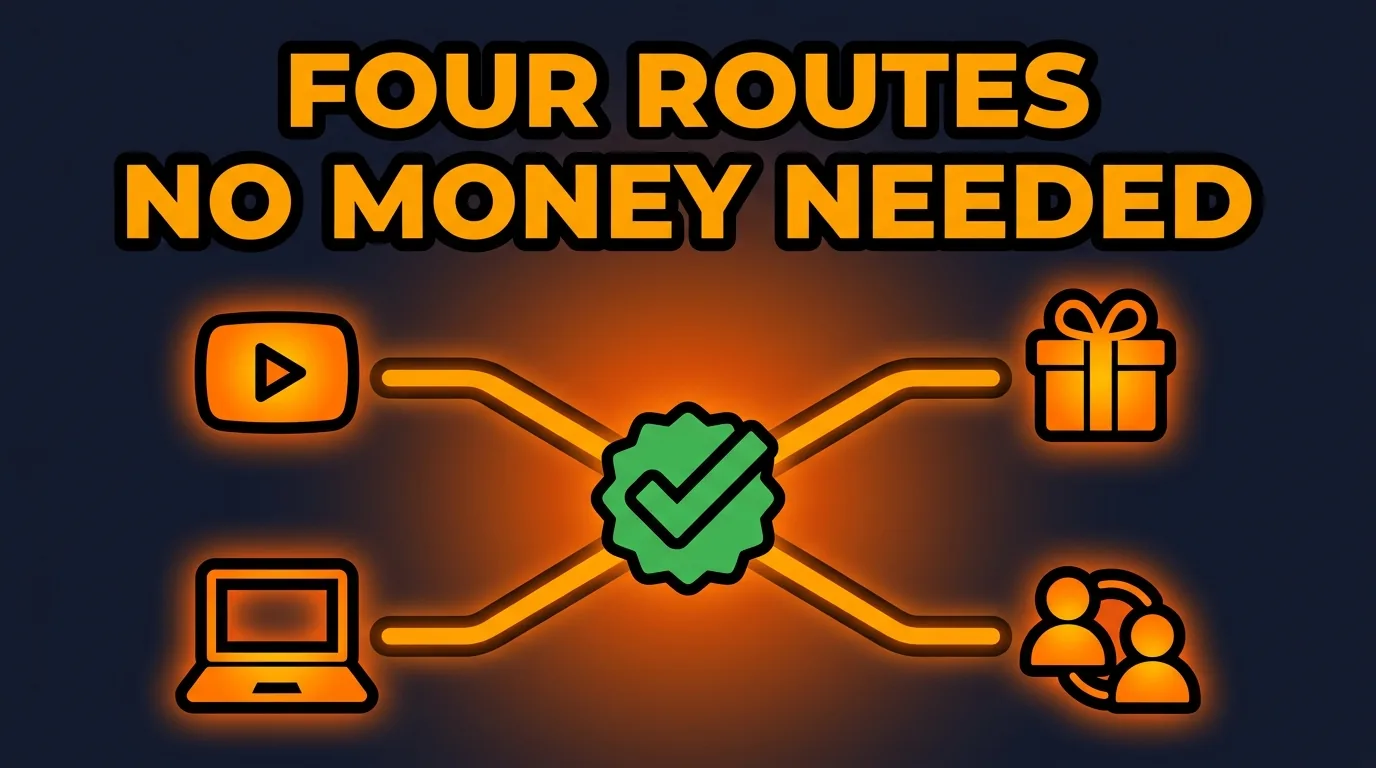
Learning how to earn money online for students without investment comes down to four routes, one habit and one expectation.
The routes are paid tasks, signup bonuses, micro-freelancing and referrals — none of which need capital. The habit is verifying before committing: check the platform, confirm no deposit is required, and make a small withdrawal early so the decision rests on evidence. The expectation is that the amounts are small, and that is true of every honest option in this category.
Used as money for otherwise-idle time, it works, and the downside is nearly zero. Used as an income plan, it does not — and no platform will change that arithmetic.
CatPTC partner plans carry capital at risk, and a published return is not a guarantee of future performance. The zero-capital routes described here involve no deposit and therefore no capital risk, but returns are small and depend on the tasks you complete. Cryptocurrency values can move between earning and withdrawal. Nothing in this article is financial advice.
Start earning on CatPTC today. No deposit and no card — a $1.50 signup bonus, task rewards published before you click, and six crypto payout options. Create your free account →
Start with a $1.50 bonus, not a deposit
No card, no deposit — task rewards published before you click, and six crypto payout options.
Create your free account →Registration takes under a minute and needs no card.