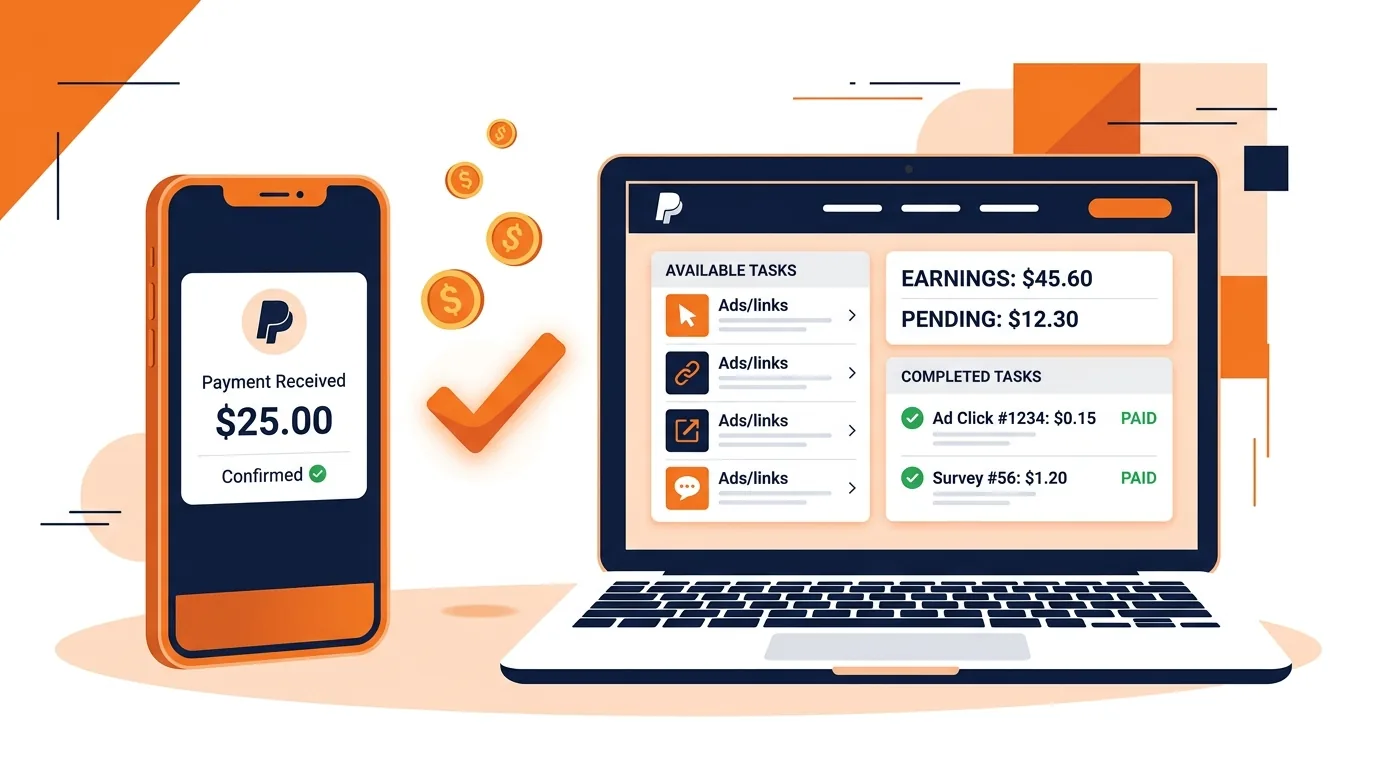
If you search for PTC sites that pay via PayPal, you will find two very different kinds of answer. The first is a long list of platforms that used to support PayPal and quietly dropped it. The second is a short list of sites that genuinely still send money to a PayPal balance in 2026. This guide separates the two, explains why the list keeps shrinking, and shows you how to verify PayPal support yourself before you spend a single hour clicking.
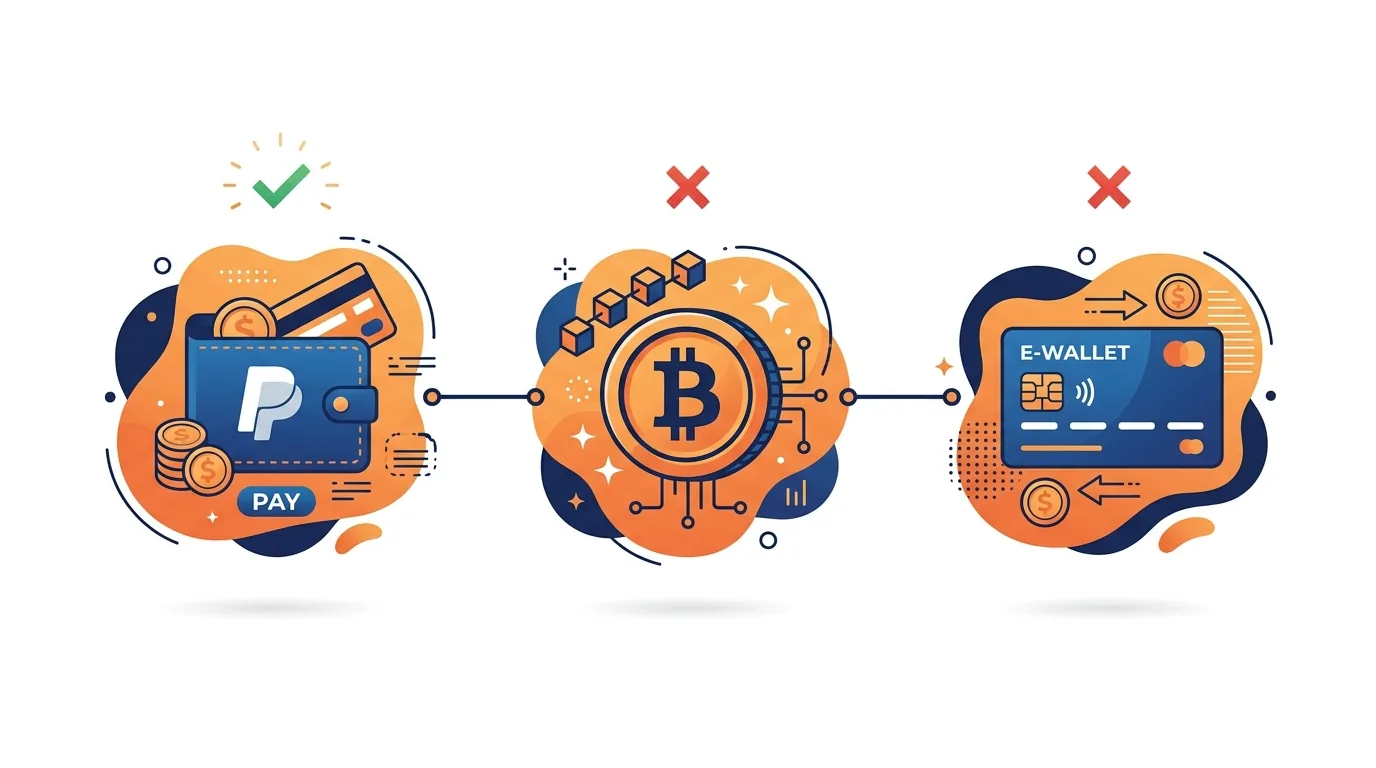
Only a minority of paid-to-click platforms still pay via PayPal in 2026. Most moved to crypto (USDT, Bitcoin) or processors like Payeer and Skrill because PayPal restricts reward-based and high-volume micro-payment accounts. If PayPal is non-negotiable for you, verify it on the platform's own withdrawal page — not on a review blog — before you join.
Why PayPal support keeps disappearing
PayPal is the payout method most people ask for, and the one most PTC platforms have abandoned. That is not a coincidence. Three forces push platforms away from it.
First, PayPal's acceptable-use rules. PayPal has historically been cautious about accounts that receive large volumes of tiny, reward-based payments. A PTC platform sending thousands of $2–$5 payouts a month looks, from PayPal's risk engine, a lot like the patterns it flags. Platforms that get limited or frozen once tend not to try again.
Second, the fee math. PayPal charges a per-transaction fee plus a percentage. On a $2 payout, that fee can eat a meaningful slice of the amount. Crypto networks, by contrast, charge a flat network fee that does not scale with the number of recipients in the same way, and processors like Payeer were built for exactly this micro-payout use case.
Third, geography. PayPal is not fully available in every country where PTC earning is popular. A platform serving Nigeria, Pakistan or Bangladesh cannot rely on PayPal as its primary rail, so it builds around crypto instead — and once crypto is the default, PayPal becomes an optional extra that is easy to drop.
The practical takeaway
Treat PayPal support as a bonus, not a baseline. If a platform offers it, great — but do not build your whole PTC plan around a payout method that the industry is steadily moving away from. Learn one crypto rail (USDT on TRON is the cheapest for small amounts) and you will never be stuck.
PTC sites that pay via PayPal compared
The table below reflects what each platform's own withdrawal page states. PayPal availability changes often, so confirm it on the live site before you commit time. Where a platform has dropped PayPal, the crypto alternative is listed so you can still get paid.
| Platform | PayPal in 2026? | Minimum payout | Best alternative rail |
|---|---|---|---|
| ySense | Yes | $10 (PayPal) | PayPal, Skrill, Payoneer |
| Swagbucks | Yes | $3–$25 (varies) | PayPal, gift cards |
| TimeBucks | Yes | $10 | PayPal, Bitcoin, Payeer |
| PrizeRebel | Yes | $5 (PayPal) | PayPal, gift cards |
| Neobux | No | $2 | Skrill, Neteller, crypto |
| ScarletClicks | No | $2 | Skrill, Payeer, Bitcoin |
| CatPTC | Crypto-first | Low, crypto | USDT, BTC and other coins |
Notice the pattern: the platforms that still support PayPal tend to be survey-and-task hybrids with larger average balances, where a $10 minimum is normal. The pure ad-clicking platforms, where balances are smaller and payouts more frequent, have almost all moved to crypto and processors.
How to verify PayPal support in 5 minutes
Review blogs go stale. Platform terms change. Here is the only method that stays accurate, and it takes five minutes.
Open the platform's own withdrawal or payment page
Not the homepage, not a review site — the actual cash-out page, usually under "Withdraw", "Cash out" or "Payment methods" in your account area or the public FAQ.
Look for PayPal in the live method list
If PayPal is not listed as a selectable option, it is not supported, regardless of what any article says. Screenshots in reviews are often years old.
Check the minimum and the fee for PayPal specifically
Some platforms list PayPal but set a much higher minimum for it than for crypto. A $25 PayPal minimum when crypto pays at $2 changes the decision entirely.
Search the platform's help centre for "PayPal"
If PayPal was removed, there is usually a notice explaining when and why. That tells you whether it is coming back or gone for good.
Test with the smallest possible withdrawal
Once you have a balance, cash out the minimum first. A small successful payout tells you more than any review ever will.

Want a payout rail that never gets dropped?CatPTC pays in crypto with no deposit required to earn — and a $1.50 signup bonus to test the flow.
Join free — no deposit →PayPal vs crypto: which payout should you choose?
If a platform offers both, the choice comes down to what you value more: familiarity or cost.
| Factor | PayPal | Crypto (USDT TRC20) |
|---|---|---|
| Familiarity | High | Medium |
| Fee on a small payout | Per-transaction + % | Flat, low network fee |
| Speed | Minutes to days | Minutes |
| Availability | Limited by country | Broad |
| Risk of removal | Higher | Lower |
For small, frequent PTC balances, crypto usually wins on cost. For people who want the money in a bank-linked account they already use, PayPal's familiarity is worth a small fee. The mistake is refusing to learn any crypto rail at all and then being unable to withdraw when a platform drops PayPal — which, as the table above shows, is the direction the whole category is moving.
If you do go the crypto route, the network you choose matters more than the coin. Our USDT TRC20 vs ERC20 guide explains why TRC20 is almost always the cheaper choice for small balances, and our safe withdrawal walkthrough covers the address checks that stop you losing a payout to a typo.
Whichever rail you pick, the same rule applies: the payout method is only as good as the platform behind it. Before you invest time in any site, run it through our scam-detection checklist and compare it against the best PTC sites of 2026.
PayPal alternatives that work like PayPal
If PayPal is not available on the platform you want to use, you are not out of options. Several processors were built for exactly the micro-payout use case that PayPal handles awkwardly, and they are widely supported across PTC platforms.
Payeer. Payeer is the closest thing to a PTC-native wallet. It supports small balances, low fees and instant internal transfers, and it is accepted by most of the older ad-clicking platforms. The trade-off is that it is a closed ecosystem — getting money out to a bank still requires a second step.
Skrill and Neteller. Both are established e-wallets with broad PTC support, including on Neobux and ScarletClicks. They are more bank-like than Payeer, with correspondingly higher verification requirements. Fees on small amounts are higher than crypto, but the familiarity is closer to PayPal.
Payoneer. Payoneer is the option to consider if you want a route to a real bank account and you are in a country where PayPal is limited. It is supported by some survey-and-task platforms, though less commonly by pure ad-click sites.
Gift cards. Several platforms let you redeem balances for Amazon or other gift cards. This is not cash, but for people who would spend the money on those retailers anyway, it can be the simplest and fee-free route — and it sidesteps both PayPal and crypto entirely.
Which alternative fits you?
Want the lowest fees on small amounts? Crypto (USDT TRC20). Want a familiar e-wallet? Skrill or Neteller. Want a route to a bank? Payoneer. Want zero fees and you shop online anyway? Gift cards. Pick one before you start earning, so you are never stuck with a balance you cannot move.
What to do if PayPal is not available in your country
PayPal's country coverage is uneven, and some of the largest PTC audiences — Nigeria, Pakistan, Bangladesh, Kenya — sit outside its full service area. If that is you, the practical path is straightforward.
First, accept that crypto is the default rail for your region and learn it properly. USDT on the TRON network is the standard choice: it is cheap, fast, and accepted by nearly every platform that pays in crypto. You do not need to understand blockchain deeply — you need a wallet address and the discipline to check it before every withdrawal.
Second, prefer platforms that publish crypto payouts as a first-class option rather than an afterthought. A platform whose primary rail is crypto will have lower minimums and faster processing than one that treats crypto as a fallback.
Third, verify the payout before you scale up. Cash out the smallest possible amount once, confirm it lands, and only then give the platform more of your time. This single habit prevents almost every "I clicked for a month and never got paid" story.
Our regional guides cover the specifics for the biggest markets: Nigeria and India both explain which rails actually reach users there, and the same logic applies across most of Asia and Africa.
The bottom line on PayPal and PTC
PayPal support in the PTC world is shrinking, not growing. The platforms that still offer it tend to be survey hybrids with higher minimums; the pure ad-clicking platforms have moved on. That does not make PayPal a bad choice — it makes it an unreliable one to depend on exclusively.
The sensible approach is to treat your payout method the way you treat the platform itself: verify it, test it small, and have a backup. Learn one crypto rail, keep a processor account as a second option, and you will be able to get paid wherever the industry moves next.
Frequently Asked Questions
Do any PTC sites still pay via PayPal in 2026?
Yes, but fewer than before. Survey-and-task hybrids such as ySense, Swagbucks, TimeBucks and PrizeRebel still list PayPal, usually with a $5–$10 minimum. Most pure ad-clicking platforms have moved to crypto and processors like Payeer and Skrill.
Why did most PTC sites stop using PayPal?
PayPal's acceptable-use rules are cautious about high volumes of tiny reward payments, and its per-transaction fees are heavy on small payouts. Many platforms also serve countries where PayPal is limited, so they build around crypto instead.
What is the minimum PayPal payout on PTC sites?
It varies widely. PrizeRebel starts around $5, ySense and TimeBucks around $10, and some platforms set a higher PayPal minimum than for crypto. Always check the live withdrawal page, because these numbers change.
Is crypto better than PayPal for PTC payouts?
For small, frequent balances, crypto is usually cheaper because the network fee is flat rather than a percentage. PayPal is more familiar and links to a bank account you already use. The safest approach is to learn one crypto rail so you are never stuck if PayPal is dropped.
How do I check if a PTC site really pays via PayPal?
Open the platform's own withdrawal page and look for PayPal in the live method list, check the PayPal-specific minimum and fee, and search the help centre for any removal notice. Then test with the smallest possible withdrawal before committing more time.
CatPTC partner plans carry capital at risk, and a published return is not a guarantee of future performance. Task earning involves no deposit and therefore no capital at risk. Earnings depend on the tasks you complete. Nothing in this article is financial advice.
See what each CatPTC task pays before you click
Every task shows its reward and timer up front — plus a $1.50 signup bonus to start with.
Create your free account →Registration takes under a minute and needs no card.

The CatPTC editorial team researches paid-to-click platforms hands-on — verifying payout terms, withdrawal records and trust signals before publishing. Every guide is fact-checked against live platform data and updated whenever terms change.