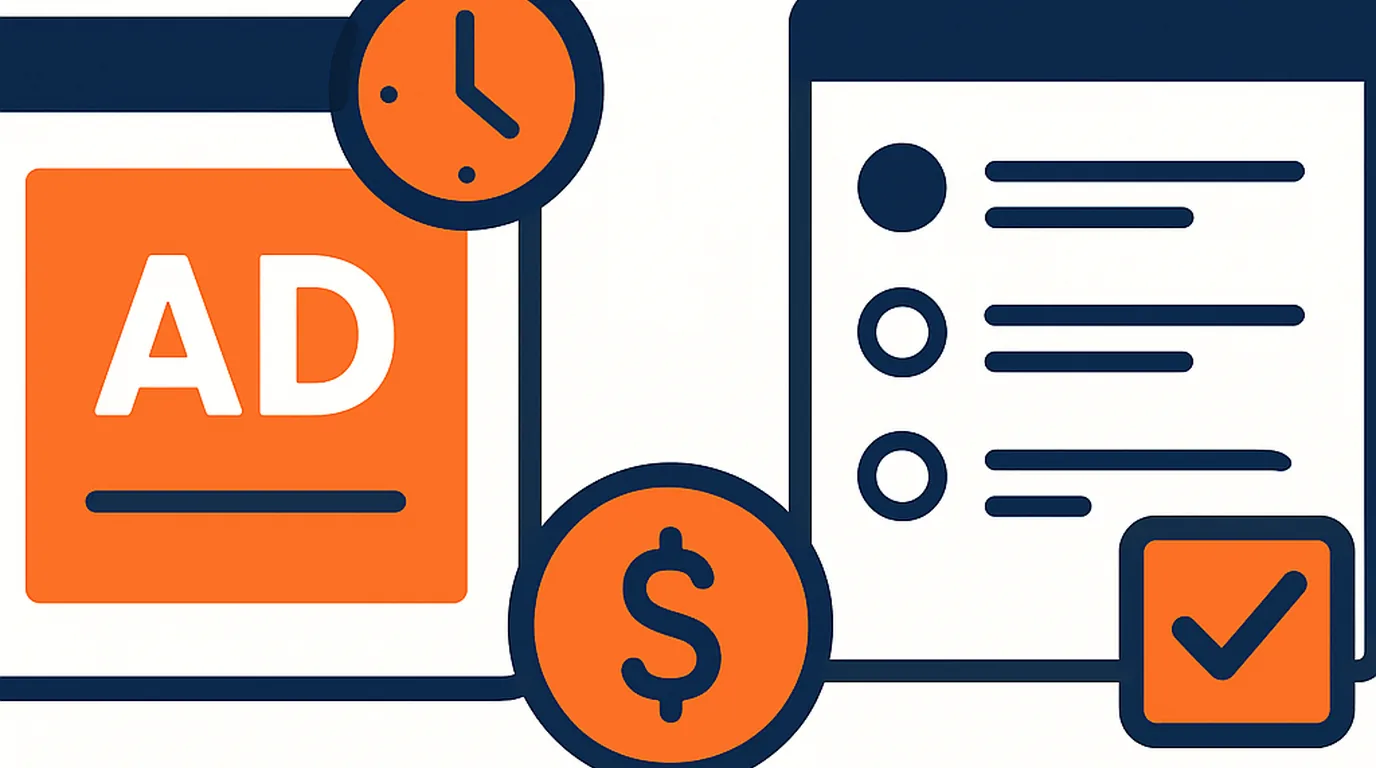
PTC and paid surveys are the two most common ways to earn small amounts online, and the comparison is more interesting than it looks. Surveys pay more per completion but screen you out constantly; PTC pays less but almost never fails. Which is better depends on whether you value the ceiling or the floor — and on how much you hate spending ten minutes on a survey only to be told you do not qualify.
Per completed task, surveys pay far more — often $0.50–$3 versus PTC's $0.02–$0.13. But surveys screen you out, sometimes after several minutes with nothing to show, and availability depends on your demographics. PTC is smaller but reliable. Surveys have the higher ceiling; PTC has the higher floor.
The core difference
The two models differ in one fundamental way, and it explains almost everything else.
A PTC task is guaranteed. You watch an ad for a fixed time and get paid. There is no qualification, no screening, and no way to fail. The reward is small but certain.
A survey is conditional. You answer screening questions first, and if you do not match the target demographic, you are screened out — often after a few minutes, usually for nothing. If you do qualify, the reward is much larger than a PTC click.
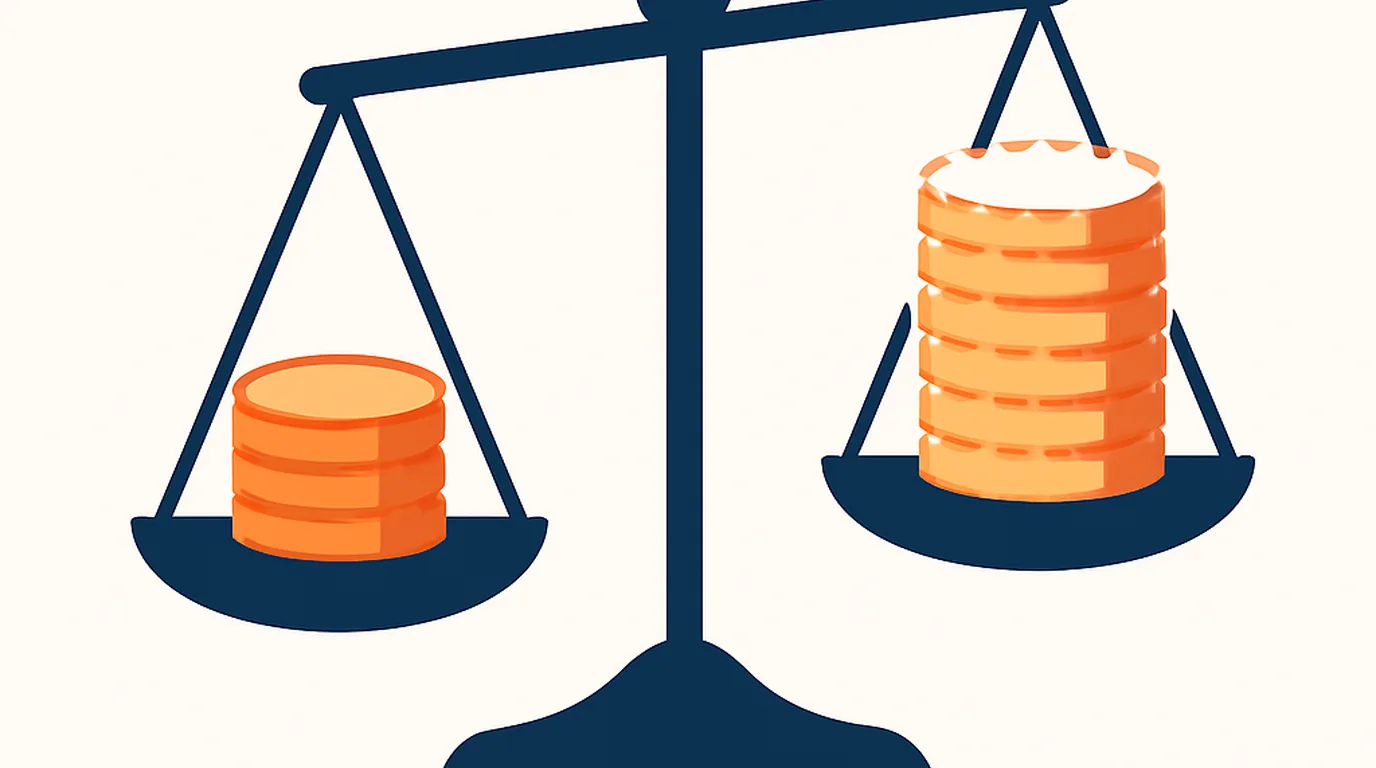
So the real comparison is small and certain versus larger and conditional. That framing explains why the two suit different people and different moments, and why the honest answer to "which pays more" is "it depends on how often you qualify".

The real per-hour comparison
Headline rates mislead in both directions, so the only fair measure is the effective hourly rate after accounting for screen-outs and wasted time.
| Task type | Typical reward | Time | Effective hourly |
|---|---|---|---|
| PTC ad click | $0.02–$0.13 | 10–15 sec | Up to ~$13 |
| Survey (completed) | $0.50–$3 | 10–20 min | $3–$9 |
| Survey (with screen-outs) | Varies | 10–20 min | Less once failures counted |
| Survey (high-demand demographic) | $1–$5 | 10–20 min | $6–$15 |
| Survey (low-demand demographic) | Few completions | 10–20 min | Often below PTC |
The top row is the surprise for most people. At the best observed PTC rate, a focused hour of clicking can return more than a mediocre survey hour — if enough high-rate tasks are available. The catch is availability: PTC task supply depends on advertiser demand that day. Our effective-rate guide and earnings breakdown show the arithmetic in detail.
Where surveys clearly win is on the upper end, and for users in high-demand demographics. A well-qualified survey can pay several dollars for fifteen minutes, which PTC can never match per task. The catch is that you only get that when you qualify — and screen-outs are common, especially for users in lower-demand countries.
Screen-outs: the hidden cost
This is the dimension that decides the comparison, and the one most guides ignore.
What a screen-out costs. You spend two to five minutes answering screening questions, then learn you do not qualify. You are paid nothing for that time. Do that three times in a row and an hour can vanish with no earnings at all.
Why it varies so much. Survey inventory is targeted. A user in a high-demand country and demographic may qualify often; a user elsewhere may be screened out repeatedly. The same platform can be excellent for one person and useless for another.
How PTC avoids it. PTC has no screening. Every task you start, you finish and get paid for. That certainty is worth more than it looks when survey screen-outs are frequent.
Why this matters for planning
If your goal is a reliable few dollars for spare time, PTC's certainty beats surveys' higher ceiling. If you are in a high-demand demographic and can tolerate screen-outs, surveys pay more. Most people are better served by a base plus a bonus than by picking one exclusively.
PTC vs surveys head to head
| Factor | PTC | Surveys |
|---|---|---|
| Guaranteed pay per task | Yes | No |
| Upper limit per task | Low | Higher |
| Screen-out risk | None | High |
| Effort required | Low | Moderate |
| Availability | Consistent | Demographic-dependent |
| Best fit | Base income for spare time | Bonus when you qualify |
Read the table as a profile rather than a scoreboard. PTC wins every reliability row; surveys win the upper-limit row. Neither wins everything, which is why the sensible strategy is to combine them.
One practical note on survey platforms: read the payment terms before you invest time. Some require a minimum balance before you can withdraw, and screen-outs are unpaid. The scam-detection checklist applies to survey platforms just as much as to PTC. If you want to keep the comparison anchored on free, no-deposit earning, our no-investment guide covers the PTC side.
Want a dependable base to build on?CatPTC pays in crypto, shows every task's reward before you click, and starts you with a $1.50 signup bonus — no deposit.
Join free — no deposit →How to combine both models
The most practical approach for most people is not to choose between PTC and surveys but to use each where it fits. Here is a simple way to structure it.
Use PTC as your always-available base
When you have a few spare minutes and low energy, PTC always has work and never screens you out. It is the reliable floor of your earning.
Try surveys when you have time to spare
Surveys pay more when you qualify, so attempt them when a screen-out would not frustrate you. Do not rely on them for a fixed target.
Track your qualification rate
Log how often you qualify over a week. If you qualify often, lean into surveys; if you are screened out constantly, PTC is the better base for you.
Withdraw the minimum on each platform early
Prove each platform pays before you commit weeks of effort. This applies to both models and is the single most important habit.
Keep expectations honest
Both are micro-earning models. Treat them as a way to turn spare time into a small amount, not as an income.
Run that structure for a week and you will know which model suits you better, with real numbers rather than someone else's estimate. For most people the answer is a PTC base plus survey bonuses, but the only way to be sure is to measure your own qualification rate.
The verdict for 2026
Surveys pay more per hour when you qualify and you are in a high-demand demographic; PTC pays something every time it is available, with almost no effort. If you had to pick one for a fixed goal with no tolerance for failure, PTC's certainty is worth more than surveys' variability. If you qualify often and can shrug off screen-outs, surveys' ceiling is higher.
The best answer, for almost everyone, is not to choose. Use a PTC platform as a reliable base that always has work and never screens you out, and dip into surveys when you have time to spare and a chance at a bigger reward. That combination captures the floor without giving up the ceiling. To compare the PTC side properly, see our best PTC sites of 2026 ranking.
Frequently Asked Questions
Which pays more, PTC sites or survey sites?
Per completed task, surveys pay far more, often $0.50 to $3 versus PTC's $0.02 to $0.13. But surveys screen you out, sometimes after several minutes with no pay, and availability depends on your demographics. Surveys have the higher ceiling; PTC has the higher floor.
Are surveys better than PTC for beginners?
Most beginners do best with a PTC base because it always has work and never screens you out, then adding surveys when they qualify. That captures PTC's reliability without giving up surveys' higher ceiling.
Why do I get screened out of surveys so often?
Survey inventory is targeted by country and demographic. If you do not match the target, you are screened out, often after a few minutes and with no pay. Users in high-demand demographics qualify far more often than others.
Can you earn a full-time income from PTC or surveys?
No. Both are micro-earning models bounded by advertiser and client budgets. They suit spare time and small amounts, not income replacement, and any source claiming otherwise is overselling.
Do survey sites require a deposit?
Legitimate ones do not. As with PTC, a genuine survey platform lets you earn and withdraw without depositing. If a site requires a deposit or an upgrade to release payouts, treat it with the same caution as any online offer.
CatPTC partner plans carry capital at risk, and a published return is not a guarantee of future performance. Task earning involves no deposit and therefore no capital at risk. Earnings depend on the tasks you complete. Nothing in this article is financial advice.
See what each CatPTC task pays before you click
Every task shows its reward and timer up front — plus a $1.50 signup bonus to start with.
Create your free account →Registration takes under a minute and needs no card.

The CatPTC editorial team researches paid-to-click platforms hands-on — verifying payout terms, withdrawal records and trust signals before publishing. Every guide is fact-checked against live platform data and updated whenever terms change.