The searches real PTC 2026 and best PTC sites 2026 overlap, but they are not identical. “Real” asks whether a platform’s model and payout claims can be verified. “Best” asks which option fits a person’s goal. A useful decision guide must answer both without turning a marketing list into a promise.
This article gives you a practical framework for choosing a PTC platform, including CatPTC. It focuses on evidence that can be checked today: task rules, free access, time value, wallet compatibility, support and the separation between task earning and any paid plan.
Decision ruleFirst verify that the platform is real enough to test: clear rules, free entry, consistent terms and a reachable support route. Then decide whether it is best for your goal by measuring task availability, effective hourly value and withdrawal fit.
Why “real” and “best” are different questions
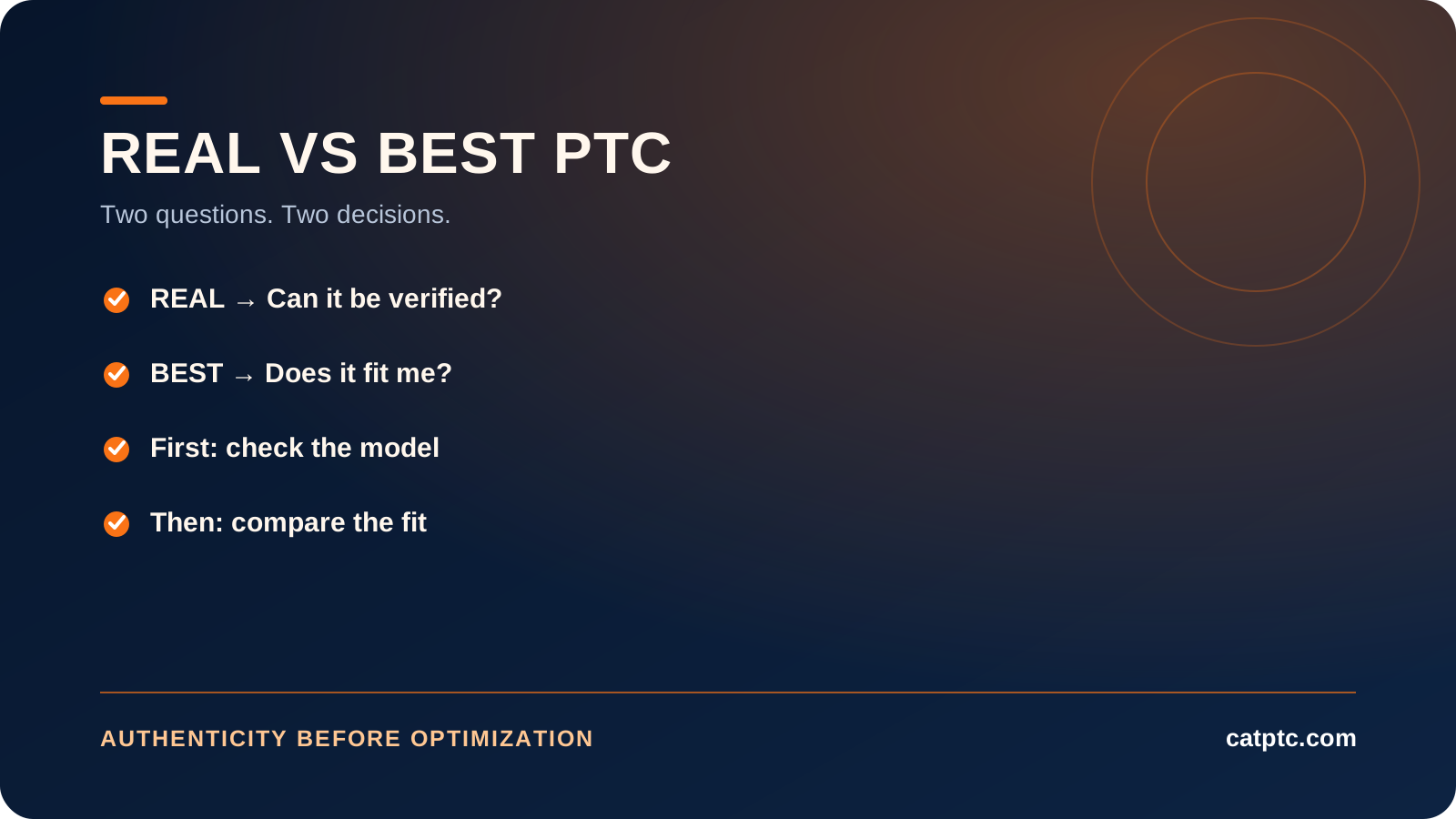
A real PTC platform may still be a poor fit. It might have few tasks in your country, a withdrawal network you cannot use or a time value below your minimum. A platform that looks “best” in a ranking may still be unsuitable if the ranking uses outdated rates or ignores fees. Separate the questions:
- Is it real? Can the model, terms, support and small payout be verified?
- Is it best for me? Does the current task supply, time value and payout method fit my needs?
For the first question, use our real PTC verification guide. For the second, use the best PTC comparison guide.
A decision matrix for PTC platforms
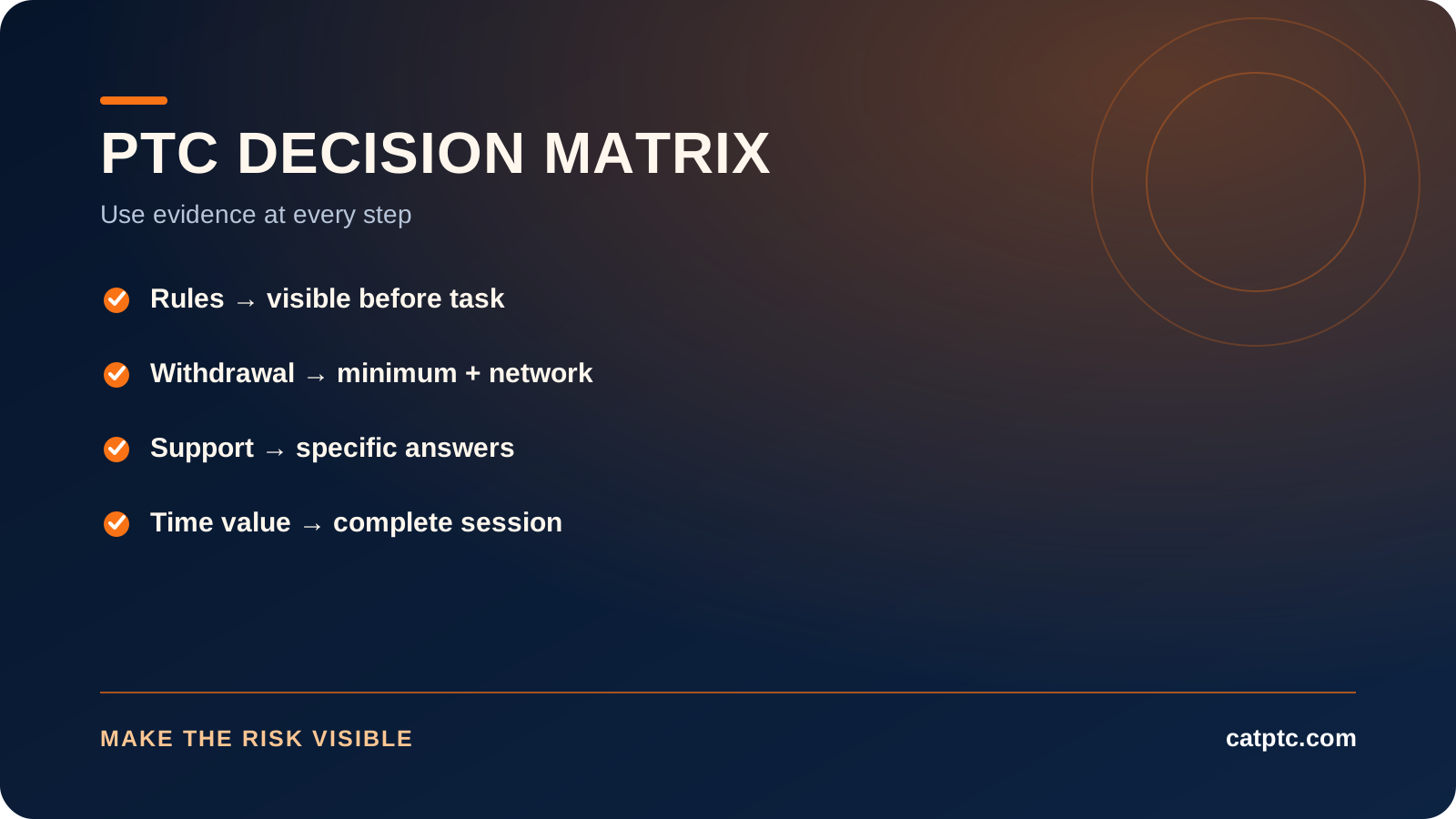
| Decision area | Minimum evidence | Better evidence | Stop signal |
|---|---|---|---|
| Advertising model | Tasks and advertiser actions are explained. | Reward and completion rule shown before task. | Income promise replaces explanation. |
| Free earning | Registration can be tested without payment. | Several free tasks can be completed and tracked. | Deposit required to unlock basic earning. |
| Withdrawals | Minimum, fee and network are published. | Small test reaches your controlled wallet. | Surprise payment to unlock funds. |
| Support | Visible contact route and terms. | Specific response linked to a rule. | Requests password, seed phrase or more money. |
| Time value | Reward is visible. | Three-session effective rate is tracked. | Waiting and failed tasks are hidden. |
Do not force every criterion into a single score. A platform can be strong for a short educational test but weak for a long daily routine. The decision should preserve your ability to stop.
How to evaluate CatPTC using the same evidence
CatPTC should be evaluated as a live platform, not as a claim in an article. Start with its public About, FAQ, terms and pricing. Then inspect the offers area to see whether the reward and completion rules are understandable before beginning.
For crypto users, confirm the asset and network shown at withdrawal. Read the safe crypto withdrawal guide before sending anything. For time value, use the PTC hourly-rate method and include the entire session—not only the seconds spent viewing an offer.
What this article does not claim
It does not claim CatPTC is the best platform for every person, guarantee income, certify future payouts or replace the live terms. It gives you a repeatable way to decide using current evidence.
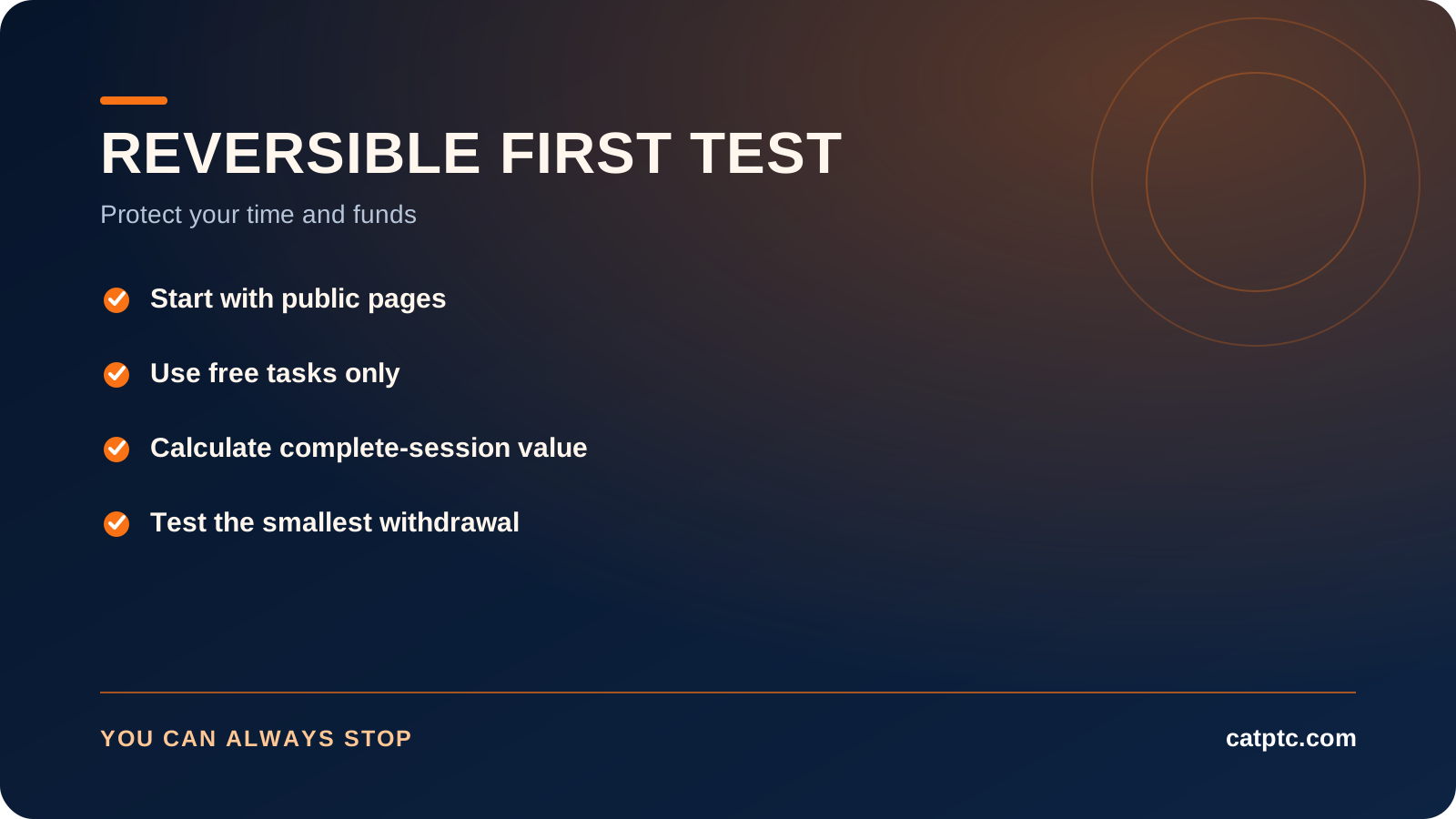
A reversible test before you choose
Start with public pages
Read the FAQ, terms, privacy page, pricing and withdrawal information before creating a routine.
Use free tasks only
Complete a small number of ordinary tasks. Record reward, duration, failed checks and waiting.
Calculate your complete-session value
Subtract fees and include login, loading and idle time. A headline reward is not an hourly rate.
Test the wallet route
Check the exact asset and network. Use a wallet you control and a small amount.
Review support quality
Ask one specific, low-risk question and compare the answer with the written terms.
Decide without sunk-cost pressure
If the model does not fit, leave. Do not add money to justify time already spent.
When should you reject a platform?
Reject or pause when there is mandatory payment before basic earning, unclear ownership of your data, inconsistent minimum withdrawals, a sudden rule change after qualification, impossible income math, or a request for a password, one-time code, seed phrase or private key. The FTC’s job-scam guidance is a useful reminder that paying to receive promised work is a major warning sign.
Also reject a platform that makes you recruit deposits as the main route to value. Referrals can be a normal marketing feature, but the core service should remain understandable without recruiting friends.
Questions to answer before creating a routine
Before you make a platform part of your weekly schedule, answer five questions in writing: What exactly am I doing? What is the reward before I start? How much time does a complete session take? What will I receive after fees and network costs? What is the easiest way to stop? If you cannot answer one of these, you are still researching—not choosing.
These questions are especially important when a site presents free tasks beside investment or partner plans. A task reward is compensation for a completed action; a paid plan exposes money to a different set of risks. Keep the two decisions separate. Read the risk disclosure, do not use essential funds and never let a promised return replace a clear explanation of the underlying activity.
| Question | Healthy evidence | Unhealthy answer |
|---|---|---|
| What am I doing? | Task and completion condition are specific. | Only vague “income” language. |
| What will I receive? | Reward, fee and network are shown. | Amount appears only after payment. |
| Can I leave? | Account can stop without pressure. | Urgency, countdowns or sunk-cost prompts. |
| Who can help? | Terms and support route are public. | Support asks for secrets or more money. |
A platform can pass the first test and still not be your best option. Your time, location, device and wallet determine the final fit. That is why this guide treats “real” as a gate and “best” as a personal comparison.
Keep your first decision small enough to reverse. You can always spend more time later if the evidence is consistent, but you cannot always recover a deposit or reverse a blockchain transfer. A cautious process is not negative about PTC; it is simply aligned with the information available at the moment of choice. Revisit the public rules whenever the product, fee or payout network changes.
That distinction matters for referrals too. A referral link or signup bonus can be useful, but it should never replace disclosure of the platform’s terms or create pressure to recruit people who do not understand the risk. Share information first, disclose any incentive, and let another person decide without urgency.
Keep this process separate from financial advice. A PTC task account is not a substitute for employment, savings or a regulated investment product. Use only time and money you can afford to lose, and consult an appropriately qualified adviser for personal financial decisions. The practical goal here is simply to make a better-informed platform choice.
In practice, this means revisiting the decision after your first withdrawal, after any fee change and whenever the platform adds a new plan. A good choice remains good because the evidence stays consistent—not because an old listicle still ranks it highly. Keep your notes current and protect the option to walk away.
Frequently asked questions
What is the difference between real PTC 2026 and best PTC sites 2026?
Real asks whether the model and payout can be verified. Best asks whether the platform fits your goals, time, location, wallet and risk tolerance.
Is CatPTC the best PTC site in 2026?
No universal ranking can prove that. Evaluate CatPTC against the same live evidence used for every other platform.
How long should a free test last?
Use several short sessions rather than one unusually good session, then make the smallest practical withdrawal if the rules allow.
Should I buy a paid plan before testing tasks?
No. Test ordinary free tasks and read the risk disclosure first. A paid plan is a separate capital-at-risk decision.
What makes a PTC comparison trustworthy?
Clear criteria, dates, sources, limitations, no guaranteed-income language and a separation between observed facts and opinion.
Conclusion
Start with “real,” then optimize for “best.” Verify the business model, rules, support and small withdrawal before comparing rates. After that, choose the platform whose current task supply, time value and crypto payout route fit your situation. That is a stronger 2026 strategy than trusting a generic top-ten list.