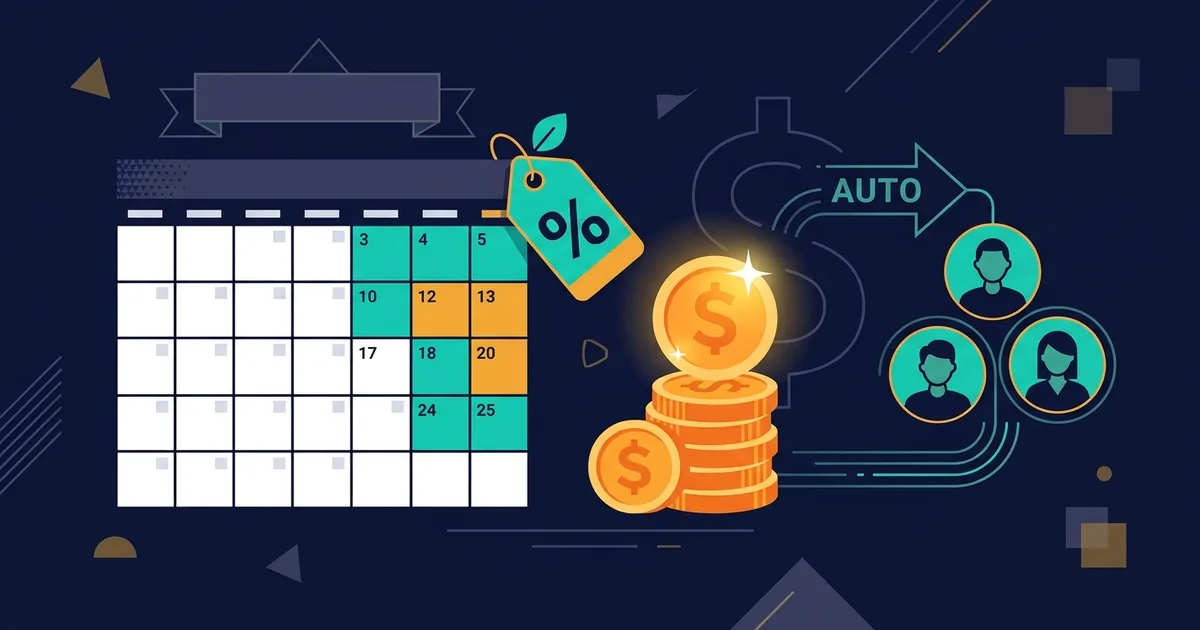
Autopay charges a reduced rate for a rented referral only on days that referral clicked. It saves money when referrals are active and does nothing when they are not, so it is a discount on activity rather than a discount on cost. Enable it only if you are tracking which referrals actually click.
How the discount works
Rented referrals are usually billed on a fixed schedule. Autopay replaces that with a per-day charge that applies only when the referral was active the previous day. On a fully active referral the daily charge is lower than the pro-rated fixed cost; on an inactive one you pay nothing but you also earn nothing.
The saving is real, but it is conditional. It rewards you for having active referrals and gives you no benefit for holding inactive ones, which is exactly the behaviour you want to encourage.
| Referral state | Autopay cost | Earnings | Net |
|---|---|---|---|
| Clicks daily | Reduced daily fee | Full | Best case |
| Clicks sometimes | Reduced on active days | Partial | Usually positive |
| Never clicks | Zero | Zero | Neutral, but no return |
Autopay is not a fix for bad referrals
It stops you paying for referrals that do not click. It does not make them click. Recycling is the tool for that.
Comparing autopay to fixed billing
Take a referral costing twenty cents a month on fixed billing. If autopay charges one cent per active day and the referral is active twenty days, you pay twenty cents, which is the same. If they are active ten days, you pay ten cents and save half.
The break-even is therefore the number of active days that makes the daily charge equal the monthly fee. Below that you save; above it you may pay more. Check the daily rate against the monthly rate before enabling it.
The inactivity trap
The trap is psychological. Autopay makes an inactive referral cost nothing, which makes it easy to keep holding it. But a referral that costs nothing and earns nothing is still occupying a slot and still represents capital you could redeploy.
The correct response to a referral that has not clicked in a week is to recycle it, not to enjoy the zero charge.
How to use autopay
Enable autopay if you track referral activity and recycle aggressively. Skip it if you do not, because the zero-cost illusion will keep dead referrals on your books.
Frequently Asked Questions
What is autopay on a PTC site?
A billing option that charges a reduced rate for a rented referral only on days that referral was active.
Is autopay cheaper than fixed billing?
Only if your referrals are active on fewer days than the break-even count. Compare the daily rate to the monthly rate.
Does autopay make inactive referrals free?
Yes, but they also earn nothing. A free inactive referral is still capital you could redeploy.
Should I enable autopay as a beginner?
Only if you track activity and recycle inactive referrals. Otherwise the zero charge encourages you to keep dead referrals.
Verdict
Autopay is a discount on activity, not a discount on cost. It rewards the behaviour you want.
Pair it with recycling. Without recycling, the zero charge is a trap.
Other ways to earn beyond this guide
Sponsored partner offers for readers who want a second income stream alongside PTC tasks. These links are paid placements — the partner sets the terms, the rewards and the payout.
See the sponsored offers →Opens a partner page in a new tab. This is not a CatPTC task and does not credit your CatPTC balance.
Test CatPTC with the $1.50 signup bonus
Registration costs nothing, needs no card, and new members get $1.50 credited instantly.
Create your free account →No deposit required to start. Withdrawals in BTC, ETH, LTC, DOGE or USDT.