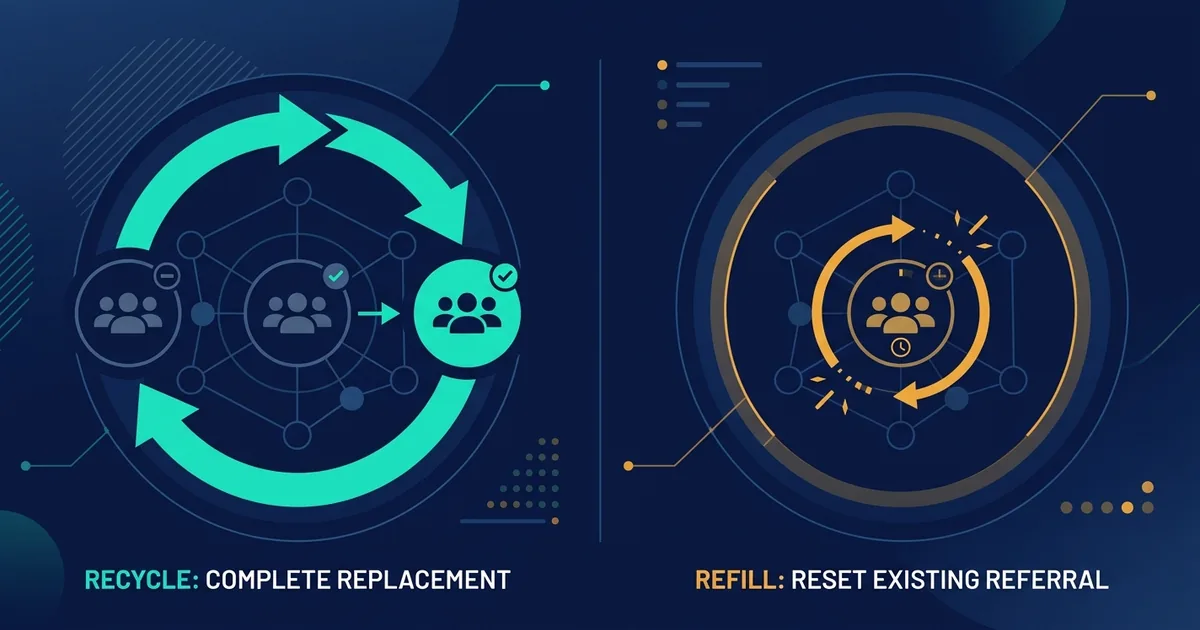
Recycle keeps the same referral slot and gives it a new chance at a lower cost; refill replaces the referral with a fresh one at a higher cost. Recycle is usually the better bet because it is cheaper and the odds of a replacement being active are not much better than the odds of a recycled one.
Two tools, two costs
Both tools address the same problem: a rented referral that has stopped clicking. Recycle resets the referral's activity record and keeps your slot. Refill returns the slot to the pool and assigns a different referral, usually for a larger fee.
The difference is cost and information. Recycle is cheaper and you keep whatever history you had. Refill is more expensive and gives you an unknown quantity.
| Tool | Cost | What changes | Best for |
|---|---|---|---|
| Recycle | Lower | Same slot, reset activity | Referral with some history |
| Refill | Higher | New referral entirely | Referral that never clicked |
Recycle first
Recycle is cheaper and usually sufficient. Refill only when a referral has never clicked at all, which suggests the assignment itself was bad.
The expected value question
If a recycled referral has a thirty percent chance of becoming active and a refilled one has a thirty-five percent chance, the extra five percent has to be worth the extra fee. On small referral values it usually is not.
That is the whole calculation. The tools are similar in outcome and different in price, so the cheaper one wins unless you have evidence the assignment was the problem.
The part that actually matters
Neither tool matters as much as the discipline of using one of them promptly. A referral that has not clicked in seven days is unlikely to start. Waiting three weeks to act costs more than choosing the wrong tool.
Set a rule: seven days inactive, recycle. Apply it without deliberation. The rule beats the optimisation.
Which to use
Recycle by default, refill only for referrals that never clicked, and act within a week either way. The timing matters more than the choice.
Frequently Asked Questions
What is the difference between refill and recycle?
Recycle resets the same referral slot at a lower cost. Refill replaces the referral with a new one at a higher cost.
Which is cheaper, refill or recycle?
Recycle. Refill usually carries a larger fee because it returns the slot to the pool.
How long should I wait before recycling?
About seven days of no clicks. Longer waits cost more than the choice of tool.
Can recycling make a referral active again?
Sometimes. The odds are modest, which is why the cheaper tool is usually the right default.
Verdict
Recycle is the default because it is cheaper and the outcome odds are similar.
The rule matters more than the tool: seven days inactive, act.
Other ways to earn beyond this guide
Sponsored partner offers for readers who want a second income stream alongside PTC tasks. These links are paid placements — the partner sets the terms, the rewards and the payout.
See the sponsored offers →Opens a partner page in a new tab. This is not a CatPTC task and does not credit your CatPTC balance.
Test CatPTC with the $1.50 signup bonus
Registration costs nothing, needs no card, and new members get $1.50 credited instantly.
Create your free account →No deposit required to start. Withdrawals in BTC, ETH, LTC, DOGE or USDT.