
Dogecoin has an unusual place in the paid-to-click world. It started as a joke, it has none of the technical sophistication of newer chains, and by any rational measure it should not be the coin that platforms choose for small payouts. Yet it is enormously popular with PTC users, and there is a practical reason for that which has nothing to do with the meme: for years it offered fast, cheap transfers that made small withdrawals viable.
That picture has shifted. Dogecoin's fee economics have changed, and in 2026 it is no longer the obvious cheapest choice it once was. This guide explains why DOGE became popular for PTC payouts, which types of platform offer it, how to set up a wallet safely, how the fees actually compare to Bitcoin and to stablecoins, and how to turn your DOGE into spendable money without losing a chunk of it along the way.
Dogecoin became popular for PTC payouts because it historically offered fast, low-cost transfers and a large, friendly user base. In 2026 it remains widely supported, but its fees are higher and less predictable than those of stablecoins on modern networks such as USDT on TRC20. DOGE is a reasonable payout option if a platform offers it, but for small, frequent withdrawals a low-fee stablecoin will usually leave you with more. Never use an exchange or wallet that requires a deposit to "unlock" your coins.
Why Dogecoin is popular for PTC payouts
The story starts with a technical detail that casual users rarely think about: block time. Dogecoin confirms a block roughly every minute, which is far quicker than Bitcoin's ten minutes, and for a long stretch of its history it charged a flat, very low fee per transaction. For a platform sending thousands of tiny payments — a dollar here, two dollars there — that combination was close to ideal. A payout that cost almost nothing to send and arrived within minutes made small withdrawals economically sensible.
The second reason is cultural. Dogecoin built an unusually welcoming community, and it became the entry coin for a generation of users who found Bitcoin intimidating and stablecoins confusing. PTC platforms follow their users, and when a large share of your audience already has a DOGE wallet, offering DOGE payouts removes a signup barrier. That network effect is self-reinforcing: users have DOGE wallets because platforms pay in DOGE, and platforms pay in DOGE because users have the wallets.
The third reason is volatility — and here the story turns. Dogecoin's price moves more than most established coins, which some users see as upside. They are paid in DOGE, the price rises, and their earnings are worth more in dollars than when they clicked. The same mechanism works in reverse, and a user who leaves a balance sitting through a downturn has genuinely lost value that a stablecoin balance would have preserved. Volatility is not a feature of a payout method; it is a risk attached to it.
The honest position on DOGE in 2026
Dogecoin is still a perfectly workable PTC payout rail, and if your chosen platform offers it, there is no reason to avoid it. But the era when DOGE was clearly the cheapest way to move small amounts has passed. Fees have risen and become less predictable, while stablecoins on modern networks now transfer for a few cents with near-instant finality. Take DOGE if it is offered, and convert promptly if you want dollar-denominated earnings.
PTC sites that pay in Dogecoin 2026
As with any payment rail, the useful question is not which brands offer DOGE today — that list changes monthly — but which types of platform do, and what that tells you about them.
| Platform type | Offers DOGE? | Typical minimum | What it signals |
|---|---|---|---|
| Modern crypto-first PTC | Commonly | Low ($1–$2) | Multi-coin support, user-friendly withdrawals |
| GPT / survey platforms | Often | $5–$10 | Broad payout menu including crypto |
| Offer-wall platforms | Sometimes | Low | Varies widely by provider |
| Legacy PTC | Rarely | Often high | Still on older rails |
The signal here is encouraging. Unlike rails such as Perfect Money, which skew towards older platforms, Dogecoin appears most often on modern crypto-first PTC sites — exactly the category we generally recommend, because those platforms have low minimums and process withdrawals quickly. Seeing DOGE alongside USDT and Bitcoin on a payout page is usually a sign of a platform that has thought about withdrawal experience rather than one that simply inherited a legacy processor.
One pattern worth noting: platforms that offer DOGE almost always offer USDT as well. When both are available, USDT on a low-fee network is usually the better choice for the reason set out below. DOGE is best treated as a secondary option — useful if you specifically want to hold the coin, or if a platform's DOGE payout has a lower minimum than its stablecoin option.
For the broader picture of how these rails stack up against each other, our comparison of PTC payment methods covers costs, minimums and speed across the category.
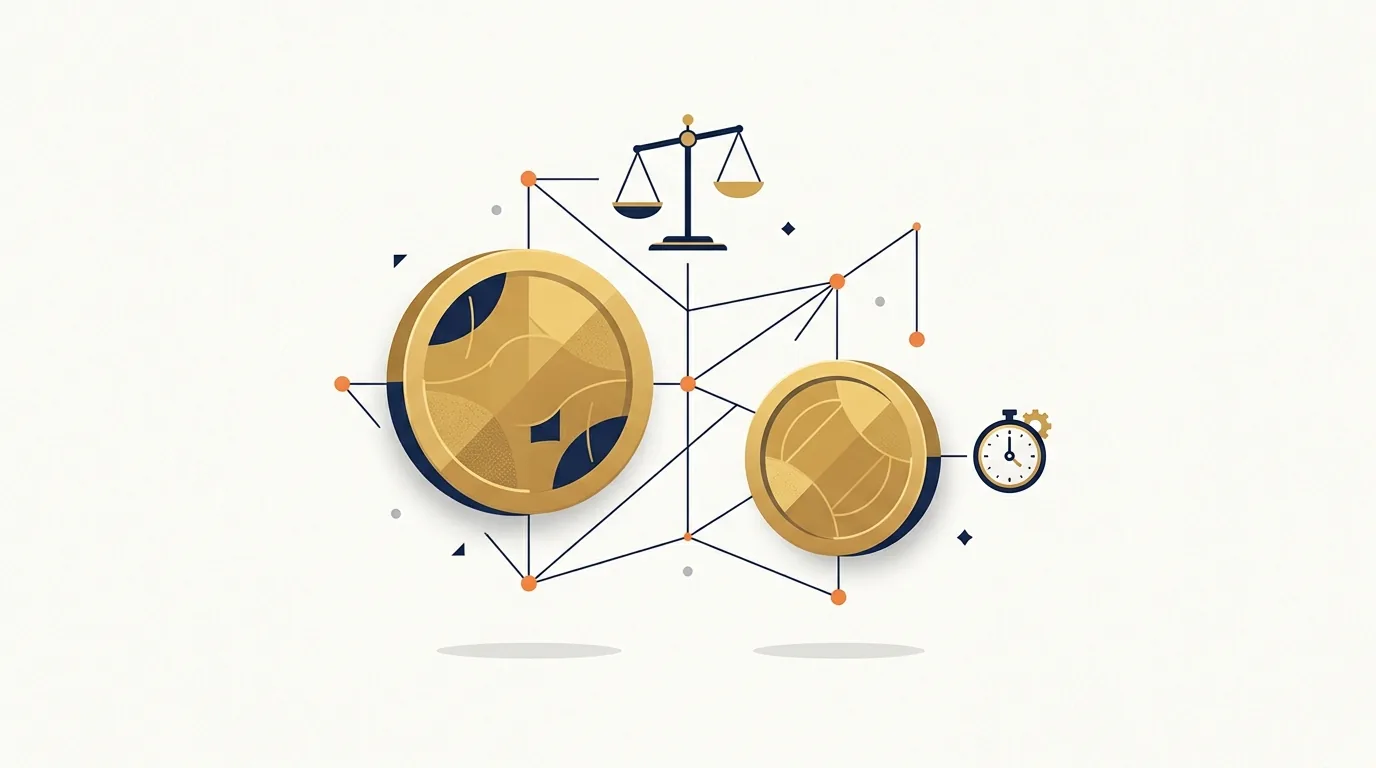
How to set up a DOGE wallet safely
Dogecoin wallets are easy to create, which is part of their appeal — and also where people get careless. The steps below take ten minutes and prevent the mistakes that cost people their balances.
- Choose the right kind of wallet. For small PTC earnings, a reputable mobile wallet or a well-known multi-coin wallet is sufficient. If you plan to accumulate a meaningful balance, consider a hardware wallet, since it keeps the private keys offline.
- Write down the recovery phrase on paper. Never photograph it, never store it in a note app, and never type it into a website. Anyone who has that phrase has your coins.
- Store the paper somewhere physically secure. A locked drawer in your home beats a cloud note by a wide margin. Consider a second copy in a separate location if the balance justifies it.
- Double-check the receiving address. Dogecoin addresses are long strings, and a single wrong character sends funds to an unrecoverable void. Copy and paste rather than typing, and verify the first and last few characters after pasting.
- Send a small test transaction first. When connecting a new wallet to a platform, withdraw the minimum amount and confirm it arrives before trusting a larger sum to the same address.
- Ignore anyone offering to "validate" or "unlock" your wallet. No legitimate service needs your recovery phrase, and any request for it is a theft attempt, without exception.
One practical note for PTC users: use a wallet that lets you set your own network fee and, ideally, shows you the current recommended fee. Dogecoin fees are no longer the reliably trivial fixed cost they once were, and being able to see what a transfer will cost before sending it prevents unpleasant surprises on a small payout.
Minimum payouts and network fees
This is where the honest comparison lives, because the headline "Dogecoin is cheap" claim no longer holds up the way it used to.
| Metric | Dogecoin (DOGE) | USDT (TRC20) | Bitcoin (BTC) |
|---|---|---|---|
| Typical platform minimum | Low ($1–$2) | Low ($1–$2) | Varies, often higher |
| Network fee character | Low but variable | Very low, near-fixed | High and demand-driven |
| Value stability | Volatile | Stable (USD-pegged) | Volatile |
| Confirmation speed | About 1 minute per block | Seconds | About 10 minutes per block |
| Best suited to | Mid-size payouts, DOGE holders | Small, frequent payouts | larger sums |
Read that table as a PTC user and the conclusion is uncomfortable but clear. Dogecoin's fee is low in absolute terms but it is variable, which matters when you are withdrawing two dollars: a fee that triples because the network is busy can consume a meaningful share of a small payout. USDT on TRC20 charges a very low, essentially fixed amount, so the proportion you keep stays predictable. Bitcoin is the worst of the three for small amounts, because its fees can exceed the payout itself.
What "variable" means in practice
A variable fee is not a problem you can plan around on small amounts, because the fee is set by network conditions at the moment you withdraw rather than by the platform. If you are withdrawing frequently — which is exactly what the low-minimum strategy encourages — a stablecoin with a near-fixed fee will consistently leave you with more than DOGE will.
None of this makes DOGE a bad choice. If a platform's DOGE minimum is lower than its stablecoin minimum, or if you want to hold DOGE deliberately, it is a perfectly sensible rail. The mistake is assuming it is automatically the cheapest option because it used to be.
Dogecoin vs Bitcoin for PTC withdrawals
Comparing the two original coins side by side is instructive, because they have diverged sharply on the dimension that matters for PTC payouts.
| Factor | Dogecoin | Bitcoin | Winner for PTC |
|---|---|---|---|
| Block time | ~1 minute | ~10 minutes | Dogecoin |
| Fee on a small transfer | Low but variable | Often high | Dogecoin |
| Exchange support | Broad | Universal | Bitcoin |
| Liquidity and spread | Good | Best | Bitcoin |
| Sensible use case | Small/mid payouts | Larger accumulations | Depends |
Dogecoin wins the PTC comparison on both speed and cost, and it is not particularly close. A payment that arrives in a minute for a low fee is simply better suited to click-level earnings than one that takes ten minutes and may cost several dollars. That is the original reason DOGE became popular, and it remains valid.
Where Bitcoin still wins is in universality and liquidity. Every exchange lists it, spreads are tightest, and selling a large amount is effortless. If you are accumulating rather than withdrawing frequently, that matters more than a one-minute block time. The practical rule: use DOGE for small, frequent payouts, and consider Bitcoin only when the amount has grown large enough that the fee becomes trivial and liquidity starts to count.
If you are weighing the rails more broadly, our guide to PTC sites that pay in Bitcoin covers the BTC side in detail, and our USDT payout guide explains why stablecoins have become the default for small withdrawals.
Converting DOGE to cash
Receiving DOGE is only half the process; the other half is turning it into money you can spend. There are three routes, and the right one depends on how much you have and how often you withdraw.
Route one: hold it. Perfectly valid if you believe in DOGE and are comfortable with the volatility. Understand what you are accepting, though: your dollar earnings are now exposure to a single, volatile asset, and a price fall can erase months of clicking. If you would not buy DOGE with your own money, do not hold your earnings in it by default.
Route two: sell on a centralised exchange. This is the standard route. Send DOGE from your wallet to an exchange you trust, sell it for your local currency or for a stablecoin, and withdraw. Costs are the trading spread plus a withdrawal fee. It is reliable, well-trodden and easy to record for tax purposes.
Route three: peer-to-peer or a swap service. Sometimes faster and cheaper, particularly in markets where exchange access is limited, but it introduces counterparty risk. If you use this route, choose a service with a long public history and treat every review on Trustpilot as a data point rather than a verdict.
Whichever route you choose, keep a record of the conversion: the amount, the date and the rate. If your earnings are taxable where you live, the value at the moment of receipt is what usually matters, and reconstructing that later is far harder than logging it at the time.
Step-by-step withdrawal guide
Here is the whole sequence, in order, from platform to spendable money.
- Confirm your wallet address in the platform settings. Paste it in, then check the first and last six characters match your wallet exactly. DOGE payments are irreversible.
- Send a minimum test withdrawal first. Prove the address works before you commit a larger balance to it.
- Check the network fee before confirming. If the fee looks unusually high relative to your payout, wait. DOGE fees fluctuate, and a short delay can meaningfully change what you keep.
- Wait for confirmation in your own wallet. Do not rely on a notification email. Open the wallet and verify the balance changed.
- Decide whether to hold or convert, and act deliberately. If you are converting, do it promptly rather than leaving the decision open for weeks.
- Record the transaction. Date, amount, fee and conversion rate, in one place.
The rule that applies to every payout rail
Whatever coin or wallet a platform offers, the underlying test never changes: a legitimate PTC site never asks you to pay before you can earn. If a site demands a deposit, an activation fee or a "wallet verification" payment before withdrawal — in DOGE or anything else — it is a scam. Regulators describe these structures consistently; the SEC's investor education pages on advance-fee and Ponzi schemes are a plain-language reference. See also our guide on how to spot a scam PTC site.
For the wider context, our comparison of PTC payment methods covers every major rail, and if you are still choosing a platform, our guide to the best PTC sites of 2026 ranks the options by rates and minimums.
The honest summary: Dogecoin earned its popularity for good reasons — speed and low cost — and it remains a workable PTC payout rail. But in 2026 the fee advantage has narrowed, and a low-fee stablecoin is usually the smarter default for small, frequent withdrawals. Use DOGE when it suits you, set up the wallet carefully, and convert promptly if what you wanted was dollars.
Frequently Asked Questions
Which PTC sites pay in Dogecoin in 2026?
Dogecoin is most often offered by modern crypto-first PTC platforms, and frequently by GPT and survey platforms that support a wide payout menu. Unlike some rails that skew towards older sites, DOGE appears most on newer platforms with low minimums — usually alongside USDT and Bitcoin. Legacy PTC brands rarely offer it.
Is Dogecoin still cheap for PTC withdrawals in 2026?
Not as cheap as it once was. Dogecoin's fee is low in absolute terms but it is variable, set by network conditions at the moment you withdraw rather than by the platform. On small payouts that variability matters, because a fee that rises can consume a meaningful share of the amount. USDT on TRC20 charges a very low, near-fixed fee, which makes the proportion you keep more predictable.
How do I set up a Dogecoin wallet safely?
Use a reputable mobile or multi-coin wallet for small earnings, or a hardware wallet if you plan to accumulate. Write the recovery phrase on paper and store it physically, never as a photo or a cloud note. Copy and paste the receiving address and verify the first and last characters, send a minimum test withdrawal first, and never share your recovery phrase with anyone — no legitimate service needs it.
Is Dogecoin better than Bitcoin for PTC payouts?
For PTC payouts, yes. Dogecoin confirms a block roughly every minute against Bitcoin's ten, and its fee on a small transfer is far lower. Bitcoin wins on universality and liquidity, which matters if you are accumulating a large amount rather than withdrawing frequently. The practical rule is to use DOGE for small, frequent payouts and Bitcoin only once the amount has grown enough that fees become trivial.
How do I convert my Dogecoin PTC earnings into cash?
The standard route is to send DOGE from your wallet to a centralised exchange you trust, sell it for your local currency or a stablecoin, then withdraw. Costs are the trading spread plus a withdrawal fee. Peer-to-peer and swap services can be faster or cheaper but add counterparty risk, so use one with a long public track record. Keep a record of the amount, date and rate for tax purposes.
CatPTC partner plans carry capital at risk, and a published return is not a guarantee of future performance. Task earning involves no deposit and therefore no capital at risk. Earnings depend on the tasks you complete. Nothing in this article is financial advice.
See what each CatPTC task pays before you click
Every task shows its reward and timer up front — plus a $1.50 signup bonus to start with.
Create your free account →Registration takes under a minute and needs no card.

The CatPTC editorial team researches paid-to-click platforms hands-on — verifying payout terms, withdrawal records and trust signals before publishing. Every guide is fact-checked against live platform data and updated whenever terms change.