
Litecoin occupies a quiet, useful place in the world of small online payouts. It has never generated the excitement of Dogecoin or the institutional weight of Bitcoin, and that is precisely why it works so well for paid-to-click earnings. LTC was designed as a lighter, faster version of Bitcoin — quicker blocks, lower fees, a mature and unglamorous network — and those are exactly the qualities you want when you are withdrawing two dollars at a time.
For a PTC user, Litecoin is one of the more sensible payout rails available in 2026. It is widely supported, it settles quickly, its fees are modest and reasonably predictable, and it does not swing wildly in value the way some smaller coins do. This guide explains why LTC suits small withdrawals, which platforms offer it, how to set up a wallet, how it compares to the other crypto options, and how to convert it into money you can spend.
Litecoin is one of the better crypto rails for small PTC payouts: it confirms in about two and a half minutes, fees are low and fairly stable, and it is supported by most modern crypto-first platforms. It is less volatile than many altcoins, though not stable like a dollar-pegged token. For the very smallest and most frequent withdrawals, a low-fee stablecoin such as USDT on TRC20 still has the edge; for everything above that, LTC is a solid, predictable choice.
Why Litecoin suits small PTC payouts
Litecoin was created in 2011 as a fork of Bitcoin, and its design brief was essentially "the same thing, but lighter". Blocks are generated roughly every two and a half minutes rather than ten, and the network has historically kept transaction fees low because the block space is less contested. It was never a marketing-led project, which is why it has a reputation for being dull — and dull is a virtue in a payout rail.
The practical consequence for PTC users is that LTC hits a sweet spot that few other coins occupy. It is fast enough that a withdrawal arrives while you are still at your desk, which matters for the low-minimum, withdraw-early strategy we recommend. It is cheap enough that the fee does not consume a small payout, unlike Bitcoin. And it is established enough that basically every exchange and wallet supports it, so converting to cash is straightforward.
The second quality worth appreciating is stability — not price stability in the sense a stablecoin offers, but the absence of the wild swings that plague smaller altcoins. Litecoin's price moves, as any crypto does, and you should never treat an LTC balance as equivalent to dollars. But its liquidity is deep and its market is mature, which means you are unlikely to face the situation where a coin falls sharply between withdrawal and sale, or where you cannot find a buyer at a fair spread.
The one thing Litecoin does not solve
A crypto payout rail determines how cheaply and quickly your money arrives — it does not change how much you earn. The effective rate across the PTC category rarely exceeds about twenty cents a minute, regardless of what coin you are paid in. Choosing LTC improves your exit, not your income. Anyone promising that a particular coin will increase your earnings is selling something.
PTC sites that pay in Litecoin 2026
The brands offering LTC change constantly, so the durable question is which categories of platform do, and what that tells you about their withdrawal experience.
| Platform type | Offers LTC? | Typical minimum | What it signals |
|---|---|---|---|
| Modern crypto-first PTC | Commonly | Low ($1–$2) | Multi-coin payouts, quick processing |
| GPT / survey platforms | Often | $5–$10 | Broad crypto menu alongside PayPal |
| Offer-wall platforms | Sometimes | Low | Depends on the underlying provider |
| Legacy PTC | Rarely | Often high | Stuck on older payout rails |
Litecoin appears most often on modern, crypto-first platforms — the category worth prioritising anyway, because those platforms combine low minimums with fast processing. Seeing LTC on a payout page, usually alongside USDT, Bitcoin and DOGE, is a good sign: it means the platform has built multi-coin withdrawals rather than inheriting a single legacy processor.
Where a platform offers both LTC and a stablecoin, the choice comes down to what you intend to do with the money. If you will convert to local currency promptly, either works, and LTC's speed makes it pleasant. If you want to leave the balance sitting for a while without worrying about price movement, a dollar-pegged stablecoin is the safer place. Neither choice is wrong; they serve different intentions.
For a full accounting of every major rail's costs and minimums, our comparison of PTC payment methods puts them side by side.

Setting up a Litecoin wallet
Getting a wallet running takes minutes, and doing it properly removes the risks that catch people out. The steps are short, but the details matter because crypto transfers cannot be reversed.
- Choose a wallet suited to your balance. For small PTC earnings, a well-reviewed mobile wallet or a mainstream multi-coin wallet is more than sufficient. If you intend to accumulate meaningfully, look at a hardware wallet that keeps keys offline.
- Get a receiving address and store it carefully. Litecoin addresses begin with an "L" or, on newer address formats, other prefixes. Copy and paste rather than typing, and after pasting, check the first and last characters against your wallet.
- Back up the recovery phrase on paper. Write it down by hand, store it physically, and never keep it as a photo, an email or a cloud note. Anyone holding that phrase controls your coins.
- Consider a SegWit address to reduce fees. Many wallets support native SegWit addresses, which can meaningfully lower transaction costs. If your platform accepts them, use one.
- Send a minimum test withdrawal first. Before you commit a larger balance, prove the address works by withdrawing the smallest amount the platform allows.
- Never enter your recovery phrase anywhere online. No wallet, exchange or support agent needs it. Any request for it — however convincing the branding — is a theft attempt.
One habit worth building early: if you use a mobile wallet, enable whatever app-level lock and biometric protection it offers. The threat to a small crypto balance is rarely a sophisticated attacker; it is a lost or borrowed phone.
Minimums, fees and speed
Here is how Litecoin actually performs on the dimensions that matter for a PTC user, measured against the other rails you will encounter.
| Metric | Litecoin (LTC) | USDT (TRC20) | Dogecoin (DOGE) | Bitcoin (BTC) |
|---|---|---|---|---|
| Block time | ~2.5 minutes | Seconds | ~1 minute | ~10 minutes |
| Fee character | Low, fairly stable | Very low, near-fixed | Low, variable | High, demand-driven |
| Volatility | Moderate | Stable | High | Moderate |
| Typical platform minimum | Low ($1–$2) | Low ($1–$2) | Low ($1–$2) | Varies, often higher |
| Exchange support | Broad | Broad | Broad | Universal |
The standout property is the combination of a low fee with reasonable predictability. Where Dogecoin's fee can spike when the network is busy, and Bitcoin's fee is genuinely unpredictable on small amounts, Litecoin tends to stay in a modest band. That predictability is what makes it comfortable for repeated small withdrawals: you can estimate what you will keep before you click withdraw, rather than discovering the cost afterwards.
On speed, Litecoin sits comfortably. Two and a half minutes per block is slower than a stablecoin on a modern network, but far quicker than Bitcoin, and fast enough that a withdrawal typically confirms while you are still using your computer. For a payment of a few dollars, that is entirely adequate.
Watch the exchange, not the network
The network fee is only part of your total cost. Converting LTC to cash involves a trading spread on the exchange, plus a withdrawal fee to get the money to your bank. Those charges are frequently larger than the network fee itself, so compare exchanges on total cost rather than on the advertised network fee alone.
Litecoin vs other crypto payouts
Putting LTC beside the alternatives makes its position clear.
Litecoin vs stablecoins (USDT on TRC20). The stablecoin wins on two counts: its value does not move, and its fee is essentially fixed and extremely low. That makes USDT the better default for the smallest and most frequent withdrawals, and for balances you intend to leave sitting. Litecoin's advantage is that it is a genuine coin rather than an issuer-backed token, which matters to users who prefer to hold an asset that does not depend on a central issuer's promises. If you are converting promptly, the difference is small.
Litecoin vs Dogecoin. These two are close competitors for the "small payout" role. DOGE is marginally faster and its community is larger, but its fees have become more variable. Litecoin's fee behaviour is steadier and its price is generally less erratic. For a user who wants predictability rather than excitement, LTC is the more comfortable choice.
Litecoin vs Bitcoin. There is no serious contest for PTC amounts. Bitcoin is slower and considerably more expensive to move in small quantities, and its fee can exceed the payout entirely. Bitcoin's advantages — universal acceptance and the deepest liquidity — only begin to matter when the sum is large enough that fees are trivial in proportion. For click-level earnings, Litecoin is the better rail by a wide margin.
If you are working through the crypto options, our guides to Bitcoin payouts and USDT payouts cover the other two rails in depth.
Cashing out your LTC
Receiving Litecoin is straightforward; turning it into spendable money takes one more deliberate step, and how you do it depends on how much you have accumulated.
Option one: hold it. Reasonable if you want exposure to LTC and accept the volatility. Be clear-eyed about what you are doing, though: your dollar earnings have become a position in a single asset, and a price decline can undo weeks of clicking. If you would not buy Litecoin with your own money, you probably should not hold your earnings in it by default either.
Option two: sell on a centralised exchange. The standard route, and the one we recommend for most users. Send LTC from your wallet to an exchange you trust, sell it for your local currency or a stablecoin, and withdraw to your bank. Your costs are the trading spread plus a withdrawal fee. It is reliable, well documented and simple to record for tax purposes.
Option three: a swap or peer-to-peer service. Sometimes quicker or cheaper, especially where exchange access is awkward, but it adds a counterparty. If you take this route, pick a service with a long public track record and read its critical reviews on Trustpilot rather than its marketing.
Whichever route you take, log the conversion — amount, date and rate. If your earnings are taxable where you live, the value at the moment you received them is usually what matters, and reconstructing it months later is far harder than writing it down now.
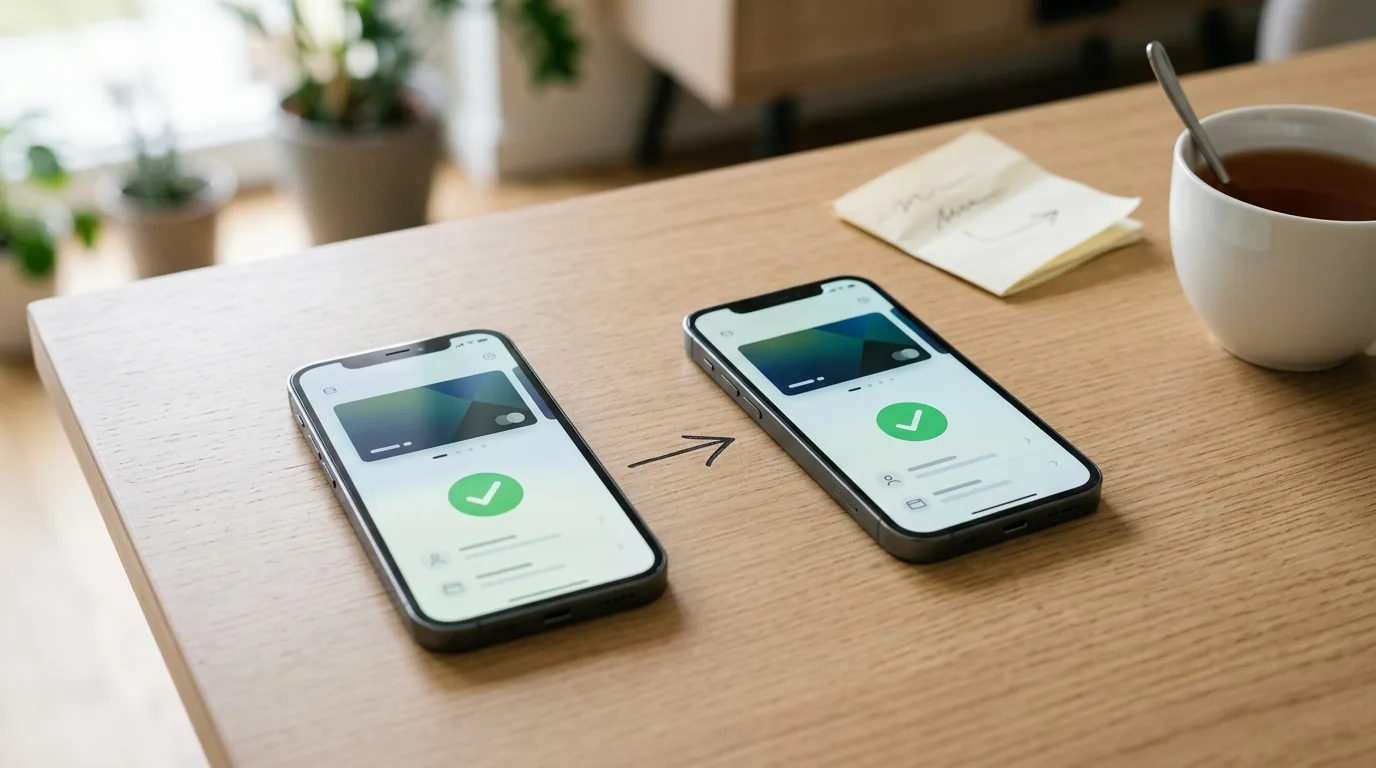
Withdrawal walkthrough
The full sequence, in order, from a platform balance to spendable money.
- Enter and verify your wallet address. Paste it into the platform's payout settings, then compare the first and last six characters against your wallet. LTC transfers cannot be reversed.
- Send a minimum test withdrawal. Confirm the address and the rail work before entrusting a larger balance to it.
- Check the fee before confirming. If it looks unusually high relative to your payout, consider waiting; Litecoin fees do vary, even if less dramatically than Bitcoin's.
- Wait for the confirmation in your own wallet. Open the wallet and check the balance rather than trusting an email notification.
- Decide deliberately whether to hold or convert. Make the decision rather than letting it drift, and act within a day or two if you intend to convert.
- Record the transaction. Amount, fee, date and conversion rate in one place.
The rule that applies to every rail
A crypto payout method does not change the fundamental test: a legitimate PTC site never asks you to pay before you can earn. If a platform demands a deposit, an activation fee or a "wallet verification" payment before withdrawal — in LTC or any other coin — it is a scam. Regulators describe these structures consistently; the SEC's investor education pages on advance-fee and Ponzi schemes are a reliable plain-language reference. See also our guide on how to spot a scam PTC site.
For the wider picture, our comparison of PTC payment methods covers every rail, and our guide to the best PTC sites of 2026 ranks platforms by their rates and minimums.
The honest summary: Litecoin is one of the more sensible crypto payouts a PTC user can choose. It is quick, its fees are modest and fairly predictable, and it is supported almost everywhere. It will not make you earn more — nothing will — but it makes getting your money out cheap and uneventful, which is exactly what a payout rail should do.
Frequently Asked Questions
Which PTC sites pay in Litecoin in 2026?
Litecoin is offered mainly by modern crypto-first PTC platforms and, often, by GPT and survey platforms that run a broad crypto payout menu. It is usually listed alongside USDT, Bitcoin and Dogecoin. Legacy PTC brands rarely support it. Seeing LTC on a payout page is generally a good sign, because it indicates a platform that has built proper multi-coin withdrawals rather than inheriting a legacy processor.
Is Litecoin good for small PTC withdrawals?
Yes. Litecoin confirms in roughly two and a half minutes, its fees are low and fairly stable compared with Bitcoin or Dogecoin, and it is supported by nearly every exchange, so converting to cash is easy. It is not price-stable the way a dollar-pegged token is, so if you plan to leave a balance sitting without converting, a stablecoin like USDT on TRC20 is the safer place.
How long does a Litecoin payout take?
A block is generated roughly every two and a half minutes, so a typical PTC withdrawal confirms quickly — usually within the time you spend at your computer. It is slower than a stablecoin on a modern network but considerably faster than Bitcoin, whose blocks take around ten minutes.
How do I set up a Litecoin wallet for PTC earnings?
Use a well-reviewed mobile wallet or a mainstream multi-coin wallet for small earnings, or a hardware wallet if you plan to accumulate. Back the recovery phrase up on paper and store it physically, never as a photo or cloud note. Consider a native SegWit address to reduce fees, send a minimum test withdrawal first, and never enter your recovery phrase anywhere online.
Is Litecoin better than Bitcoin for PTC payouts?
For PTC amounts, yes, and by a wide margin. Litecoin is faster and far cheaper to move in small quantities, whereas Bitcoin's fee can exceed the payout itself. Bitcoin's advantages — universal acceptance and the deepest liquidity — only start to matter when the sum is large enough that fees become trivial in proportion. For click-level earnings, Litecoin is the better rail.
CatPTC partner plans carry capital at risk, and a published return is not a guarantee of future performance. Task earning involves no deposit and therefore no capital at risk. Earnings depend on the tasks you complete. Nothing in this article is financial advice.
See what each CatPTC task pays before you click
Every task shows its reward and timer up front — plus a $1.50 signup bonus to start with.
Create your free account →Registration takes under a minute and needs no card.

The CatPTC editorial team researches paid-to-click platforms hands-on — verifying payout terms, withdrawal records and trust signals before publishing. Every guide is fact-checked against live platform data and updated whenever terms change.