For a large share of the world's online earners, the biggest obstacle between earning money and spending it was never the platform — it was the bank. In Kenya, Ghana, Tanzania, Uganda, Bangladesh, Pakistan and much of West Africa, millions of people use mobile money every day without ever holding a conventional bank account. M-Pesa, MTN Mobile Money, Airtel Money, bKash and their peers move more small payments in these markets than cards do, and they do it instantly and cheaply.
That ought to make mobile money the natural payout rail for paid-to-click platforms serving these markets. In practice, it rarely is. Most PTC sites still pay in cryptocurrency or through international processors, and genuine direct mobile-money payouts remain uncommon. This guide explains what mobile money actually means in a PTC context, which platforms support it, how the routing works in practice, how it compares with crypto, and how to avoid the fraud that circulates around mobile-money earning schemes.
True direct mobile-money payouts from PTC platforms are still rare in 2026. Most platforms that serve mobile-money markets actually pay in crypto (usually USDT) and leave the conversion to you, because integrating M-Pesa, MTN or bKash requires licensed local partnerships. A handful of regional and GPT-style platforms do pay directly to mobile money in supported countries. The practical rule is simple: verify that the payout method actually works for your country with a small test withdrawal before you build a balance, because a listed method that fails is the most common disappointment in this category.
What counts as mobile money for PTC payouts
The term "mobile money" gets used loosely, and the distinction matters when you are evaluating a platform's claim. There are really three different things that get marketed as mobile-money payouts, and only one of them is what most users mean.
The first is true mobile money: a direct credit to a wallet like M-Pesa, MTN MoMo, Airtel Money or bKash from the platform itself. This is the ideal outcome, and it is the rarest. Delivering into a mobile-money wallet requires the platform to hold or work through a licensed local agent, which means regulatory obligations and country-by-country integration work that most offshore operators avoid.
The second is an aggregator payout, where the platform uses a third-party payment processor that supports mobile money in some countries. This shows up as a listed option that works for some users and silently fails for others, depending on country and wallet. It is genuinely useful where it works, but its availability is inconsistent, and it is the single largest source of confusion for earners in this category.
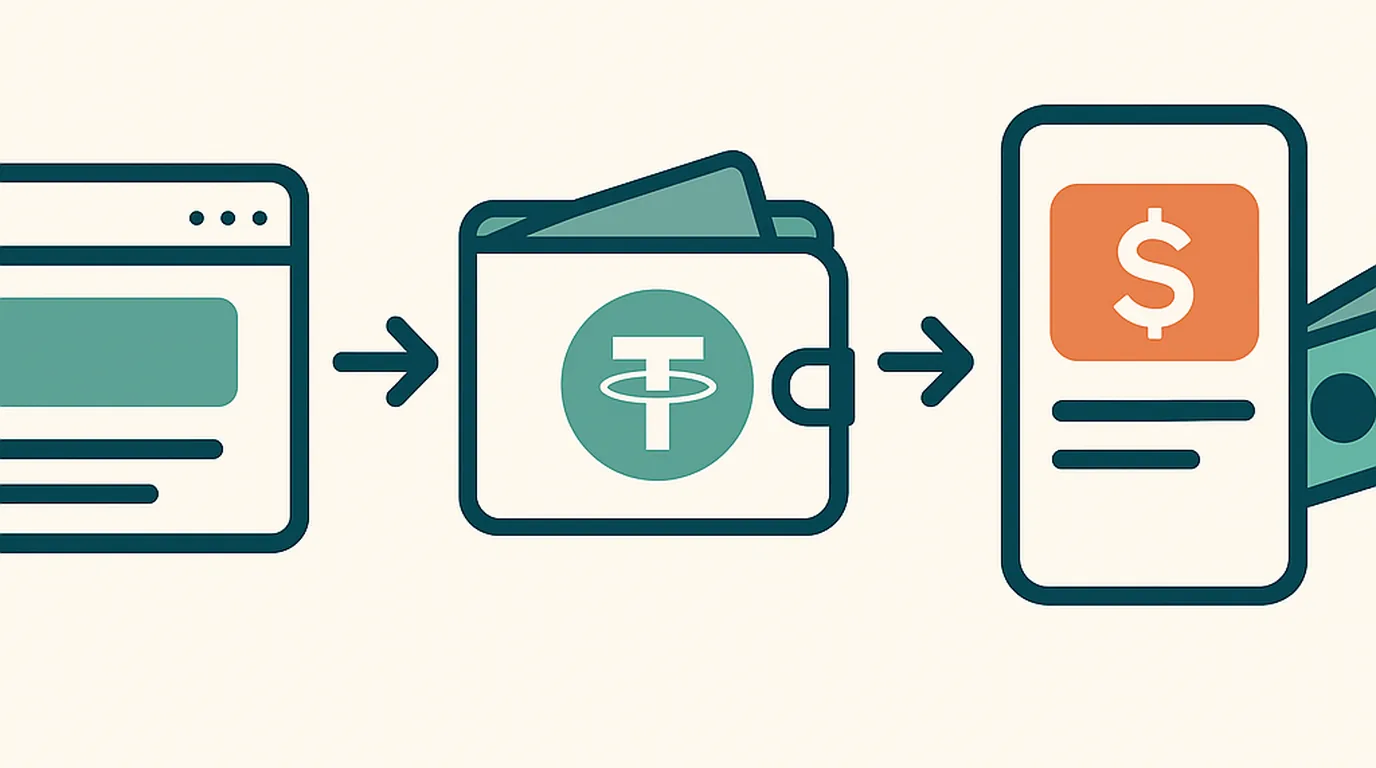
The third is crypto to mobile money via a local exchange, which is not a direct payout at all but has become the dominant practical route. The platform pays USDT, you send it to a local exchange or an over-the-counter desk that supports your country, and they push the local currency into your mobile wallet. It involves one more step, but it works almost everywhere and it is how the majority of mobile-money users actually get paid today.
Read the payout page carefully
When a platform lists "mobile money" among its withdrawal methods, check three things before trusting it: the exact list of supported countries, the named networks in each country, and whether the method is described as a direct payout or a partner-processed one. Vague wording like "mobile money available in selected regions" is a signal that availability is patchy and that you should test it early rather than assume it works for you.
PTC sites that pay via mobile money 2026
Rather than recommend brands that change quarterly, it is more durable to understand which platform categories actually support mobile money and what each is good for. The table below sets out what you will find across the market.
| Platform type | Mobile-money support | Typical minimum | Best for |
|---|---|---|---|
| Regional PTC platforms (Africa, South Asia) | Direct, in supported countries | Low ($1–$3) | Users who want no crypto at all |
| GPT / survey platforms with local partners | Often supported | $2–$10 | Higher reward per task with local payout |
| Modern crypto-first PTC | Indirect — via exchange | Low ($1–$2) | Reliability, then convert locally |
| Aggregator-processed platforms | Inconsistent by country | Varies | Testing carefully before committing |
| Legacy PTC | Rarely supported | Often high | Not recommended in 2026 |
Regional platforms built specifically for African or South Asian markets are the most likely to offer genuine direct payout, because their entire user base depends on it. Their trade-off is usually a smaller task inventory and lower per-click rates than the large international platforms, but for a user who genuinely cannot or will not use crypto, that is a fair exchange.
GPT and survey platforms with local partners are often the best blend of earning rate and payout convenience, particularly in markets where global panels need respondents. Availability fluctuates by month, but when studies are open, the reward per task is materially higher than clicking ads.
Modern crypto-first platforms are worth serious consideration even for mobile-money users, because their reliability is generally higher and their minimums lower. The extra step of converting through a local exchange is a genuine inconvenience, but it is a one-time setup cost rather than a recurring problem.
Supported countries and networks
Mobile-money support is country-specific, and the network names differ from place to place. Knowing which network dominates your market tells you what to look for on a payout page.
| Country | Dominant networks | Direct PTC payout | Practical route |
|---|---|---|---|
| Kenya | M-Pesa | Sometimes | Regional platforms direct; otherwise crypto → local desk |
| Ghana | MTN MoMo, Vodafone Cash | Sometimes | Crypto → local exchange → MoMo |
| Tanzania | M-Pesa, Tigo Pesa, Airtel Money | Sometimes | Crypto → local exchange |
| Uganda | MTN MoMo, Airtel Money | Sometimes | Crypto → local exchange |
| Bangladesh | bKash, Nagad, Rocket | Limited | Crypto → exchange (check local rules) |
| Pakistan | JazzCash, Easypaisa | Limited | Crypto → exchange (check local rules) |
Two cautions apply across this table. First, mobile-money support is not static: a method working this month can be suspended next month when a processor changes its coverage, so re-test periodically rather than assuming continuity. Second, some markets have legal restrictions on cryptocurrency that make the crypto-to-mobile-money route either awkward or unavailable, so establish what is permitted locally before you plan around it. Our guides to specific markets cover the local detail.
Fees, minimums and speed
Cost and speed are where mobile money and crypto diverge most sharply, and the comparison is more nuanced than either side's advocates suggest.
| Route | Typical cost | Minimum | Speed | Notes |
|---|---|---|---|---|
| Direct mobile-money payout | Low to free | $1–$3 | Minutes to 1 day | Best when genuinely supported |
| Aggregator payout | Low to moderate | Varies | Hours to 3 days | Availability uncertain by country |
| Crypto → local exchange → mobile money | Very low + small spread | Depends on exchange | Under an hour | Works almost everywhere |
| International processor | Moderate to high | $5–$10 | Days | Poor fit for small amounts |
The pattern is that mobile money wins on simplicity and loses on dependability, while the crypto route wins on dependability and loses on simplicity. A direct mobile-money payout into M-Pesa with a one-dollar minimum is close to ideal, and when it works, nothing beats it. The problem is the word "when".
For small amounts, the crypto route's cost is negligible — a few cents in network fees on USDT over TRC20, plus a conversion spread at the local exchange. The spread is the real cost, and it is worth checking: locally, a poor exchange rate can quietly cost more than a visible fee. Always compare the rate you are offered against a public reference before converting.
The decisive test is not the fee
For a two-dollar payout, a fifty-cent fee is annoying but the payout still arrives. A payment method that does not work at all is a total loss. When you evaluate a platform, put reliability ahead of cost: a slightly more expensive rail that always delivers beats a cheap one that fails in your country, and the only way to know which you have is to test with a small withdrawal in your first week.
Mobile money vs crypto for PTC
This comparison matters most for users in the markets where both are available, because the right answer depends on your goal rather than on which technology is better.
| Factor | Mobile money | Crypto (then convert) |
|---|---|---|
| Simplicity | One step, familiar | Two steps, needs setup |
| Reliability across countries | Varies; often fails | Works almost anywhere |
| Minimum to withdraw | Low where supported | Low ($1–$2) |
| Cost on small amounts | Low or free | Low (few cents + spread) |
| Setup effort | None if you already use a wallet | Wallet plus exchange account |
| Exposure to price moves | None | None if you hold stablecoins |
| Best for | Users avoiding crypto entirely | Users wanting maximum reliability |
If you already use mobile money daily and want the shortest possible path from earning to spending, a platform with genuine direct payout in your country is the best choice — provided you have verified with a test withdrawal that it actually works for you. If you want the widest choice of platforms and the lowest minimums, the crypto route is stronger, and once your wallet and exchange are set up it is barely more effort than a direct payout.
Many experienced earners in these markets end up using both: a direct mobile-money platform for convenience, and one or two crypto-integrated platforms for better rates and reliability of payment. For a broader look at how the rails compare, see our guide to PTC payment methods compared.
Safety and fraud prevention
Mobile money is fast, irreversible and widely trusted, which makes it an attractive target for fraud. In the PTC context, the risks are predictable and mostly avoidable.
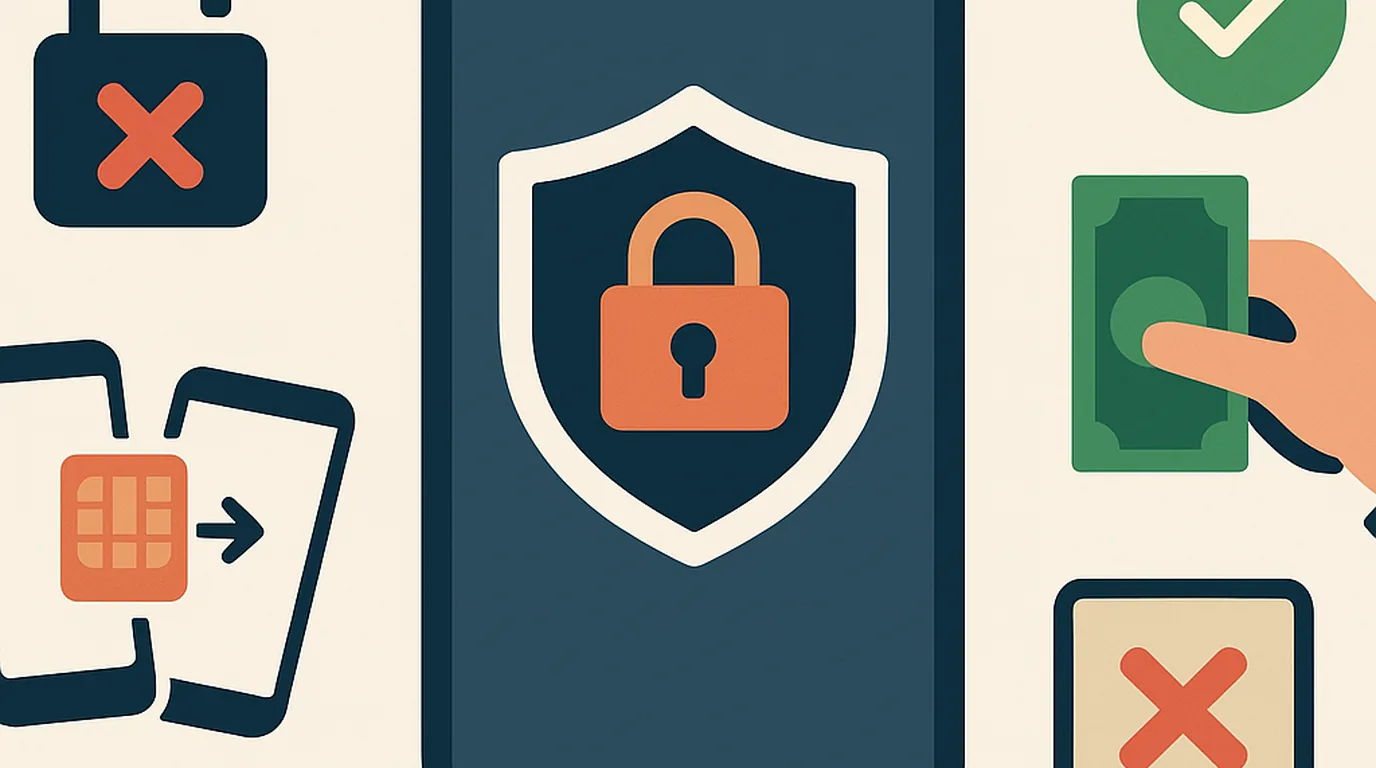
The most important rule concerns your PIN and your SIM. A mobile-money PIN is the equivalent of a card PIN, and no legitimate platform, agent or support person will ever ask you for it. Similarly, treat unexpected SIM-swap messages or requests to change your registered number with suspicion — SIM-swap fraud, where an attacker takes over your number to intercept one-time codes and drain a wallet, is a real and specific threat in mobile-money markets.
Two rules that prevent almost all mobile-money scams
One: never send money in order to receive money. A legitimate PTC platform pays you for attention; if it requires a deposit, an activation fee or a "withdrawal tax" before releasing your earnings, it is a scam. Two: never share your mobile-money PIN, and never approve a transaction you did not initiate. These two rules alone defeat the great majority of schemes that target earners in mobile-money markets.
Beyond those, watch for the standard warning signs: guaranteed daily returns, referral structures where withdrawal depends on recruiting others, pressure to act quickly, and platforms that exist only inside a messaging app. Regulatory bodies worldwide describe these mechanics consistently, and the SEC's Investor.gov resources on Ponzi and advance-fee schemes are a plain-language reference worth reading even outside the United States. Before committing effort to any platform, check independent reviews on Trustpilot, and read the one-star reviews first.
Step-by-step withdrawal
The process differs depending on which route your platform supports. Do the setup first, so the first payout is a test rather than a scramble.
- Confirm your country is supported. On the platform's payout page, find the exact country list and the named networks. Vague coverage descriptions are a warning.
- Set up your receiving route before you earn. If you are using mobile money directly, confirm the wallet is active and in your own name. If you are using the crypto route, create a wallet that supports USDT on TRC20 and open an account with a local exchange that pays into your mobile wallet.
- Earn to the minimum. On most modern platforms this is a few days of light clicking rather than weeks.
- Request a small withdrawal first. Take the smallest amount the platform allows. The goal is to prove the rail works, not to maximise the payout.
- Confirm the money lands. Check the mobile wallet itself, not just the platform's "paid" status. Only the wallet balance is proof.
- Keep records. Date, platform, amount, and the local-currency value at the time, in a simple spreadsheet.
- Scale up only after that test passes, and re-test if you switch platform or if a payout method is suspended and restored.
For a full walkthrough of the earning side, our guide to how to start earning on PTC sites covers the basics, and our country guide to the best PTC sites in Kenya covers M-Pesa-specific detail. For a wider regional view, see the best PTC sites of 2026.
The honest summary: mobile money is the right destination for earners in these markets, but direct PTC payouts into it are still the exception rather than the rule in 2026. Choose a platform whose payout method you have actually verified with a small test, keep the crypto route available as a fallback, never send money to receive money, and protect your PIN. Do that, and the last mile stops being the thing that stops you.
Frequently Asked Questions
Do any PTC sites pay directly to mobile money in 2026?
A small number do, mainly regional platforms built for African and South Asian markets, plus some GPT and survey platforms that work with local payment partners. Genuine direct payouts to M-Pesa, MTN MoMo or bKash remain the exception rather than the rule, because delivering into a mobile wallet requires a licensed local partner. Always confirm the exact supported countries and networks, then test with a small withdrawal.
Is mobile money better than crypto for PTC withdrawals?
It depends on what you optimise for. Mobile money is simpler and often free, but availability varies by country and can be suspended without notice. Crypto pays almost anywhere with a low minimum, but needs a wallet and a local exchange account to convert. For reliability and choice of platforms, crypto is stronger; for simplicity, a verified direct mobile-money payout is better.
What is the safest way to receive PTC earnings by mobile money?
Use the crypto-to-local-exchange-to-mobile-money route where direct payout is unavailable, because it is the most consistent. Never share your mobile-money PIN with anyone, including support staff or agents, and never approve a transaction you did not initiate. If a platform asks you to pay a fee or deposit before releasing earnings, it is a scam.
Why did a PTC platform's mobile money method stop working?
Most mobile-money payouts are delivered through third-party processors whose country coverage changes over time. A method that worked last month can be temporarily suspended or permanently withdrawn when a processor changes its partners. This is why you should re-test periodically and keep an alternative route, such as crypto, available.
How long does a mobile money payout take?
A genuine direct payout into M-Pesa, MTN MoMo or a similar wallet often lands within minutes to a day. Aggregator-processed payouts typically take hours to three days. The crypto route, including conversion at a local exchange, usually completes in under an hour once your wallet and exchange account are set up.
CatPTC partner plans carry capital at risk, and a published return is not a guarantee of future performance. Task earning involves no deposit and therefore no capital at risk. Earnings depend on the tasks you complete. Nothing in this article is financial advice.
See what each CatPTC task pays before you click
Every task shows its reward and timer up front — plus a $1.50 signup bonus to get started.
Create your free account →Registration takes under a minute and needs no card.

The CatPTC editorial team researches paid-to-click platforms hands-on — verifying payout terms, withdrawal records and trust signals before publishing. Every guide is fact-checked against live platform data and updated whenever terms change.