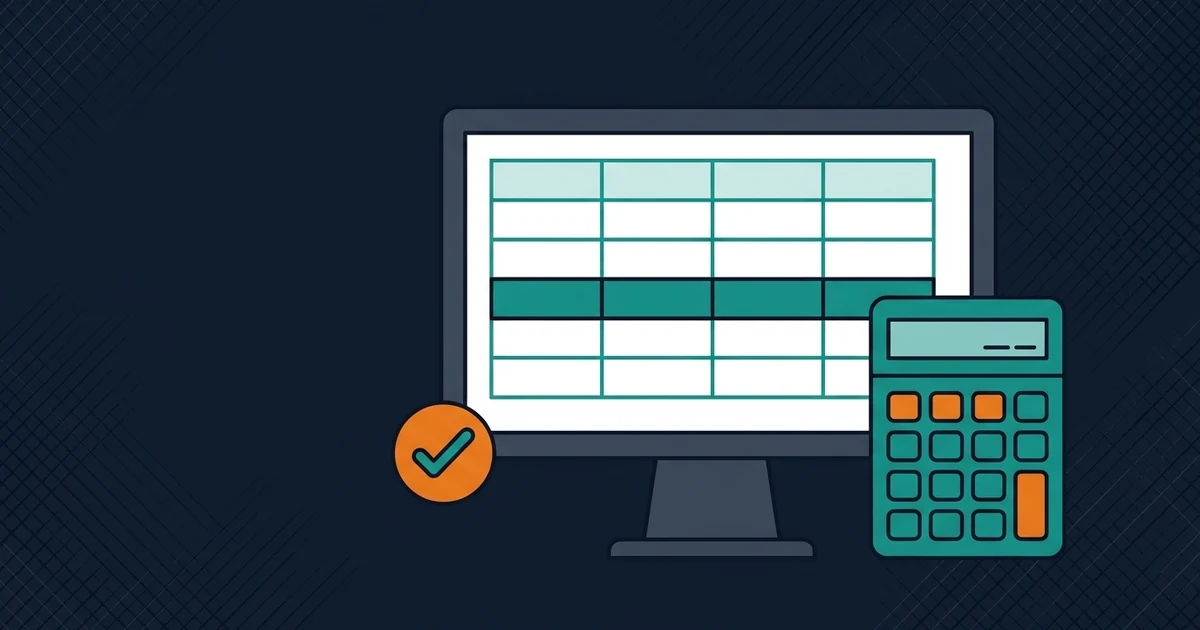
Almost every guide to PTC taxes starts with the law, which is the part you cannot control and the part that varies most by country. This one starts with the part you can control: the record.
Whatever your jurisdiction decides about taxing online earnings, the practical question is always the same — can you show what you earned, when, in what currency, and what it cost to receive? A member who can answer that in four columns is in a completely different position from one who cannot, regardless of what the rules say.
Keep a four-column log: date, gross amount in the platform's currency, net amount actually received in your currency, and total fees. Add the exchange rate used. That is enough to reconstruct your income, your costs and your conversion gains or losses, and it takes about two minutes a month. Everything else — receipts, statements, screenshots — supports those four columns.
Why the record matters more than the rule
Tax treatment of PTC earnings varies enormously. Some countries treat it as miscellaneous income, some as business income, some as capital gains on the crypto leg, and some have thresholds below which nothing is due. You cannot memorise all of that, and it changes.
What does not change is the requirement to be able to explain your own numbers. Every tax authority, every exchange compliance team, and every accountant asked to help you will start from the same question: what did you receive, and what did it cost?
A member with a clean log can answer in a minute. A member without one faces a reconstruction problem that gets harder every month it is deferred.
The four columns
| Column | What goes in it | Why it matters |
|---|---|---|
| Date | The day the money landed, not the day you requested it | Determines which period it falls in |
| Gross | What the platform says it paid, in its currency | Your income before costs |
| Net | What actually arrived, in your currency | What you can spend |
| Fees | Platform fee + network fee + conversion spread | Your deductible costs, and your real margin |
Add a fifth column for the exchange rate used. Without it, gross and net cannot be reconciled later, and the reconciliation is exactly what an accountant will ask for.
Gross and net are different numbers and both matter. Gross is what you earned. Net is what you kept. The gap is your cost of doing business, and it is the number most members cannot reconstruct after the fact because platforms do not store it for them.
A worked example
Here is what a month looks like in practice, with realistic figures.
| Date | Gross (USD) | Net (local) | Fees | Rate |
|---|---|---|---|---|
| 2026-11-03 | 12.40 | 1,438 | 0.31 | 119.0 |
| 2026-11-10 | 9.80 | 1,131 | 0.28 | 118.6 |
| 2026-11-17 | 15.20 | 1,772 | 0.35 | 119.4 |
| 2026-11-24 | 11.60 | 1,341 | 0.29 | 118.9 |
| Month | 49.00 | 5,682 | 1.23 | — |
Four rows, one total. From this you can state your gross income, your net received, your total costs, and the average rate you converted at. That is a defensible record, and it took four minutes across a month.
The supporting evidence
The log is the summary. These are the documents behind it, and they are worth keeping because platforms disappear.
- Platform withdrawal records. Export them if the platform offers an export; screenshot them if it does not. Do this monthly, not annually.
- Exchange trade confirmations. The crypto-to-fiat sale, with the rate and the fee.
- Bank or wallet statements. The arrival of the fiat, which is the only proof that the money actually came.
- Conversion records. If you converted between currencies, the rate at each step.
Store them by month in one folder. The point is not to produce them on demand — it is to be able to produce them at all after a platform has closed and taken its dashboard with it.
The crypto leg is its own question
If you receive crypto and later sell it, there are potentially two events: earning the income, and disposing of an asset. Many jurisdictions treat these separately, and the second can produce a gain or loss independent of the first.
| Event | What it is | What you need |
|---|---|---|
| Earning | Income at the value when received | Date, amount, value in your currency that day |
| Holding | Value moves with the market | Nothing, until you dispose |
| Disposing | Sale or exchange for fiat or another asset | Proceeds, cost basis, gain or loss |
This is why the rate column matters. The value on the day you earned it is your cost basis; the value on the day you sold is your proceeds. Without both, the calculation cannot be done.
Nothing here tells you what you owe or whether you owe anything. Treatment varies by jurisdiction, thresholds exist in some countries and not others, and rules change. What this guide gives you is the record that lets a qualified local adviser answer those questions quickly and cheaply.
Three habits that make it painless
Log on the day money lands
Not at month end. The rate is fresh, the confirmation is in your inbox, and the entry takes thirty seconds.
Export monthly, not annually
Platforms close, dashboards change, and exports disappear. A monthly export is a five-minute habit that protects a year of history.
Reconcile quarterly
Add up the quarter and check it against your bank or wallet statements. A discrepancy found in three months is fixable; one found in three years usually is not.
Five record-keeping mistakes that cost real money
These are the ones that turn a simple log into an expensive reconstruction.
| Mistake | What it costs later | Fix |
|---|---|---|
| Logging the request date, not the arrival date | Income lands in the wrong period | Log when the money arrives |
| Recording only the net | Costs become invisible, margin unknown | Record gross and net separately |
| Omitting the exchange rate | Cost basis cannot be reconstructed | One extra column, thirty seconds |
| Relying on the platform dashboard | Lost entirely when the platform closes | Export or screenshot monthly |
| Mixing personal and earnings transfers | Every figure becomes arguable | One wallet or account for earnings only |
The fourth row is the one that actually happens. Platforms close, dashboards change, and export features disappear without notice. A member who exported monthly has a year of history; one who planned to export annually has nothing.
What to hand an accountant
If you ever need professional help, the quality of the first meeting depends entirely on what you bring. Three things make it short and cheap.
- The four-column log, as a spreadsheet. Not screenshots, not a narrative. A file they can open and total.
- One page of context. Which platforms, which rails, which currencies, and roughly how the money moved. Two paragraphs is enough.
- The supporting documents, organised by month. Withdrawal records, exchange confirmations, statements. In folders, not in an inbox.
An adviser given those three things can answer in an hour. An adviser given a shoebox of screenshots will bill you for the reconstruction, and the reconstruction is the expensive part.
The cheapest tax advice is a clean record. You are not paying for the answer to "what do I owe" — you are paying for the time it takes to work it out. A log that takes two minutes a month removes most of that time.
Sources and method
Record-keeping expectations are described generically because they vary by jurisdiction; the four-column structure is a bookkeeping convention rather than a legal requirement. Crypto disposal treatment is described in general terms only. Consult a qualified adviser in your own country before relying on any of it.
Frequently Asked Questions
Do I have to declare PTC earnings?
In most countries, income from online activity is taxable in some form, though thresholds and categories vary widely. The practical answer is that you should be able to state what you earned and what it cost, and then let a local adviser tell you the treatment. A clean log makes that conversation short.
What records should I keep for PTC income?
A four-column log of date, gross, net and fees, plus the exchange rate used. Behind that: platform withdrawal records, exchange trade confirmations, and bank or wallet statements showing the money arrived. Store them by month.
Do I need to record the crypto price on the day I earned it?
Yes, if you later sell the crypto. The value when you received it is your cost basis, and the value when you sold is your proceeds. Without both figures the gain or loss cannot be calculated, and that is the calculation most jurisdictions care about.
How long should I keep PTC records?
Follow your local rule, which is commonly several years after the relevant tax year. Because platforms close and dashboards disappear, the practical answer is to keep your own copies indefinitely — they cost almost nothing to store.
Is a spreadsheet enough, or do I need accounting software?
A spreadsheet is enough for most PTC earners. The volume is low and the structure is simple. Accounting software becomes worth it when you have many transactions across several platforms and currencies, or when an accountant asks for a format they can import.
Verdict
The tax rules are not yours to control. The record is. Four columns, logged on the day money lands, exported monthly, reconciled quarterly. That is the entire system, and it takes less time per month than a single ad view session.
Members who get into difficulty are almost never the ones who earned too much. They are the ones who cannot say what they earned, because the platform closed and the dashboard went with it.
For the country-specific treatment see do you pay tax on PTC earnings, and for the payout side see payment methods compared.
Other ways to earn beyond this guide
Sponsored partner offers for readers who want a second income stream alongside PTC tasks. These links are paid placements — the partner sets the terms, the rewards and the payout.
See the sponsored offers →Opens a partner page in a new tab. This is not a CatPTC task and does not credit your CatPTC balance.
Test CatPTC with the $1.50 signup bonus
Registration costs nothing, needs no card, and new members get $1.50 credited instantly.
Create your free account →No deposit required to start. Withdrawals in BTC, ETH, LTC, DOGE or USDT.