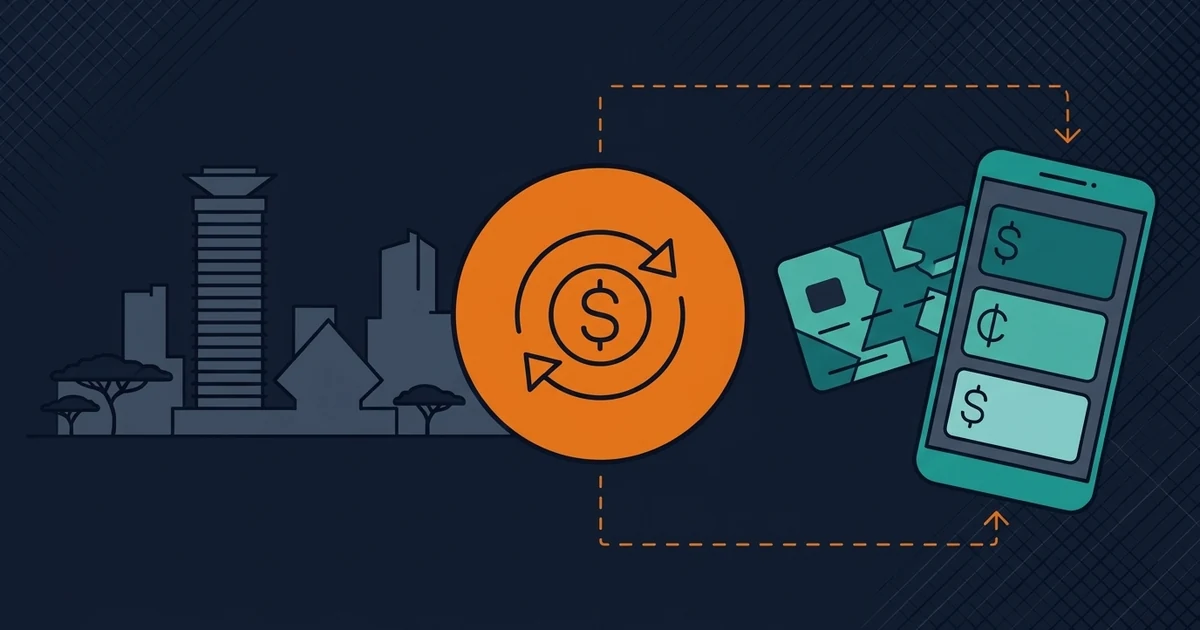
Revolut is what most people actually want from a payout rail: local account details in several currencies, a card that spends them at the real rate, and an app that does not feel like a bank. For a PTC earner working across borders, that combination is genuinely useful.
The catch is the same one that applies to every regulated rail in this space. Revolut is a licensed institution with its own compliance model, and a paid-to-click platform is not a payer it recognises. The money has to arrive through a route Revolut will accept, and that route is narrower than the marketing suggests.
Revolut does not accept direct PTC payouts, but it is one of the easiest rails to fund indirectly. Withdraw crypto from the platform, sell it on an exchange or P2P desk that supports a local transfer to your Revolut account details, and the money arrives as a domestic payment. The advantage over a normal bank is the multi-currency balance and the interbank rate on card spending; the disadvantage is that Revolut's monitoring is stricter than a bank's on small, frequent, unexplained inflows.
What Revolut gives a PTC earner that a bank does not
Three things, and they are all about currency rather than about receiving.
- Local details in multiple currencies. A EUR IBAN, a GBP sort code and account number, USD details in some regions. Money can arrive as a domestic transfer, which is cheaper and faster than SWIFT.
- Interbank-rate spending. On weekdays, within a monthly allowance, card spending converts at or near the interbank rate. That is the same advantage Wise has, applied at the point of sale rather than at conversion.
- Holding without converting. You can keep a dollar balance while your local currency moves, then convert when it suits you.
What Revolut does not give you is a tolerant receiving policy. Its risk engine is aggressive, and small inbound transfers from unfamiliar senders are exactly the pattern it watches for.
Can a PTC platform pay into Revolut directly?
No, and any platform claiming otherwise is describing a bank transfer to your Revolut account details rather than a Revolut integration. That distinction matters because a bank transfer from a corporate sender can be reversed or refused after the platform has marked your withdrawal as paid.
| Claim | Reality | Risk |
|---|---|---|
| "Revolut payout supported" | Bank transfer to your Revolut IBAN or account number | Medium — may be refused by Revolut's receiving checks |
| "Instant to Revolut" | Faster Payments or SEPA Instant to your details | Low if the sender is a recognised business |
| "Revolut via crypto" | You receive crypto and convert yourself | Low — this is the route that works |
The third row is the honest one, and it is what this guide recommends.
The route that works
Withdraw in a cheap crypto
USDT on TRC20 or BEP20. Cents to move, and accepted by every exchange worth using.
Sell on a venue with a local-transfer off-ramp
You need an exchange that can send EUR via SEPA, GBP via Faster Payments, or USD via ACH to your Revolut details. Not every exchange can.
Receive as a domestic transfer
This is the step that makes Revolut worth using. A SEPA transfer into a Revolut IBAN is normally free and arrives same day.
Hold or convert inside Revolut
Convert on a weekday within your plan's allowance to get the interbank rate. Weekend conversion carries a markup on most plans.
Weekday rule. Revolut's interbank rate applies on weekdays. Converting on a Saturday can cost a percentage point more than doing it on a Tuesday. If the amount is meaningful, wait for a weekday.
The real cost of the chain
| Step | Typical cost | Notes |
|---|---|---|
| Platform withdrawal | $0–$3 | Fixed fee, hurts small withdrawals most |
| Network fee | $0.01–$2 | TRC20 or BEP20 keeps this near zero |
| Crypto-to-fiat spread | 0.1–1.5% | The leg worth shopping around |
| Transfer to Revolut | $0–$8 | Free for SEPA and Faster Payments, costly for SWIFT |
| Conversion in Revolut | 0–1% | Free within allowance on weekdays, markup at weekends |
End to end, a well-run chain costs 1–2%. A chain that uses SWIFT and converts at the weekend costs 4–6%. The difference is entirely in choices you control.
Revolut's monitoring, and how to stay out of it
This is the part nobody warns you about. Revolut reviews accounts more aggressively than a high-street bank, and the triggers are predictable.
| Trigger | Why it fires | How to avoid it |
|---|---|---|
| Many small inbound transfers | Looks like structuring or a payment-processing pattern | Batch into fewer, larger transfers |
| Inbound from a new sender each time | No stable counterparty to verify | Use one exchange consistently |
| Rapid in-and-out | Money arrives and leaves within hours | Let funds settle before withdrawing |
| Mismatch with declared income | Inflows exceed what you told Revolut you earn | Keep your declared activity accurate and current |
None of these are accusations. They are pattern rules, and a PTC earner can satisfy all of them with a little discipline: one exchange, batched transfers, funds that rest for a day.
Revolut can ask for source-of-funds documents at any time. Platform withdrawal records, exchange trade confirmations and a simple monthly log are enough for modest amounts. Members who cannot produce them are the ones whose accounts get restricted.
Revolut vs Wise vs a normal bank
| Feature | Revolut | Wise | High-street bank |
|---|---|---|---|
| Local details in multiple currencies | Yes, varies by region | Yes, broadest coverage | Usually one currency |
| Conversion cost | Free within allowance, weekday | 0.3–0.6% | 2–4% typical |
| Card spending at interbank rate | Yes, within allowance | Yes, via card | No |
| Receiving tolerance for small inflows | Low | Medium | High |
| Best for | Spending and holding | Converting and receiving | Large, documented income |
The pattern is clear: Revolut is the best spending rail and the worst receiving rail of the three. If your PTC money is going to be spent rather than saved, that trade is worth making. If it is going to sit, Wise is the safer home.
Your first Revolut payout, step by step
Theory is cheap. Here is what the first run actually looks like, with the decision points that matter.
- Day one: verify Revolut fully. Identity and address, before any money is involved. An unverified account that suddenly receives an inbound transfer is the single most common trigger for a review.
- Day one: open one exchange account. One, not three. A stable counterparty is what keeps your inbound transfers looking normal.
- Day two: withdraw the minimum from the platform. Not your full balance. You are testing the chain, not moving money.
- Day two: sell and transfer. Sell the crypto, then send the fiat to your Revolut details as a local transfer. Note the exact fee the exchange charged.
- Day three: confirm arrival and record it. Date, gross, net, fees, rate. If the numbers do not match your expectation, you have found the expensive leg before it mattered.
Only after that chain has worked once should you withdraw a meaningful amount. The members who lose money are the ones who test with their whole balance and discover the problem at the end.
Keep the first transfer small enough to lose. If the chain breaks, you want to have learned that for $5 rather than $200. The test costs a few cents in fees and buys certainty about every step.
Using the multi-currency balance properly
Most members hold a Revolut balance in one currency and convert everything into it immediately. That wastes the main feature.
If your earnings are in dollars and your spending is in another currency, holding the dollar balance and converting at the point of spend gives you two advantages: you convert only what you need, and you convert on a weekday when the rate is better. A member who converts the whole balance on a Saturday because that is when they happened to withdraw has paid a markup on money they will not spend for weeks.
The discipline is simple: receive in dollars, hold in dollars, convert in the currency you are about to spend, on a weekday, in the amount you are about to spend.

Sources and method
Revolut's plan allowances, conversion policy and account-review practices are from Revolut's published terms and help pages for 2026. Exchange and network fee ranges are observed ranges, not quotes. Platform payout terms are site-reported. This is not tax or legal advice.
Frequently Asked Questions
Can PTC sites pay directly into Revolut?
No. Platforms that list Revolut are describing a bank transfer to your Revolut account details, not an integration. That transfer can be refused by Revolut's receiving checks after the platform has already marked your withdrawal as paid. The reliable route is crypto out, sold for fiat, transferred in as a domestic payment.
Why does Revolut charge more at weekends?
Revolut's interbank rate applies on weekdays. At weekends, when foreign-exchange markets are closed, a markup applies on most plans. Converting a meaningful amount on a Saturday instead of a Tuesday can cost around a percentage point.
Is Revolut better than Wise for PTC earnings?
For spending, usually yes — the card converts at or near the interbank rate within your allowance. For receiving, no. Wise is more tolerant of small inbound transfers and its conversion fee is published and predictable. Many members use Wise to receive and Revolut to spend.
Will Revolut close my account for PTC income?
Not for the income itself, but for the pattern. Many small inbound transfers from varying senders, or rapid in-and-out movement, trigger reviews. Use one exchange, batch your transfers, and let funds settle for a day before moving them on.
What documents does Revolut ask for?
Typically identity, address, and source of funds. For PTC earnings, platform withdrawal records plus exchange confirmations are normally sufficient for modest amounts. A simple monthly log of gross and net is the most useful single document you can keep.
Verdict
Revolut is the best spending rail in this comparison and one of the least forgiving receiving rails. Use it as the place your money lives and gets spent, not as the place it first arrives. Fund it through a domestic transfer from an exchange, batch your withdrawals, convert on weekdays, and keep a record.
If you are choosing one rail and only one, choose Wise for receiving and add Revolut later for spending. If you already hold both, route through Wise and top up Revolut from it — that keeps the receiving risk on the more tolerant account.
See PTC sites that pay via Wise for the receiving side, and payment methods compared for the full picture.
Other ways to earn beyond this guide
Sponsored partner offers for readers who want a second income stream alongside PTC tasks. These links are paid placements — the partner sets the terms, the rewards and the payout.
See the sponsored offers →Opens a partner page in a new tab. This is not a CatPTC task and does not credit your CatPTC balance.
Test CatPTC with the $1.50 signup bonus
Registration costs nothing, needs no card, and new members get $1.50 credited instantly.
Create your free account →No deposit required to start. Withdrawals in BTC, ETH, LTC, DOGE or USDT.