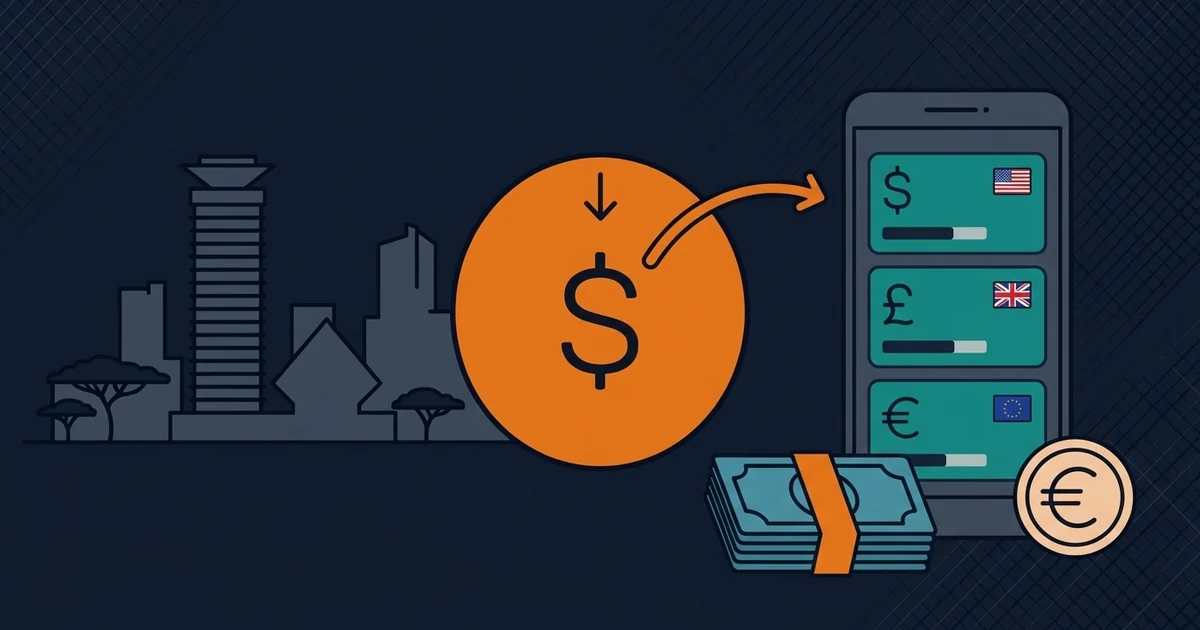
Wise is the rail most PTC members ask about and the one fewest platforms can actually use. The appeal is obvious: a real mid-market exchange rate, a multi-currency balance that holds dozens of currencies at once, and local account details in the US, UK and eurozone so a dollar balance can be spent as if it were local money.
The problem is on the other side of the transaction. Wise is a regulated payments institution, not a wallet that accepts incoming transfers from anyone. A paid-to-click platform cannot simply "pay into Wise" the way it pays into a crypto address. This guide covers what the real route looks like, what it costs at each step, and the specific situations where Wise beats every alternative — and the ones where it quietly loses.
Almost no PTC platform pays into Wise directly, because Wise requires the sender to be an identifiable, verified payer and most PTC payouts are crypto or e-wallet transfers. The working route is crypto out of the platform, sold through an exchange or P2P desk, then withdrawn to your Wise balance as a local bank transfer. That route is worth it above roughly $200 a month, where the mid-market rate saves more than the extra hop costs — and it is usually not worth it below that, where a fixed transfer fee eats the advantage.
Why Wise is different from every other PTC payout rail
Most payout rails are wallets. You receive a balance, you hold it, you spend it or cash it out. Wise is closer to a bank account with a currency-exchange engine bolted on, and that changes what it can and cannot do for a PTC earner.
Three properties matter:
- The rate is the mid-market rate, plus a published percentage. There is no hidden spread baked into a worse rate. On a currency pair with a wide bank spread, that alone can be worth 2–4%.
- You get real local account details. A USD balance with US routing details, a GBP balance with a sort code, a EUR balance with an IBAN. Money can arrive as a domestic transfer rather than an international one.
- It is a regulated institution. That is the benefit and the barrier. Wise must know who is sending it money, which is exactly what a PTC platform's bulk payout cannot provide.
That third point is the whole story of this article. The rail is excellent. The connection to a PTC platform is the hard part.
Can a PTC site pay into Wise directly?
In practice, no. A handful of platforms list "Wise" in their withdrawal dropdown, and what that usually means is one of two things: they send a bank transfer to the account details you entered, or they route through a third-party payout processor that happens to settle into a Wise account.
Both are fragile. A bank transfer into Wise from a corporate sender is fine if the sender is a legitimate verified business — but PTC platforms are frequently de-banked or refused service by payment processors, so the transfer may be rejected days later, after the platform has already marked your withdrawal as paid.
Test before you trust. If a platform claims direct Wise payout, withdraw the minimum amount first and watch the money actually land in your Wise balance before you build a balance there. A withdrawal marked "completed" in a platform dashboard is not the same as money in your account.
The reliable route is indirect, and it is the one this guide is about.
The route that actually works
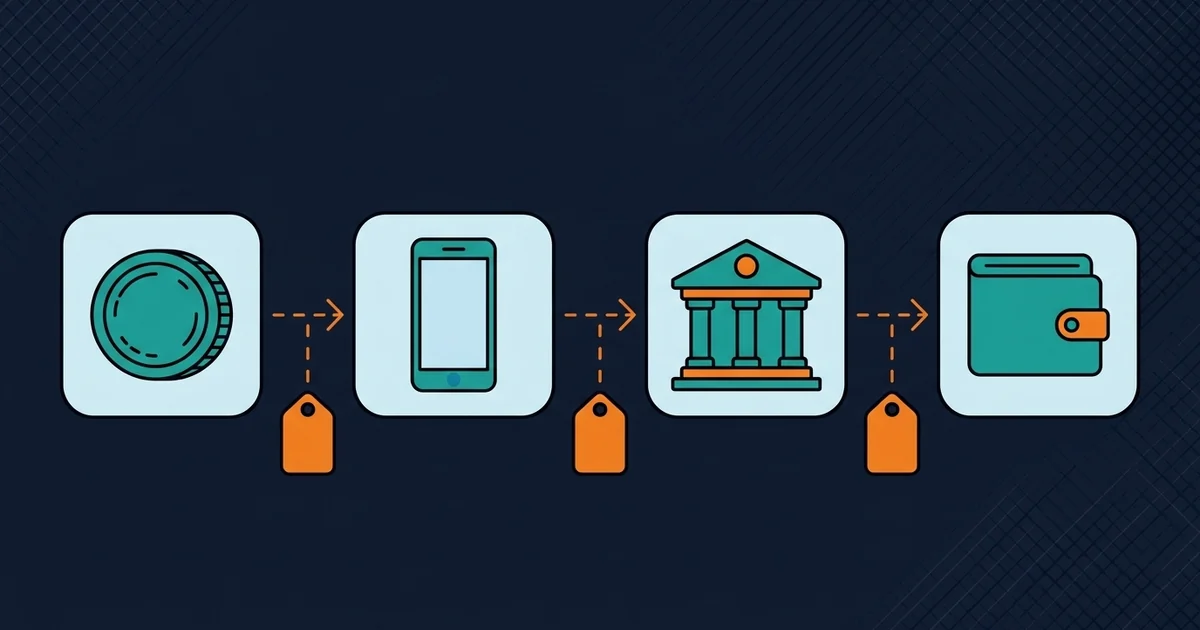
Four steps, and each one has a cost you should be able to name before you start.
Withdraw crypto from the platform
USDT on TRC20 or BEP20 is the cheapest common option; BTC is the most expensive to move. This step costs the platform's withdrawal fee plus the network fee, typically a few cents to a couple of dollars.
Sell the crypto for fiat
Either on an exchange with a fiat off-ramp, or through a peer-to-peer desk. This is where the real cost lives: the exchange spread, or the P2P premium or discount.
Send the fiat to your Wise balance
If the exchange supports withdrawal to a Wise account as a local transfer, this is cheap or free. If it only supports international SWIFT, it is neither.
Convert inside Wise if you need another currency
This is where Wise earns its reputation. Converting USD to GBP or EUR inside Wise at the mid-market rate plus a small published fee is usually the cheapest conversion available to a retail customer.
Step two is the one people underestimate. A P2P desk quoting a rate that looks 1% better than the exchange often hides the difference in a payment method that takes three days and a fee at the other end.
What the whole chain costs
Here is the honest comparison. Figures are typical ranges, not quotes — your own numbers depend on the exchange, the pair and the day.
| Step | Typical cost | Who charges it | Can you avoid it? |
|---|---|---|---|
| Platform withdrawal fee | $0–$3 | The PTC platform | No, but choose a platform with a low fixed fee |
| Network fee | $0.01–$2 | The blockchain | Yes — use TRC20 or BEP20, not ERC20 |
| Crypto-to-fiat spread | 0.1–1.5% | Exchange or P2P counterparty | Partly — compare two venues before selling |
| Fiat withdrawal to Wise | $0–$15 | The exchange | Yes — pick an exchange with free local transfer |
| Currency conversion in Wise | 0.3–0.6% | Wise | No, but it is the cheapest leg |
Add it up and a well-run chain costs roughly 1–2.5% end to end. A badly run one — BTC instead of USDT, SWIFT instead of local transfer, a P2P desk with a bad rate — costs 5–8%. On $500 a month that is the difference between losing $10 and losing $40.
When Wise is genuinely the right choice
Wise is not universally better. It wins in specific situations and loses in others, and the dividing line is mostly about size and currency.
It wins when you earn in one currency and live in another
If your PTC earnings are dollar-denominated and your life is priced in pounds, euros, or a currency with a wide bank spread, the mid-market rate is worth real money. A high-street bank converting USD to GBP might cost 3%; Wise costs a fraction of that.
It wins above a few hundred dollars a month
Below that, the fixed costs of the extra hops dominate. A $15 international transfer fee on a $100 withdrawal is 15% — no exchange rate advantage survives that.
It wins if you need to hold, not spend
A multi-currency balance lets you keep earnings in dollars while your local currency moves, then convert when the rate suits you. No e-wallet in the PTC space offers that properly.
It loses on speed
The full chain takes one to three business days. If you need the money today, a mobile-money rail or a direct crypto spend is faster and the rate advantage is irrelevant.
Where it fails, and what to do instead
Three failure modes are common enough to plan for.
| Failure | What it looks like | Fallback |
|---|---|---|
| Exchange refuses the deposit | Crypto arrives but the account is flagged for "unusual activity" | Use a P2P desk with an established counterparty, or a smaller exchange with looser monitoring |
| Wise rejects the incoming transfer | Money bounces back days later, minus fees | Ask the sender to use a personal account, or receive into a normal bank account and transfer inward yourself |
| Account review | Wise asks for source-of-funds documents | Keep platform withdrawal records and exchange statements; a PTC income log is usually enough for modest amounts |
The third one is not a failure, it is normal compliance. Wise is regulated and will ask where money came from. The members who get stuck are the ones who cannot produce a record, not the ones who earned the money.
Every platform withdrawal, every exchange trade, every Wise credit. A spreadsheet with four columns — date, gross USD, net local currency, fees — is enough. Reconstructing six months of history after a compliance request is far harder than logging it as you go.
How Wise compares with the other rails
If your goal is simply to get paid with the least friction, Wise is rarely the answer. If your goal is to get paid with the least loss, it often is.
| Rail | Speed | Typical total cost | Best for |
|---|---|---|---|
| Wise (via crypto) | 1–3 days | 1–2.5% | Cross-currency earners, larger balances |
| PayPal | Instant–1 day | 3–5% | Small amounts, buyers who insist on it |
| Payeer | Minutes | 1–3% | Internal exchange between members |
| Mobile money | Minutes | 1–3% | Markets where the wallet is the bank |
| Direct crypto spend | Minutes | 0.5–1.5% | Anyone who can pay bills in crypto |
Notice that Wise is not the cheapest on paper. It is the cheapest per unit of currency actually delivered once you account for the rate, which is the number that matters and the one most comparisons ignore.
Sources and method
Wise's fee structure and mid-market rate policy are from Wise's published pricing pages. Exchange and network fee ranges are observed ranges across common venues in 2026, not quotes. Platform withdrawal terms are site-reported and change without notice. Nothing here is tax or legal advice; treatment of online earnings varies by jurisdiction and you should confirm it with a local adviser.
Frequently Asked Questions
Can I receive PTC earnings directly into Wise?
Almost never. Wise requires an identifiable verified sender, and PTC platforms pay in bulk through crypto or e-wallets. A few platforms list Wise in their withdrawal options, but that usually means a bank transfer to your account details, which can be rejected days later. Test with the minimum withdrawal before relying on it.
Is Wise cheaper than PayPal for PTC payouts?
Usually yes, once you count the exchange rate. PayPal's visible fee is around 3–5% and its currency conversion adds a spread on top. Wise charges a smaller published fee at the mid-market rate, but you reach it through an extra crypto-to-fiat hop that costs 1–2%. Below about $200 a month the extra hop can cancel the advantage.
What is the cheapest crypto to withdraw for a Wise route?
USDT on TRC20 or BEP20. Both settle for cents. ERC20 USDT can cost several dollars in network fees, which is a large share of a small PTC withdrawal. Bitcoin works but is the most expensive of the common options to move.
Will Wise ask where my money came from?
Yes, eventually. Wise is a regulated payments institution and runs source-of-funds checks. For modest PTC amounts, platform withdrawal records plus exchange statements are normally enough. The members who get stuck are the ones with no record at all.
How long does the whole chain take?
One to three business days end to end. The crypto leg is minutes, the exchange sale is minutes to hours depending on the venue, and the fiat transfer into Wise is the slow part. If you need the money today, use a mobile-money or direct crypto route instead.
Verdict
Wise is the best currency-conversion tool available to a retail PTC earner and one of the worst first hops. Treat it as the last leg of a chain, not the first. Withdraw in USDT on a cheap chain, sell on a venue with a free local transfer, land the fiat in Wise, and convert there if you need to. That chain costs 1–2.5% and gives you the mid-market rate; skipping any step costs more than it saves.
If you earn under a couple of hundred dollars a month, do not bother. Use the simplest rail your platform supports and spend the time on earning instead. The optimisation only pays once the amounts are large enough to matter.
For the wider comparison see payment methods compared, and for the mechanics of moving crypto safely see how to withdraw crypto from PTC sites safely.
Other ways to earn beyond this guide
Sponsored partner offers for readers who want a second income stream alongside PTC tasks. These links are paid placements — the partner sets the terms, the rewards and the payout.
See the sponsored offers →Opens a partner page in a new tab. This is not a CatPTC task and does not credit your CatPTC balance.
Test CatPTC with the $1.50 signup bonus
Registration costs nothing, needs no card, and new members get $1.50 credited instantly.
Create your free account →No deposit required to start. Withdrawals in BTC, ETH, LTC, DOGE or USDT.